
Florida’s Glowing Waters Are Calling — Here’s Where to Find Them
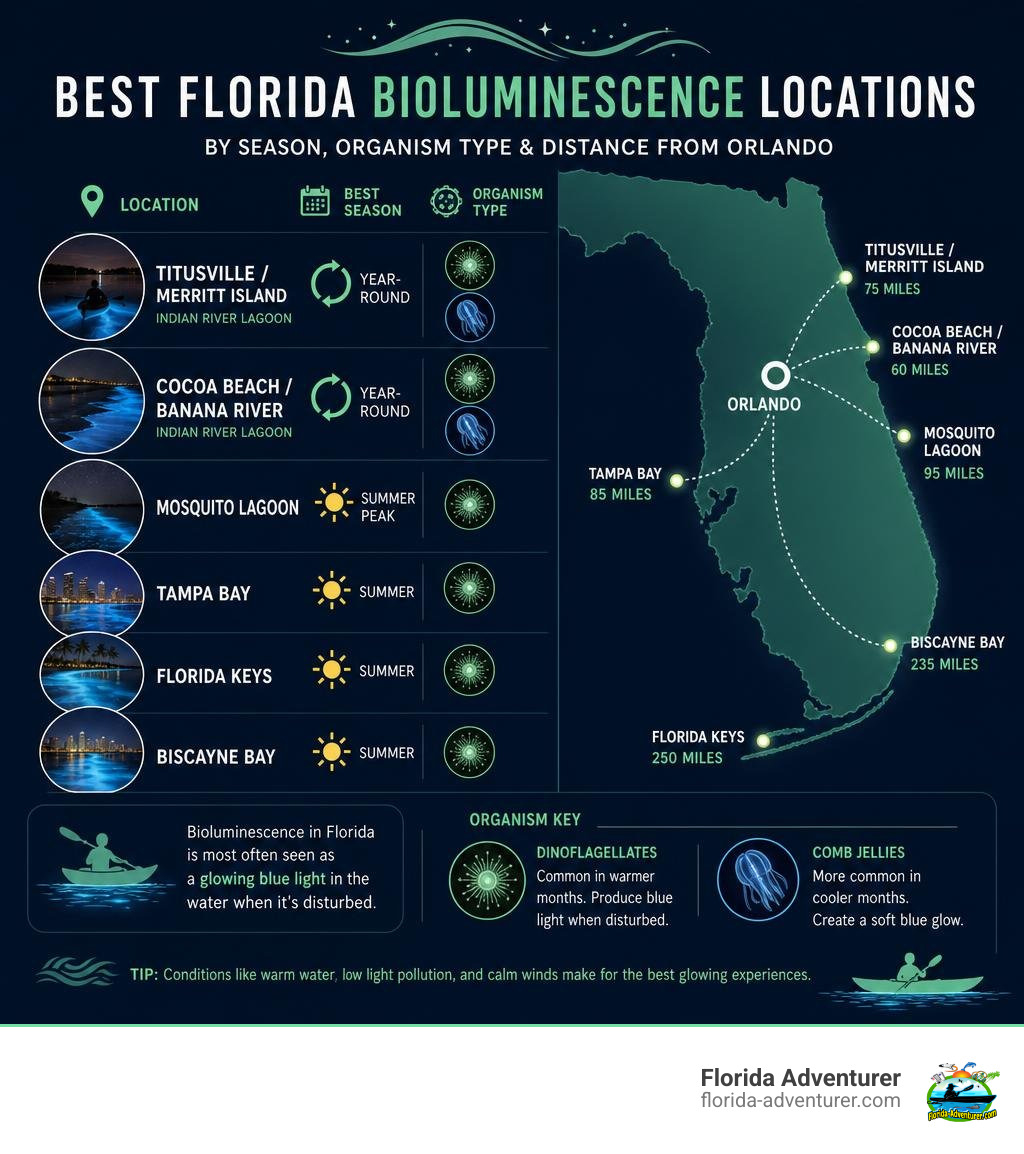
If you’ve been wondering where to see bioluminescence in Florida, here are the top spots:
| Location | Best Season | Glow Type |
|---|---|---|
| Titusville / Merritt Island | Year-round | Dinoflagellates (summer), Comb jellies (winter) |
| Cocoa Beach / Banana River | Year-round | Dinoflagellates (summer), Comb jellies (winter) |
| Mosquito Lagoon | Summer peak | Dinoflagellates |
| Tampa Bay | Summer | Dinoflagellates |
| Florida Keys | Summer | Dinoflagellates |
| Biscayne Bay | Summer | Dinoflagellates |
Florida’s Space Coast is widely regarded as one of the best places in North America to experience bioluminescence, thanks to its dark skies, calm lagoon waters, and exceptional wildlife habitat.
Imagine dipping a paddle into dark water and watching it explode in a burst of electric blue light. Then a manatee glides beneath your kayak, leaving a glowing trail like a comet across the night sky.
That’s bioluminescence in Florida — and it’s completely real.
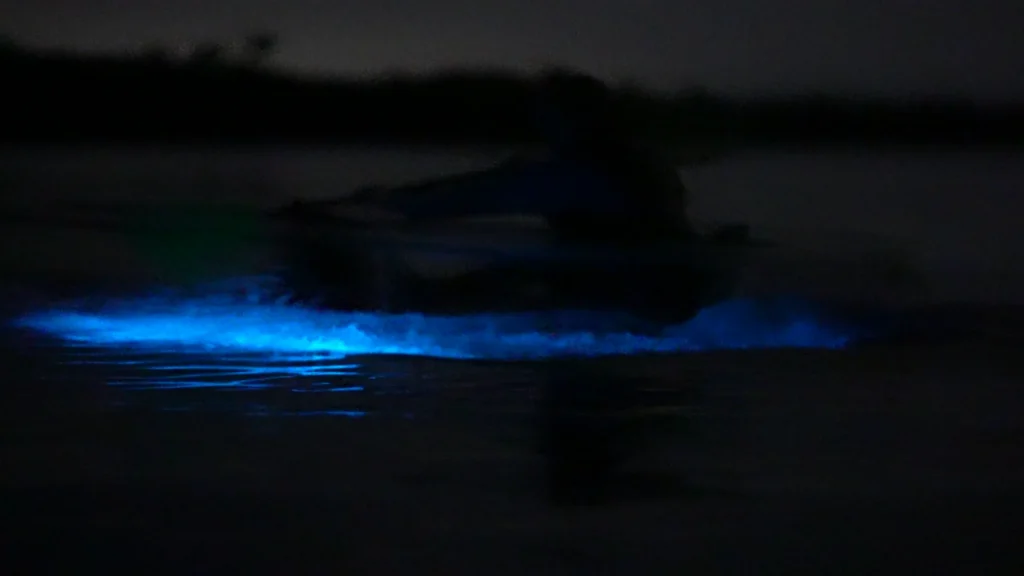
Florida’s Space Coast is one of the rare places where you can experience this phenomenon up close, from a kayak, a clear-bottomed boat, or even aboard a family raft. During peak summer months, the lagoon often contains dense concentrations of bioluminescent dinoflagellates, creating spectacular glowing displays with every paddle stroke.
It’s not a light show designed by humans. It’s nature doing something truly extraordinary.
Whether you’re planning a family trip from Orlando, looking for an unforgettable date night, or comparing Florida bioluminescence kayaking options, this guide covers where to go, when to visit, which tour to choose, and how to make the most of a night on Florida’s Space Coast.
What is Bioluminescence and What Causes Florida’s Glowing Waters?
At its core, bioluminescence is a chemical reaction that allows living organisms to produce their own light. It is a natural defense mechanism designed to startle predators, warn other creatures of nearby danger, or attract prey. While this phenomenon is relatively common in the deepest parts of the open ocean, it is incredibly rare to find it in shallow, easily accessible coastal waters.
The glowing water we experience in Florida is triggered by physical movement. When a kayak paddle slices through the water, a fish darts past, or a gentle wave ripples across the surface, the organisms in the water react to the disturbance by emitting a brilliant blue-green light. This chemical reaction occurs when a light-emitting molecule called luciferin reacts with oxygen, a process catalyzed by an enzyme called luciferase.
To better understand the science of bioluminescence, it helps to look at the delicate balance of our brackish estuaries. The unique geography of Florida’s Space Coast, specifically the Indian River Lagoon system, provides the perfect environment for these microscopic wonders to thrive. For perspective, our guide to the best places in the world to witness bioluminescence shows how Florida’s Space Coast ranks alongside legendary spots like Puerto Rico’s Mosquito Bay.
To understand how this ecosystem has captivated humans for centuries, you can also explore the rich history behind Florida bioluminescence adventures.
Summer Dinoflagellates vs. Winter Comb Jellies
The reason we are able to offer bioluminescence tours year-round is because Florida’s waters host two entirely different glowing organisms depending on the season.
During the warm summer months, the glow is caused by single-celled marine algae known as dinoflagellates (specifically Pyrodinium bahamense). As the Florida sun heats the shallow waters of the lagoon, these tiny organisms can multiply into dense concentrations. When disturbed, they emit a bright, sparkling, neon-blue light. Swirling your hand in the water during this season makes it look as though glittering fairy dust is cascading down your arm.
As the weather cools in late autumn, the dinoflagellates go dormant, but the magic does not stop. From November through May, the waters are taken over by ctenophores, commonly known as comb jellies. Despite their name, comb jellies are not true jellyfish—they do not sting, they are 95% water, and they are completely harmless to touch.
Comb jellies are ancient creatures, having existed for over 540 million years. They produce light using specialized cells called photocytes. When touched or disturbed, they glow with a softer, continuous blue-green light, often creating a shimmering rainbow effect along their comb-like plates. During a winter tour, guides can safely scoop these gentle creatures into a viewer or net, allowing you to hold a pulsing, glowing “underwater star” right in the palm of your hand.
For a detailed breakdown of these seasonal shifts, check out our guide to Florida’s glowing waters and the best places to see bioluminescence.
Where to See Bioluminescence in Florida
If you are researching where to see bioluminescence in Florida, you will quickly find that the Indian River Lagoon system is the undisputed epicenter of this phenomenon. Spanning 156 miles along Florida’s east coast, the Indian River Lagoon is the most biologically diverse estuary in North America. Its shallow, slow-moving, brackish waters act as a natural greenhouse, trapping nutrients and warmth to create the ultimate breeding ground for both dinoflagellates and comb jellies.

Within this massive estuary system, there are a few specific locations that offer the absolute brightest displays due to their lack of development and minimal light pollution. To help you choose the perfect launch site for your adventure, we have compiled a guide to bioluminescence kayaking in Florida with the best tours, locations, and seasons.
Titusville and Merritt Island: The Best Place Where to See Bioluminescence in Florida
Titusville and the adjacent Merritt Island National Wildlife Refuge represent one of the premier destinations for bioluminescence viewing in North America. The refuge covers over 140,000 acres of protected wetlands and waterways, providing a safe haven for 15 federally threatened or endangered species. Because the refuge is completely undeveloped, there is virtually zero light pollution. When the sun goes down, the skies become pitch black, which makes the glowing water beneath you appear incredibly vibrant.
The most famous launch sites within the refuge include:
- Haulover Canal: A historic canal that connects the Mosquito Lagoon and the Indian River Lagoon. This is a primary highway for marine life, making it a fantastic spot to see glowing manatees and dolphins.
- Beacon 42 Launch: Located deeper in the refuge, this spot offers exceptionally dark skies and highly concentrated summer glows.
- Parrish Park: Situated right at the boundary of Titusville and the refuge, this convenient location offers easy access and beautiful views of the nearby exploration landmarks.
If you are wondering why this specific area is so highly regarded, discover why Titusville is such a strong choice for bio kayaking. You can also learn more about one of Florida Adventurer’s most popular launch locations.
Cocoa Beach and Banana River: Another Top Spot Where to See Bioluminescence in Florida
Just south of Merritt Island lies Cocoa Beach and the Banana River Aquatic Preserve. Covering roughly 30,000 acres, this preserve is famous for its shallow, protected waterways, calm lagoon habitats, and its massive resident population of West Indian manatees.
The Banana River is slightly closer to the beachside resorts of Cocoa Beach, making it a highly accessible option for travelers staying on the coast. Paddling through calm lagoon habitats at night is a thrilling experience, especially when experienced naturalist guides know which launch areas and waterways are most likely to produce the brightest displays.
To plan your beachside glowing adventure, read our guide to bioluminescence kayaking in Florida or explore Visit Florida’s overview of bioluminescent kayaking around the state. If you are visiting during the cooler months, you will also want to read about where to find Florida’s most dazzling comb jelly displays.
Timing Your Trip: Best Seasons and Moon Phases
Timing is everything when it comes to witnessing the peak of Florida’s bioluminescence. While you can see a glow year-round, the intensity of the display fluctuates based on water temperature, weather, and—most importantly—the moon cycle.
To help you plan, here is a quick reference table comparing the two primary glowing seasons:
| Feature | Summer Season (Dinoflagellates) | Winter Season (Comb Jellies) |
|---|---|---|
| Active Months | May – October (Peak: July – September) | November – April (Peak: January – March) |
| Glow Characteristics | Electric blue, sparkling, highly reactive | Soft blue-green, continuous, rainbow-like |
| Water Temperature | Warm (80°F+) | Cool (60°F – 70°F) |
| Best Moon Phase | New Moon (Dark Sky Weeks) | New Moon preferred, but less sensitive |
| Wildlife Activity | High (Dolphins, manatees, active fish) | Moderate (Manatees, winter birds, resting fish) |
The absolute brightest bioluminescence occurs during New Moon phases and the days immediately leading up to and following it (often referred to as “Dark Sky Weeks”). When the moon is bright or full, its light reflects off the water’s surface, creating glare that makes it much harder to see the subtle glow beneath the surface. Planning your tour during a dark sky week ensures that the contrast between the black night and the glowing water is at its absolute peak.
If you are planning an autumn getaway, you can find excellent viewing opportunities by learning how to see bioluminescence in October near Orlando.
Is Seeing Bioluminescence in Florida Worth It?
Yes — for most visitors, seeing bioluminescence in Florida is worth planning around, especially if you choose the right season, moon phase, and launch location. Unlike a standard sightseeing activity, this is an after-dark, on-the-water experience where every paddle stroke, swimming fish, or passing manatee can create a visible glow.
It is especially worthwhile on Florida’s Space Coast because the Indian River Lagoon, Banana River, and Mosquito Lagoon offer a rare combination of accessible launch areas, dark protected waterways, experienced local guides, and strong seasonal glow opportunities. Among the many bioluminescence tours Florida offers, the Indian River Lagoon consistently delivers some of the brightest displays. A guided trip also helps answer the practical questions that matter most before booking: when the glow is strongest, which location is best that night, and which tour format fits your group.
Choosing Your Adventure: Types of Bioluminescence Tours
We believe that everyone should have the opportunity to experience this natural wonder, which is why we offer several different tour formats to accommodate different comfort levels, ages, and group sizes. Florida bioluminescence kayaking allows you to experience the glowing waters from the best possible vantage point: close to the surface, moving quietly through the lagoon with a local guide who knows the conditions. Our guided kayak tours also give you an up-close view of glowing water that simply isn’t possible from larger boats.

- Clear Kayaks: These 100% transparent tandem kayaks provide a completely unobstructed view of the underwater world. As you paddle, you can look directly between your feet to watch glowing fish darting by and comb jellies swirling beneath your seat. It is a fully immersive experience that makes you feel as though you are floating through a glowing galaxy. This is highly recommended for couples and adventure seekers.
- Tandem Kayaks: Our traditional tandem kayaks are highly stable, comfortable, and incredibly easy to maneuver, making them the perfect choice for beginners, older adults, and families with children.
- Family Rafts: For those traveling with young children (under the age of 8), seniors, or anyone who feels nervous about being in a kayak at night, our multi-passenger family rafts are the ideal solution. These large, stable rafts are guided directly by one of our professional naturalists, allowing you to sit back, relax, and enjoy the glowing water safely.
- Sunset Combo Tours: Why choose between daytime wildlife and nighttime glow? Our sunset-bioluminescence combo tours allow you to launch in the late afternoon to search for active dolphins, manatees, and shorebirds as the sun paints the sky. As twilight fades into night, you will transition directly into the glowing waters for the ultimate dual-adventure.
This nighttime paddling experience is one of the most unique after-dark adventures on the Space Coast, especially when you choose the tour format that fits your group best.
If you are looking to plan a truly memorable date night, explore how bioluminescence can create a romantic Florida adventure.
Essential Tips for Your Florida Bioluminescence Tour
To ensure you have the most magical and comfortable experience possible on the water, keep these practical tips in mind:
- Dress to Get Wet: You will be paddling, splashing, and interacting with the water. Wear lightweight, quick-drying athletic clothing. Avoid heavy fabrics like denim.
- Wear the Right Shoes: Secure water shoes, sandals with heel straps, or old sneakers are highly recommended. Avoid flip-flops, as they are easily lost in the shallow mud near the launch sites.
- Prepare for Bugs: Mosquito Lagoon earned its name honestly! During the summer months, biting insects can be highly active at night. We recommend wearing lightweight long-sleeved shirts and long pants to create a physical barrier, and applying insect repellent before launching.
- Manage Your Expectations with Cameras: Capturing bioluminescence on a camera is notoriously difficult. Standard smartphones and point-and-shoot cameras usually result in completely black photos because they cannot handle the low-light conditions. If you want to try capturing the glow, you will need a camera that supports manual settings, a very low aperture, high ISO, and a long exposure of 2 to 4 seconds—which requires keeping the camera completely still on a moving kayak! We highly recommend putting the screens away, enjoying the moment with your own eyes, and letting the memory wash over you.
- Secure Your Valuables: Bring a small dry bag with a carabiner to clip your car keys and phone securely to your kayak.
For more planning help, read our guide to choosing the best bioluminescence tour near Orlando, Florida.
Which Florida Adventurer Tour Is Right for You?
Choosing the right tour comes down to your comfort level, group type, and the kind of night you want to have on Florida’s Space Coast. Every Florida bioluminescence kayaking tour is led by experienced naturalist guides familiar with current glow conditions.
| Tour Type | Best For | Why Choose It |
|---|---|---|
| Clear Kayaks | Couples, photographers, adventure seekers | A see-through view of glowing water, fish, and comb jellies beneath you |
| Tandem Kayaks | Beginners, families, most paddlers | Stable, easy-to-use kayaks with a classic paddling experience |
| Family Rafts | Young children, seniors, nervous paddlers | A larger, guide-led option that lets you relax while still experiencing the glow |
| Sunset + Bioluminescence Tour | Wildlife lovers and first-time visitors | Daylight wildlife viewing followed by glowing water after dark |
If you are not sure which bioluminescence tour Florida option fits your group, Florida Adventurer’s local team can help you compare conditions, seasonal glow types, and comfort levels before you book.
Frequently Asked Questions about Florida Bioluminescence
Can you see bioluminescence in Florida without a guided tour?
Technically, yes, you can access public launch sites like Parrish Park or Haulover Canal on your own at night. However, we strongly advise against doing so, especially if you are not deeply familiar with the local waterways.
Navigating shallow, winding estuaries in pitch-black conditions is incredibly challenging. There are no streetlights or trail markers on the water, and it is very easy to become disoriented or lost in the maze of waterways. While local wildlife includes manatees, dolphins, fish, and numerous bird species, guides are trained to safely navigate the area’s diverse ecosystem.
Our professional guides are certified in water safety, know these waterways intimately, carry proper navigation lights, and monitor real-time weather and wind conditions to ensure your safety. Furthermore, our guides know exactly which micro-locations in the lagoon are holding the brightest concentrations of bioluminescence on any given night, ensuring you get the best possible view.
To find out why booking a guided trip is the smartest choice, read about choosing the best bioluminescence tour near Orlando, Florida.
What wildlife will you see on a bioluminescence tour?
The night brings out a completely different side of the Space Coast’s ecosystem. During our tours, it is common to encounter:
- Manatees: Watching a 1,000-pound manatee glide slowly beneath your kayak while completely outlined in a glowing blue aura is a spiritual experience.
- Dolphins: When dolphins swim through a concentration of dinoflagellates, they look like glowing blue torpedoes, leaving a blazing trail of light in their wake.
- Jumping Mullet: These small fish are easily startled by kayaks and often jump out of the water, skipping across the surface like glowing skipping stones. Occasionally, a friendly mullet might even land right in your kayak!
- Wading Birds: You may spot the silhouettes of night herons, egrets, and pelicans resting in the mangroves or hunting along the shallow flats.
How far are the tour locations from Orlando and Cocoa Beach?
Because Orlando is a major feeder market for our coastal adventures, we have designed our launch locations to be highly accessible for day-trippers:
- From Downtown Orlando: Titusville is approximately 45 to 60 minutes east, depending on traffic and your starting location.
- From Disney World / Kissimmee: The drive is approximately 55 to 60 minutes.
- From Cocoa Beach: Our Banana River launch sites are just 10 to 15 minutes away, while our Titusville sites are an easy 25-to-30-minute drive north.
- From Kennedy Space Center: Most of our refuge tours launch just 15 minutes from the main visitor complex, making a bioluminescence tour the perfect way to cap off a day of space exploration.
If you’re still wondering where to see bioluminescence in Florida, guided tours around the Indian River Lagoon remain the most reliable option for choosing the right launch area, timing, and tour format.
Conclusion
Bioluminescence tours Florida visitors experience on the Space Coast are among the most memorable outdoor adventures in the state, and Florida bioluminescence kayaking offers a front-row seat to this incredible natural phenomenon. Experiencing Florida’s glowing waters is a true bucket-list adventure that you will remember for the rest of your life. Because our tours operate in protected wildlife refuges with strict limits on the number of boats allowed on the water at any one time, our tours sell out weeks in advance, especially during peak summer months and dark sky weeks.
We invite you to join our expert naturalists at Florida Adventurer for an unforgettable night under the stars. Whether you want to paddle a clear kayak through a sea of neon light, relax with your family in a guided raft, or try bioluminescence kayaking Florida during another season, we have the perfect adventure waiting for you. If you’re planning a bioluminescence tour Florida visitors consistently recommend, Florida Adventurer offers several guided options throughout the season.
Don’t miss out on this natural magic—book your bioluminescence kayak tour in Florida today and experience one of the Space Coast’s most unforgettable nighttime adventures!