
Do Jellyfish Glow? The Quick Answer Before You Go
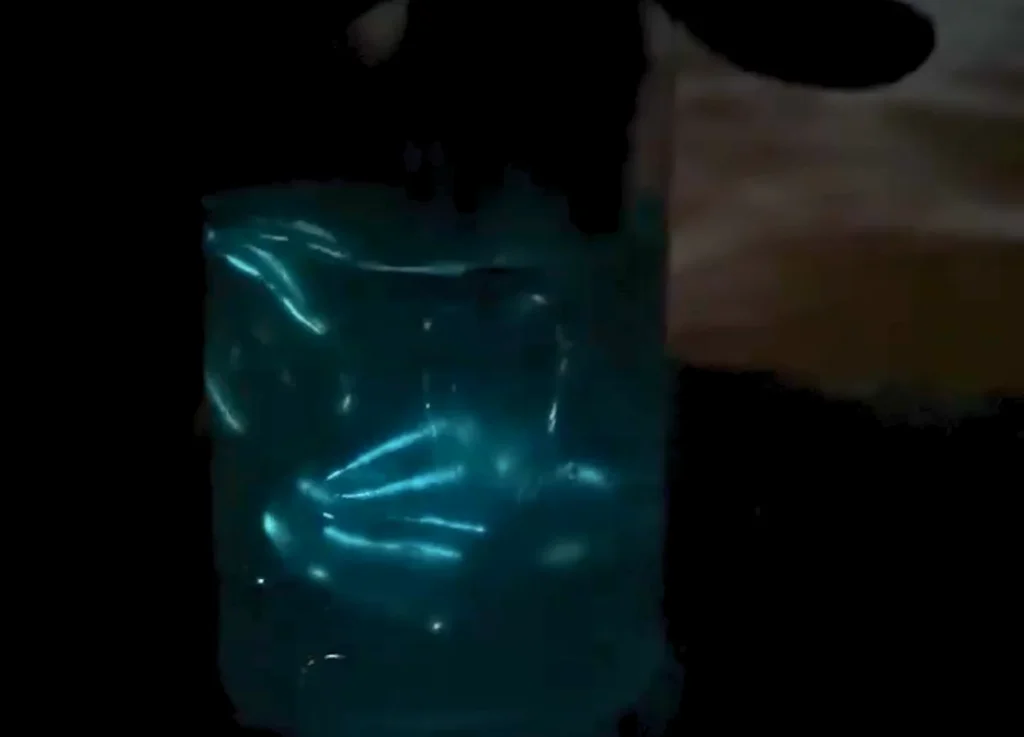
Yes, many jellyfish glow — but not all of them do.
Here is the fast answer:
- About half of true jellyfish species can produce their own light through bioluminescence.
- Most glowing jellyfish live offshore or deeper in the ocean, where light is useful for defense and survival.
- Their glow is usually blue or green, because those colors travel best through seawater.
- Jellyfish mainly glow to startle predators, distract attackers, or attract prey.
- On Florida’s Space Coast, the glowing “jellyfish” visitors usually see on night tours are actually comb jellies — not true jellyfish, but harmless, glowing marine animals that are incredible to experience up close.
One of the questions we hear most often before winter tours is, “Are we actually going to see glowing jellyfish?” That last point matters if you are planning a Florida bioluminescence tour, because guests often arrive wanting to know whether the glowing creatures in the lagoon are safe, seasonal, and something they can actually see from a kayak.
For most visitors, yes—but not in the way they expect. During the cooler months, Florida’s Indian River Lagoon and Mosquito Lagoon can fill with glowing comb jellies. They look like tiny translucent floating beads of jelly in the water, and when they are gently disturbed, they flash with a blue-green sparkle that guests can see around their paddles, in the water, and sometimes in their hands.
Our guides explain this difference on almost every winter tour because the phrase “glowing jellyfish” is what many visitors search for, even though the animal they are most likely to meet on the tour is a comb jelly.
This guide explains which jellyfish glow, why they do it, how true jellyfish differ from comb jellies, and what you can realistically expect on a Florida Space Coast bioluminescence tour.
Helpful Florida Adventurer guides:
Do All Jellyfish Glow?
No. Not all jellyfish glow. Many species can produce light, but many others cannot.
Scientists estimate that roughly half of true jellyfish species are bioluminescent. That means if you encounter a jellyfish in the ocean, you should never assume it is bioluminescent simply because it looks translucent. The glowing species are especially common in darker offshore and deep-sea environments, where producing light can help an animal survive. In shallow daytime water, glowing is less useful, so many coastal jellyfish rely more on transparency, drifting behavior, or stinging tentacles for protection.
A few key points make this easier to understand:
- Some true jellyfish glow, but not all. Bioluminescence varies by species.
- Deep-sea jellyfish are more likely to glow. In dark water, light can become a survival tool.
- Most marine bioluminescence looks blue or green. Those colors carry farther underwater.
- The glow is usually triggered by disturbance. Movement, turbulence, or contact can cause a flash.
So when someone asks, “Do jellyfish glow?” the best answer is: yes, many do — but whether you see one depends on the species, location, season, and water conditions.
That distinction comes up often on our tours, especially when guests have watched videos online and expect every jelly-like animal in the water to be a true jellyfish.
For Florida visitors, there is one more important detail: the glowing animals most people encounter on Space Coast tours are usually not true jellyfish. They are comb jellies, a different group of marine animals that glow beautifully and are safe to touch.
Why Do Jellyfish Glow?
Jellyfish glow because bioluminescence helps them survive. In the ocean, especially at night or in deep water, a sudden flash of light can be just as useful as speed, camouflage, or a sting.
Jellyfish use their glow in a few main ways:
- Defense: A sudden flash can startle a predator long enough for the jellyfish to drift away.
- Distraction: Some species can release glowing particles or glowing body parts that draw attention away from the main animal.
- Burglar alarm effect: A bright glow can attract a larger predator, potentially scaring off or exposing the animal attacking the jellyfish.
- Prey attraction: In some species, light may help lure smaller animals closer.
The science behind the glow is called bioluminescence. In simple terms, the animal produces light through a chemical reaction inside its body. Unlike a fire or lightbulb, this “cold light” gives off very little heat. For a deeper science explanation, NOAA Ocean Exploration has a helpful overview of how bioluminescence works in the ocean.
For most readers, that is the practical takeaway: jellyfish do not glow for decoration. They glow because light helps them respond to danger, find food, and survive in dark water.
If you want a broader explanation of how glowing water works on Florida tours, read our guide to bioluminescent kayaking.
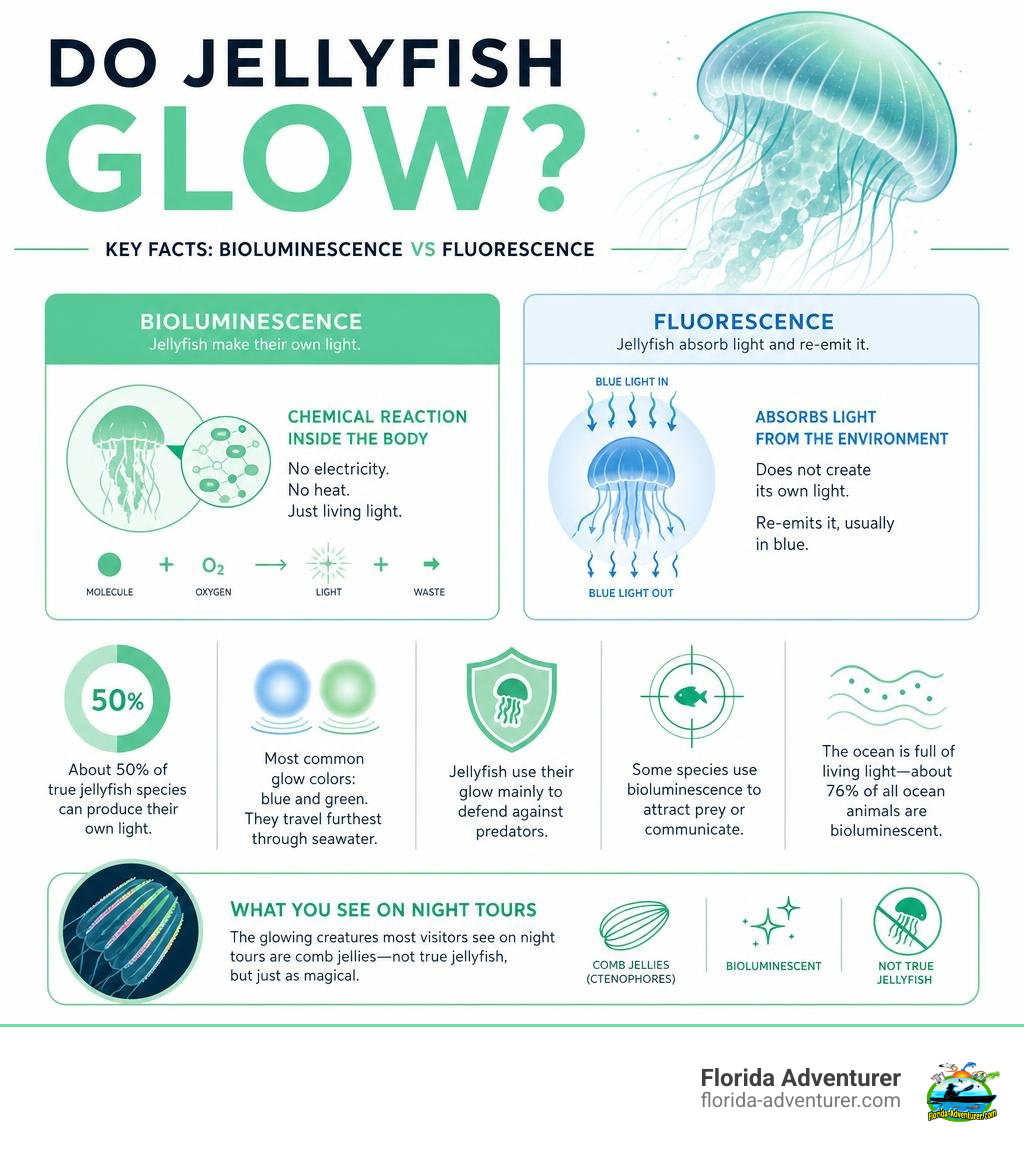
True Jellyfish vs. Comb Jellies: What Is the Difference?
When visitors join us on the water in Brevard County, they often use the terms “jellyfish” and “comb jellies” interchangeably. They look similar at first glance, but they are not the same animal.
True jellyfish belong to the phylum Cnidaria. They are known for bell-shaped bodies and stinging cells called cnidocytes. Some true jellyfish glow, and some do not.
Comb jellies belong to the phylum Ctenophora. They do not have stinging tentacles. Instead, they move with eight rows of tiny hair-like cilia. During the day, those cilia can shimmer with rainbow-like reflections. At night, comb jellies can produce a blue-green glow when disturbed. The Smithsonian Ocean Portal has a clear primer on what makes comb jellies different from jellyfish.
This difference matters on Florida tours because the glowing “jellyfish” guests often see in the Indian River Lagoon and Mosquito Lagoon are usually comb jellies. They are soft, translucent, and harmless to touch when handled gently.
Are Comb Jellies Really Jellyfish?
No. Comb jellies are not true jellyfish, even though many guests call them jellyfish when they first see them in the water.
The confusion makes sense. Comb jellies are clear, soft-bodied, and jelly-like. They drift through the lagoon, glow when disturbed, and look exactly like the kind of animal most people imagine when they hear the phrase “glowing jellyfish.” But scientifically, they belong to a separate group of marine animals.
On winter tours, this is often the moment when guests relax. Once they learn that comb jellies do not have stinging cells, they are usually much more comfortable watching one up close with help from a guide.
For guests, the practical difference is simple: true jellyfish may sting, while comb jellies do not have stinging cells. That is why our guides can safely show visitors comb jellies up close during winter bioluminescence tours, explain what they are, and then release them gently back into the lagoon.
Why People Mistake Comb Jellies for Jellyfish
People mistake comb jellies for jellyfish because the common name sounds similar, the animals look similar in dark water, and most visitors are not thinking about scientific classification during a night paddle.
On the water, guests usually notice three things first: a clear jelly-like body, a soft rounded shape, and a blue-green flash when the animal is gently disturbed. Without a guide explaining the difference, it is natural to call that animal a jellyfish.
That is one reason guided tours are helpful. One of the first things our guides often explain is that the glowing animals most visitors encounter during winter tours are actually comb jellies, not true jellyfish. Once guests understand that difference, the experience becomes less confusing and more memorable.
We also hear plenty of guests say, “I thought jellyfish were dangerous,” which gives our guides a natural chance to explain the difference between avoiding unknown true jellyfish and gently observing harmless comb jellies.
| Feature | True Jellyfish | Comb Jellies |
|---|---|---|
| Scientific group | Cnidaria | Ctenophora |
| Do they sting? | Many species can sting | No stinging tentacles |
| How they move | Pulsing bell | Rows of beating cilia |
| How they catch prey | Stinging cells | Sticky cells called colloblasts |
| Can they glow? | Some species can | Yes, many glow when disturbed |
| Found on Florida tours? | Usually no | Yes, especially on winter comb jelly tours |
| Florida tour experience | Not usually the main glowing animal guests see | Common on winter bioluminescence tours |
| Touch safety | Avoid touching unless guided by an expert | Safe to gently touch on guided tours |
If you want to share some fun trivia with your family before your trip, check out our list of fun facts about comb jellies.
Can You See Glowing Jellyfish in Florida?
Yes — but in Florida, the glowing animals you are most likely to see are comb jellies, not true jellyfish.
This is one of the most common questions guests ask before a night paddle. They have seen videos of glowing water, heard the phrase “glowing jellyfish,” and want to know what will actually happen when they get on the water near Titusville, Merritt Island, Cocoa Beach, or the Indian River Lagoon.
Can You See True Bioluminescent Jellyfish on Florida’s Space Coast?
Occasionally, yes — true bioluminescent jellyfish can appear in Florida waters, including around the broader Space Coast region. But they are uncommon on the guided bioluminescence tours most visitors book, and they are not the experience our guides market or set expectations around.
Although true bioluminescent jellyfish in Florida are occasionally found, the glowing marine animals visitors most commonly encounter on Space Coast winter tours are comb jellies.
That distinction is important. If a guest asks whether true glowing jellyfish are possible, the honest answer is yes, nature is unpredictable and jellyfish sightings can happen. But if they are booking a winter bioluminescence tour with Florida Adventurer, the expected glowing animal is the comb jelly.
Our guides do not promise true bioluminescent jellyfish because they are not reliable enough to build a tour around. Comb jellies, on the other hand, are the seasonal experience guests are most likely to encounter during cooler months in the Indian River Lagoon and Mosquito Lagoon. They are also harmless, easy to observe up close with a guide, and much better suited for a family-friendly night paddle.
So the practical answer is this: true bioluminescent jellyfish are possible but uncommon on Florida Space Coast tours. Comb jellies are the expected winter experience, and they are the glowing “jellyfish” most guests are actually hoping to see once they understand the difference.
Here is the realistic answer from our experience guiding bioluminescence tours on Florida’s Space Coast:
- In winter, comb jellies are the main attraction. They usually appear in larger numbers from about October through April as the water cools.
- They are safe to touch. Comb jellies do not sting, which makes them one of the most family-friendly bioluminescent animals to experience.
- The glow is localized and hands-on. Instead of the whole lagoon lighting up evenly, you may see bright flashes around your paddle, kayak, or a comb jelly gently scooped from the water.
- Conditions still matter. Wind, water clarity, moonlight, tides, temperature, and recent weather can all affect how bright the glow appears.
- Guides adjust for the best experience. Because conditions change from night to night, our guides scout the water and may vary launch locations or routes to find the strongest glow.
Some nights, the best glow is not in the exact spot guests expected when they booked. That is why local guide experience matters: our team is watching the water, weather, and seasonal patterns instead of treating every night like the same trip.
What Guests Usually Expect vs. What They Actually See
Many first-time guests arrive expecting glowing jellyfish floating everywhere, lighting up the lagoon like a scene from a movie. One of the first things our guides explain is that the glowing animals most visitors encounter during winter tours are actually comb jellies, which belong to an entirely different group of marine animals.
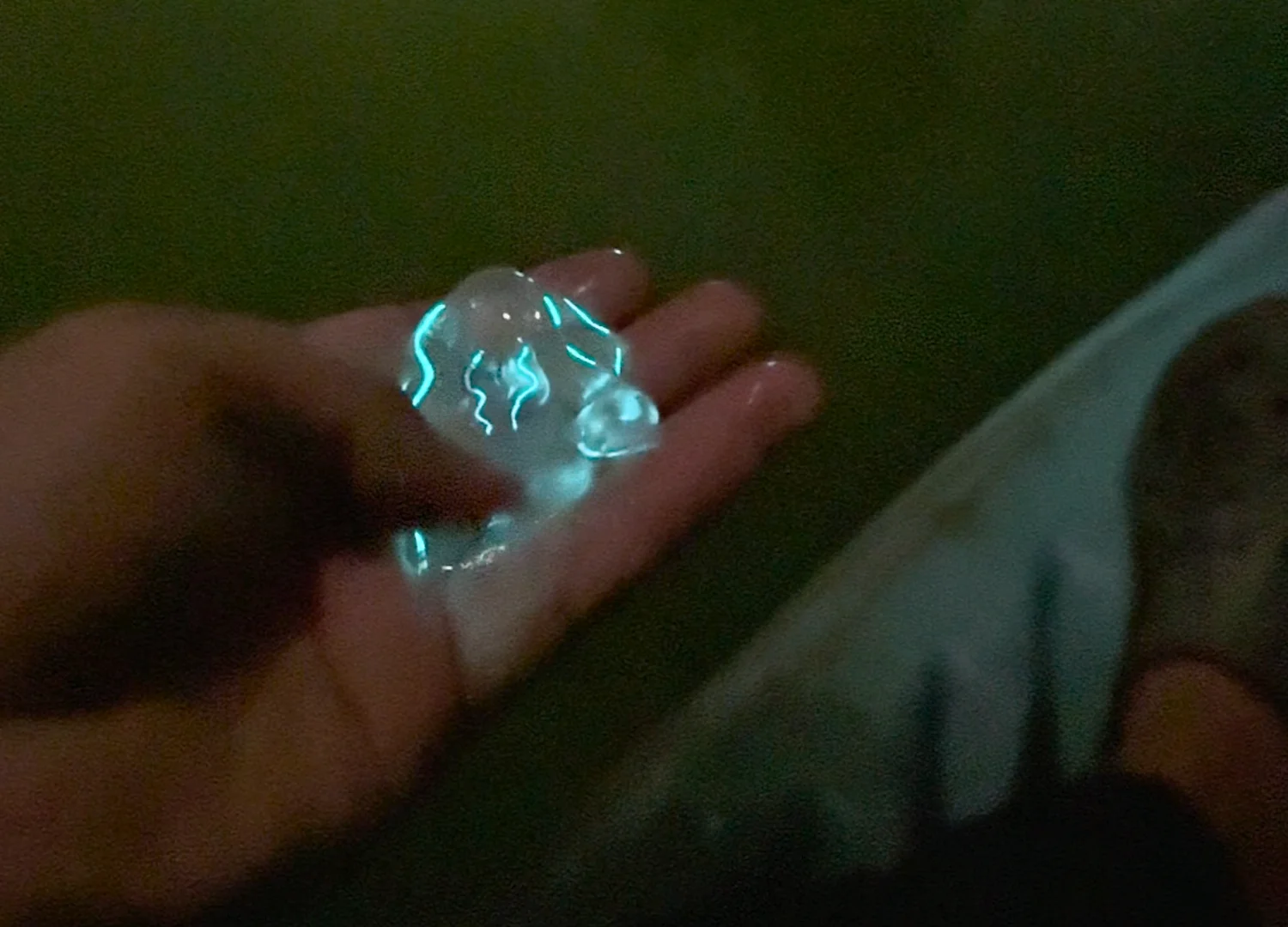
What guests actually see is usually more personal and close-up. A paddle stroke may create a quick sparkle. A guide may point out a comb jelly drifting beside the kayak. When conditions are right, guests can gently scoop one near the surface and watch it flash blue-green before releasing it back into the water.
One of the most rewarding moments for our guides is when a guest sees a comb jelly glow for the first time and realizes the experience is smaller, closer, and more hands-on than the videos made it seem.
That difference matters because it sets the right expectation. Winter comb jelly tours are not usually about seeing thousands of large jellyfish glowing in every direction. They are about slowing down, watching carefully, and experiencing small glowing animals up close with a guide who knows where and how to look.
For many visitors, that ends up being the best part. Once they understand what they are seeing, the moment feels less like a generic glowing-water tour and more like a guided encounter with one of the Indian River Lagoon’s most unusual seasonal animals.
Florida’s Space Coast has two main bioluminescence seasons:
- Summer Season (May to September): This is peak time for bioluminescent dinoflagellates, the tiny organisms that can make the water sparkle around every paddle stroke. Learn more in our guide to fun facts about dinoflagellates.
- Winter Season (October to April): This is the best season for comb jellies. These gentle, walnut-shaped animals can gather in quiet areas of the lagoon and glow when disturbed.
The darker the night, the easier it is to see the glow. New moon weeks are usually best, while bright moonlight can make the bioluminescence look more subtle. Calm nights also help because smoother water makes the light easier to notice.
If your goal is to see glowing comb jellies specifically, winter is the season to target. If your goal is to paddle through sparkling water, summer dinoflagellate season may be the better fit. Both are natural experiences, and every night is slightly different.
Our guides talk through that difference with guests all the time, because choosing the right season is the difference between expecting glowing water everywhere and looking for glowing comb jellies up close.
To explore seasonal options, check out our Comb Jelly Bioluminescence Kayak Tours or read more about what to expect on a comb jellyfish tour with Florida Adventurer.
Frequently Asked Questions About Glowing Jellyfish
Are the glowing things in Florida actually jellyfish?
Usually, no. On Florida Space Coast winter tours, the glowing animals guests often call “jellyfish” are usually comb jellies. They look jelly-like, but they belong to a different group of marine animals and do not sting.
This is one of the first clarifications our guides make on the water, because it helps guests understand what they are seeing before they try to compare it to a true jellyfish.
Are comb jellies safe to touch?
Yes, comb jellies are safe to gently touch on a guided tour. Unlike true jellyfish, they do not have stinging tentacles. Kids and adults often love seeing them sparkle up close before releasing them back into the lagoon.
If you want to prepare your family for the trip, read our 5 fun facts about comb jellies to know before your bioluminescence kayak tour.
Do jellyfish light up when you touch them?
Some bioluminescent jellyfish can light up when disturbed by movement or contact, but you should not touch unknown true jellyfish because many species can sting. On Florida Space Coast winter tours, the glowing animals guests may gently observe up close are usually comb jellies, not true jellyfish.
Do you guarantee bioluminescence sightings on tours?
We cannot guarantee exact levels of bioluminescence on any specific night because it is a natural phenomenon influenced by water temperature, rainfall, wind, tides, moonlight, and seasonal patterns.
What we can do is use local experience. Our guides are on these waterways regularly, and when the glow shifts, we adjust routes and launch sites to give guests the best possible chance of a bright experience.
Can You Touch Glowing Jellyfish?
True jellyfish: No. You should not touch unknown true jellyfish, even if they appear harmless or are glowing, because many species can sting.
Comb jellies: Yes, on a guided tour. Comb jellies do not have stinging tentacles, so guests can often gently observe them up close when conditions are right. Our guides show visitors how to handle them carefully and release them back into the lagoon.
This is the practical difference for Florida visitors: avoid touching true jellyfish, but enjoy safe, gentle close-up encounters with comb jellies when your guide says it is appropriate.
What season is best for glowing jellyfish or comb jellies in Florida?
For comb jellies, the best season is usually October through April. For the brightest glowing water caused by dinoflagellates, the best season is usually May through September. If you are unsure which experience fits your trip, compare our Florida bioluminescence kayaking tours before booking.
When guests ask us which season is “better,” we usually explain that it depends on what they want to see: summer is often about glowing water around the kayak, while winter is more about finding and observing glowing comb jellies.
Conclusion
So, do jellyfish glow? Yes, many true jellyfish do — but not all of them. The glowing animals most Florida visitors encounter on Space Coast tours are usually comb jellies, which are harmless, beautiful, and much easier to experience up close than deep-sea bioluminescent jellyfish.
While true glowing jellyfish are fascinating, most visitors to Florida’s Space Coast are even more amazed to discover they can safely hold a glowing comb jelly in the palm of their hand — an experience that’s surprisingly rare anywhere else in the world.
Ready to see the water light up for yourself? Book your next adventure on our Comb Jelly Adventure Tour or explore all of our seasonal options by visiting Florida Adventurer Bioluminescence Kayaking Tours.
About Josh Myers
Josh Myers is a Florida Space Coast bioluminescence guide and the owner of Florida Adventurer. He has spent years guiding guests through the Indian River Lagoon, Mosquito Lagoon, Merritt Island, Titusville, and Cocoa Beach area, helping visitors understand when to see dinoflagellates, comb jellies, manatees, dolphins, and other seasonal wildlife. His firsthand experience on these waterways helps shape Florida Adventurer’s tour routes, seasonal recommendations, safety practices, and guest education.
About Florida Adventurer
Florida Adventurer is a local Space Coast tour company specializing in guided bioluminescence kayaking, comb jelly tours, wildlife encounters, and eco-adventures in the Indian River Lagoon and surrounding waterways. The company focuses on small-group, guide-led experiences that help guests see Florida’s natural glow at the right season, in the right conditions, with realistic expectations and local expertise.