
What Is Bioluminescent Kayaking? Everything You Need to Know
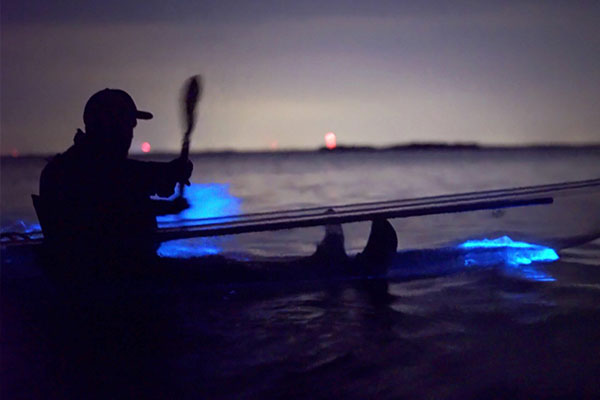
Bioluminescent kayaking is a guided nighttime adventure where every paddle stroke can create glowing blue trails across the water as microscopic marine organisms produce natural light. Florida’s Space Coast is home to one of the world’s most spectacular natural bioluminescence displays, making it one of the best places anywhere to experience this unforgettable adventure.
Quick answers:
- What is it? A guided night kayak tour through water filled with glowing plankton or comb jellies
- Best locations: Florida’s Indian River Lagoon (near Titusville and Cocoa Beach), Mosquito Bay in Puerto Rico, Tomales Bay in California, and Port Gamble Bay in Washington
- When is the best time? June through October for peak glow in Florida; winter months bring a different type of sparkle from comb jellies
- Best conditions? New moon nights with dark skies and calm, warm water
- Do you need experience? No — tours are beginner-friendly and suitable for families
Imagine paddling through still, dark water and watching a dolphin carve a glowing trail beneath your kayak. Picture a manatee drifting past, its outline shimmering in blue-white light. This is not science fiction. It happens on Florida’s Space Coast on warm summer nights — and it’s one of the most memorable experiences you can have outdoors.
Florida’s Indian River Lagoon and surrounding Space Coast waterways are shallow, protected, warm, and rich with the conditions bioluminescent organisms need to thrive close to the surface. That means paddlers do not have to travel offshore or dive deep to see the glow — they can experience it from a stable kayak with local guides who understand the best seasons, moon phases, weather patterns, and launch conditions.
Whether you’re a family looking for something beyond the theme parks, a couple chasing a truly unique night out, or a nature lover eager to see Florida’s ecosystems come alive after dark, this guide covers everything you need to know.
The Science and Best Conditions for Bioluminescence
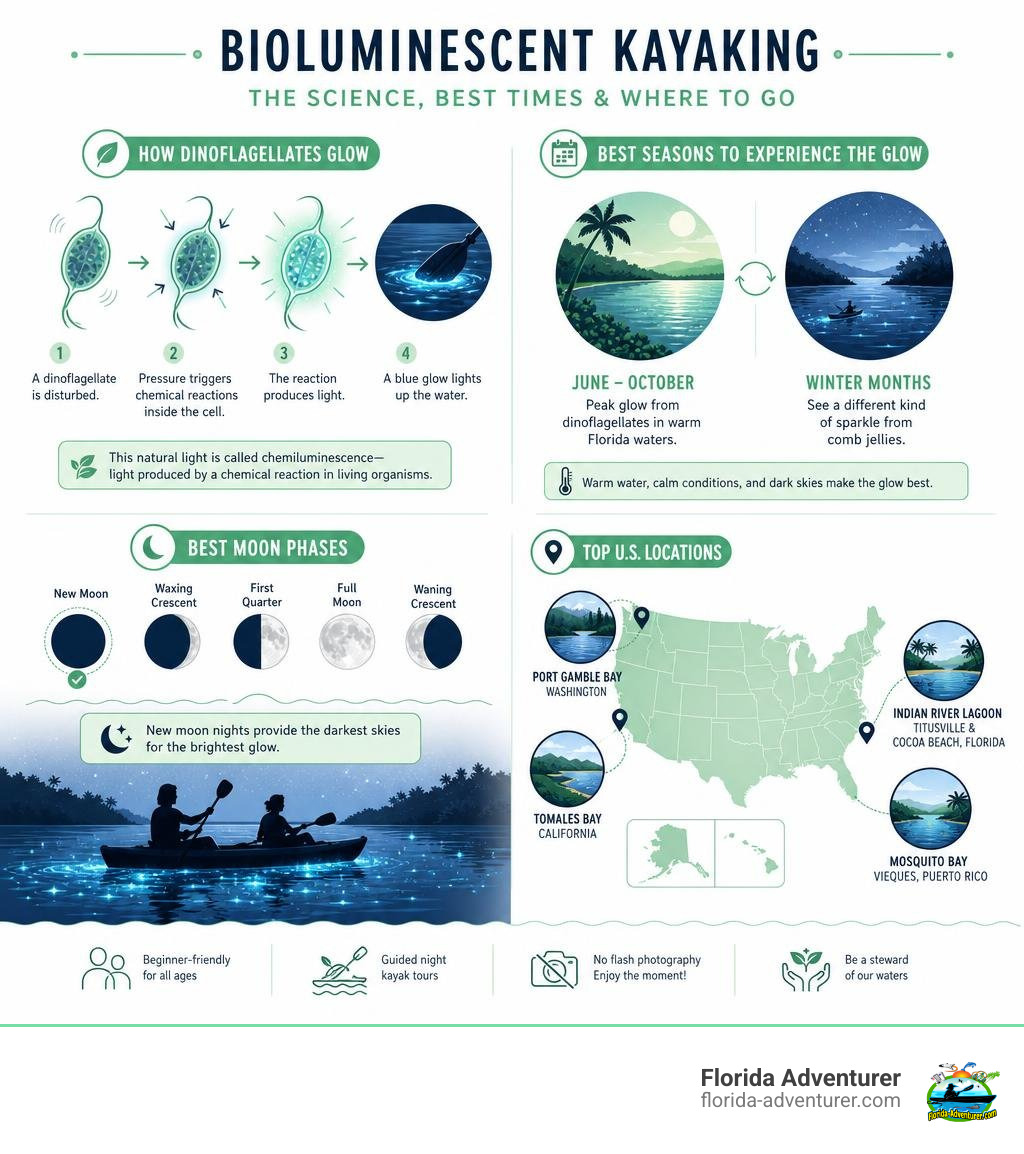
To understand why the water glows, it helps to understand bioluminescence—the natural production of light by living organisms through a chemical reaction. In Florida’s lagoons, this glow comes from microscopic dinoflagellates during summer and comb jellies during the cooler months.
In marine environments, bioluminescence is incredibly common, serving as a vital tool for survival. Creatures use this glowing ability for communication, camouflage, warning signals, and distracting predators in the pitch-black depths. When a predator tries to consume or disturb these microscopic organisms, the flash of light acts as a burglar alarm, startling the predator or exposing it to larger hunters nearby.
The intensity of this light show relies heavily on environmental conditions. The water temperature, salinity, and nutrient levels must align perfectly. Florida’s Space Coast provides one of the world’s most favorable environments for seasonal bioluminescence. Specifically, the Indian River Lagoon boasts a unique combination of warm temperatures, shallow water, protected estuaries, and nutrient-rich ecosystems that allow bioluminescent organisms to thrive in staggering concentrations.
To learn more about the history and science of this local phenomenon, explore the resources provided by the Space Coast tourism board on bioluminescence and read our deep dive into Florida’s bioluminescence history and science.
How Dinoflagellates and Comb Jellies Glow
The glowing water we encounter during our tours is primarily powered by two different organisms depending on the season: dinoflagellates and comb jellies.
- Dinoflagellates: These are single-celled plankton that drift in the water. During the peak summer season, dinoflagellates can reach incredibly high concentrations, creating the brilliant electric-blue glow that makes Florida’s Space Coast famous. When they are physically jostled by a kayak hull, a paddle stroke, or a swimming fish, a chemical reaction inside their cell walls triggers an instant, brilliant electric-blue flash. On exceptionally calm summer nights, it is common to see glowing trails stretching several feet behind each paddle stroke. Collectively, millions of these tiny flashes create a continuous, sweeping glow in the water.
- Comb Jellies: Known scientifically as ctenophores, comb jellies are prehistoric creatures that have drifted in our oceans since the Cambrian era, over 540 million years ago. Unlike true jellyfish, they do not sting. Instead, they use rows of tiny, comb-like plates to propel themselves through the water. When touched or disturbed, they emit a shimmering, rainbow-like bioluminescent glow. Paddling through them in the cooler months feels like gliding through a floating underwater galaxy.
Moon Phases and Seasonal Timing
Timing is everything when planning your night on the water. Because bioluminescence is a natural light show, ambient light is its greatest rival.
The brightest and most dramatic glow is always visible during new moon phases and dark sky weeks. When the moon is absent or hidden below the horizon, the lack of competing light allows the electric-blue trails and sparkling jellies to stand out in sharp, vivid contrast. Cloud cover can also reduce visibility, although calm, overcast nights often still provide excellent bioluminescence if there is little ambient light. While tours still run during full moon phases, the moonlight illuminates the surrounding scenery and wildlife rather than the bioluminescent glow beneath the surface.
Our viewing calendar is divided into two distinct seasons:
- Summer Glow (June – October): This is the peak season for dinoflagellates. The warm summer sun heats the lagoon, causing plankton populations to skyrocket. If you are planning a trip from nearby cities, learn how to see bioluminescence in October near Orlando as the summer warmth lingers in the estuaries.
- Winter Glow (November – March): As the water cools, the plankton subside, and the comb jellies move in. This season offers an incredibly interactive experience where you can scoop up these harmless, glowing jellies to watch them light up in your hand.
To experience the magic of the transition between daylight and total darkness, many paddlers choose a combo trip. You can read more about what to expect on a sunset kayaking with bioluminescence tour.
Top Destinations for Glowing Water Adventures
While there are a handful of famous glowing bays around the world, travelers in the United States do not need to fly overseas to experience this bucket-list phenomenon. For most visitors, Florida’s Space Coast offers the strongest combination of reliable seasonal glow, warm paddling conditions, accessible launch areas, rich wildlife, and experienced local guides.
In the United States, the Indian River Lagoon on Florida’s Space Coast is one of the premier destinations for bioluminescent kayaking. Encompassing the waters near Titusville, Merritt Island, and Cocoa Beach, this estuary is one of the most biodiverse in North America. Its protected, shallow waters keep the glowing organisms concentrated close to the surface, making it exceptionally reliable and bright.
Florida’s advantage is not only the glow itself. The Space Coast gives paddlers a rare mix of dark protected waterways, seasonal dinoflagellate blooms, winter comb jelly viewing, and possible wildlife encounters with dolphins, manatees, mullet, wading birds, and other lagoon species. Local guides can adjust routes based on conditions, recent observations, wind, and water clarity, which often makes the difference between a basic night paddle and a memorable bioluminescent kayaking tour. Wind is often a bigger factor than temperature when it comes to water clarity, so experienced guides watch the forecast closely before choosing the best route for the night. Every tour is slightly different because wind direction, recent weather, moonlight, water clarity, and wildlife activity all influence where our guides launch each evening.
Other notable North American locations include Mosquito Bay in Vieques, Puerto Rico; Tomales Bay in California; and Port Gamble Bay in Washington. Each has its own appeal, but Florida’s Space Coast stands out for visitors who want warm-water kayaking, strong seasonal glow, easy access from Orlando and Cocoa Beach, and guided tours designed around local lagoon conditions.
If you are staying in the Cocoa Beach area or visiting the Space Center, consider our clear kayaking bioluminescence tours near Cocoa Beach or learn more about bioluminescent kayaking near Kennedy Space Center.
Comparing Regional Bioluminescence Tours
To help you understand how our local Florida tours compare to other famous bioluminescent destinations across the country, we have put together a quick comparison:
| Destination | Primary Organisms | Peak Season | Typical Guided Experience | Key Features |
|---|---|---|---|---|
| Florida’s Space Coast — Indian River Lagoon (Titusville & Cocoa Beach, FL) | Dinoflagellates (Summer) & Comb Jellies (Winter) | June – October (Summer) & Nov – March (Winter) | 1.5 to 2 Hours | Clear kayaks available; rich wildlife like manatees and dolphins; year-round glowing options. |
| Port Gamble Bay (Washington) | Dinoflagellates | Mid-May – Mid-September | 1.5 to 2 Hours | Cold-water paddling; stunning views of the Pacific Northwest shoreline; protected bay. |
| Mosquito Bay (Vieques, Puerto Rico) | Dinoflagellates | Year-Round | 1.5 to 2 Hours | Extremely bright; surrounded by dense mangrove forests; requires ferry or flight to Vieques. |
Nocturnal Wildlife Encounters in the Lagoon
Paddling in the dark is an adventure in itself, but the real magic happens when the lagoon’s diverse wildlife interacts with the bioluminescence.
As you glide through the water, schools of mullet fish often dart away from your kayak, leaving behind trails of bright blue light that look like bottle rockets shooting through the water. Occasionally, a curious mullet might even jump right into your kayak!
Larger marine mammals create even more spectacular displays. A manatee swimming slowly through the plankton appears haloed in a soft, shimmering outline, looking like a gentle underwater giant. Dolphins hunting in the dark leave long, glowing, comet-like trails behind them as they slice through the water. Visitors who want to learn more about seeing these animals in daylight can also explore our guided clear kayak sunset with bioluminescence tour, which gives paddlers a chance to enjoy wildlife activity before the water begins to glow.

To maximize your chances of seeing these animals before the sun goes down, consider booking a sunset kayaking with bioluminescence experience. This allows you to watch the sunset, spot active dolphins and manatees in the twilight, and then watch the water begin to glow as complete darkness falls. If you are traveling from the theme park capital, find out why we offer one of the best bioluminescence tours near Orlando, Florida.
Conservation and Protecting the Estuaries
Because these delicate ecosystems rely on a precise balance of nutrients and clean water, conservation is incredibly important to us.
Runoff, chemical pollution, and artificial light pollution can disrupt the life cycles of both dinoflagellates and comb jellies. When visiting these pristine waters, we practice strict Leave No Trace principles.
To protect the estuary, we ask all paddlers to avoid wearing harsh chemical insect repellents or sunscreen that can wash off into the water (opt for natural, eco-friendly alternatives instead). We also keep artificial lights to an absolute minimum during our tours. Not only does this preserve your night vision and enhance the visibility of the glow, but it also prevents disruption to the nocturnal behaviors of local wildlife.
Never intentionally disturb wildlife simply to create larger glowing trails. The best bioluminescent kayaking experiences come from observing the lagoon responsibly, allowing fish, dolphins, manatees, comb jellies, and other wildlife to move naturally through the water.
Where Can You Go Bioluminescent Kayaking in Florida?
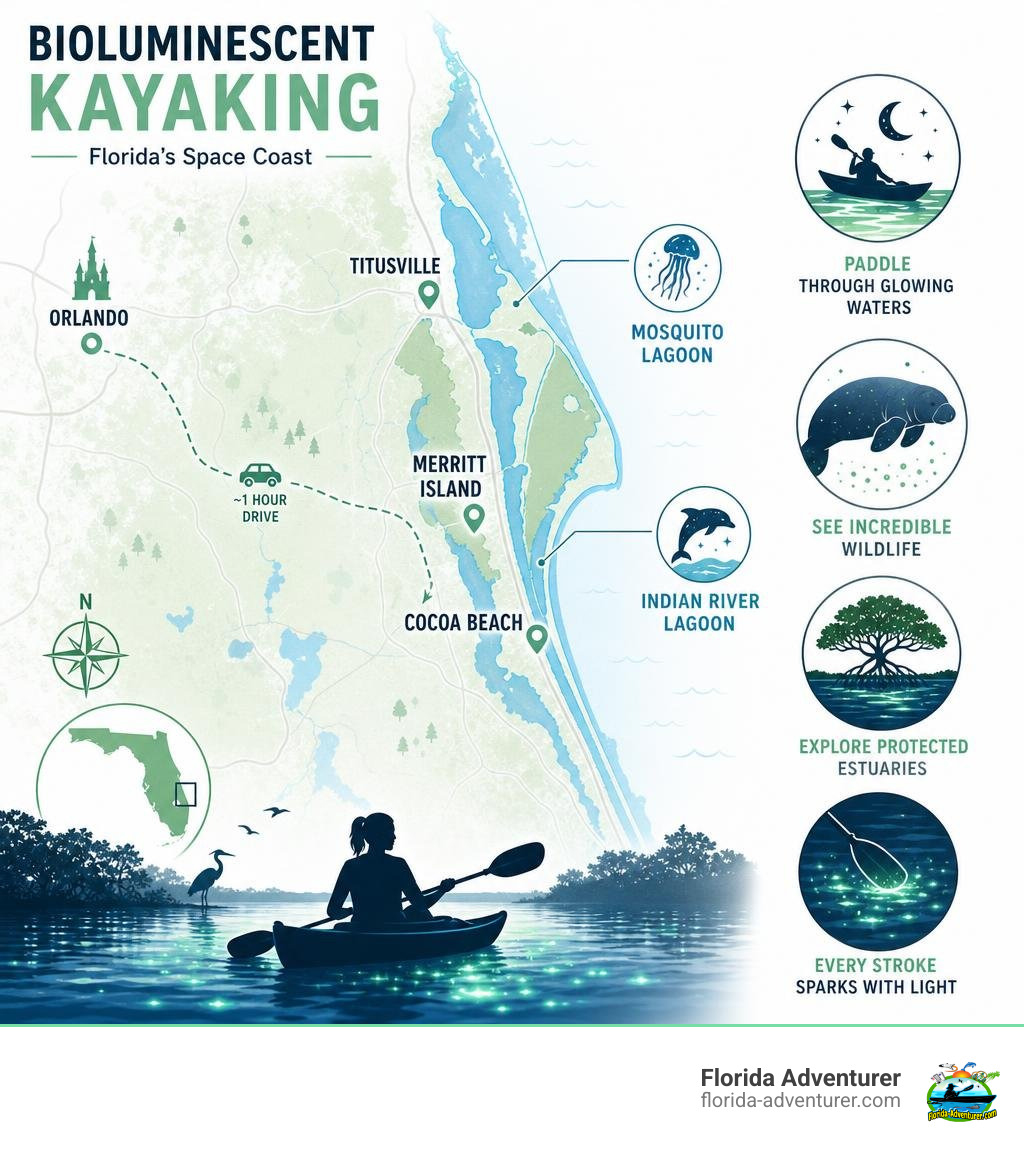
The best places for bioluminescent kayaking in Florida are concentrated along the Space Coast, especially around Titusville, Merritt Island, Cocoa Beach, the Indian River Lagoon, and Mosquito Lagoon. These protected estuaries are shallow, warm, and sheltered from ocean surf, which helps keep glowing organisms close to the surface where kayakers can actually see them.
Titusville is one of the most popular launch areas for summer bioluminescence because it provides convenient access to dark, protected sections of the Indian River Lagoon near Merritt Island National Wildlife Refuge. It is also an easy drive from Orlando, making it a strong choice for visitors searching for where to see bioluminescence without adding a long overnight trip.
Merritt Island offers access to some of the Space Coast’s richest wildlife habitat. Depending on the season and conditions, paddlers may see mullet, wading birds, manatees, dolphins, comb jellies, or glowing plankton. Our guides pay close attention to wind direction, recent water clarity, moon phase, and wildlife activity because those details can change the best launch choice from night to night.
Cocoa Beach is a convenient base for travelers staying near the beach, Port Canaveral, or Kennedy Space Center. While many tours depart from nearby lagoon access points rather than directly from the oceanfront, Cocoa Beach visitors are close to some of Florida’s best bioluminescence kayaking routes.
Mosquito Lagoon and the broader Indian River Lagoon system are the real stars. Together, these waterways create the conditions that make Florida bioluminescence so memorable: dark skies, calm water, seasonal blooms, and the chance to watch every paddle stroke spark with living light.
Essential Gear and Safety for Bioluminescent Kayaking
Preparing for a night paddle is slightly different than gearing up for a daytime excursion. Safety and comfort in the dark require a few specific items.
First and foremost, every participant is outfitted with a Coast Guard-approved Personal Flotation Device (PFD) and a safety whistle. Our kayaks are also equipped with specialized navigation lights to ensure we remain visible to one another on the water.
Here is a quick checklist of what you should wear and bring:
- Clothing: Wear lightweight, quick-dry athletic clothing or swimwear. Avoid heavy cotton fabrics that stay wet and cold.
- Footwear: Bring water shoes, sandals with straps, or old sneakers that you don’t mind getting wet. Avoid flip-flops, as they can easily slip off in the water or mud.
- Insect Protection: Mosquitoes and no-see-ums can be active near the shoreline, especially on warm summer nights. We recommend wearing lightweight long pants and long-sleeved shirts, and using natural insect repellents.
- Dry Bags: Keep your car keys, phone, and valuables safe in a sealed dry bag.
- Towel & Change of Clothes: Keep a dry towel and a change of clothes in your car for after the tour.
If you are hoping to capture memories of your trip, keep in mind that photographing this low-light phenomenon can be tricky. Read our bioluminescence kayaking photography tips for practical advice on camera settings and techniques.
Why Choose Guided Bioluminescent Kayaking?
Paddling in the dark can be disorienting, even for experienced kayakers. Booking a guided tour is the smartest and safest way to experience the glowing waters.
Our professional guides are intimately familiar with the local waterways, winding channels, and weather patterns of the Indian River Lagoon and Mosquito Lagoon. Our guides monitor water clarity, moon phases, wind direction, and recent wildlife activity before every tour to help choose launch locations that provide the best possible experience. We handle all the navigation, provide comprehensive safety briefings before launching, and ensure our group stays together in a controlled, relaxed manner.
Furthermore, our guides are passionate local naturalists. They will point out constellations, identify nocturnal wildlife calls, and explain the fascinating science behind the organisms glowing beneath your kayak. To read more about how our team structures these magical nights, see our guide to bioluminescence tours in Florida.
Is Bioluminescent Kayaking Suitable for Beginners and Families?
Absolutely! You do not need any prior kayaking experience to join us on the water.
Our tours are designed to be beginner-friendly and highly accessible. We use stable, tandem (double) kayaks that are incredibly difficult to tip over, making them perfect for couples, friends, or parents paddling with children. Before we launch, our guides provide step-by-step paddling instructions so everyone feels confident and comfortable.
The waters we explore in the Merritt Island National Wildlife Refuge and the surrounding lagoons are calm, shallow, and protected from rough ocean currents. This makes it an incredibly peaceful, low-stress environment for paddlers of all ages and fitness levels. To learn more about bringing your family along, read our guide to paddling through bioluminescence.
Frequently Asked Questions About Bioluminescence
We want you to feel completely prepared for your night under the stars. Here are some of the most common questions we receive from adventurers planning their trips.
Can you see bioluminescence on a full moon night?
Yes, you can still see the bioluminescence on a full moon night, but the visual experience is different. Because the moon casts a bright glow over the water, the contrast is reduced, making the bioluminescence appear more subtle. However, full moon tours offer their own unique advantages. You will have excellent visibility of the surrounding landscape, mangroves, and active wildlife, and you can enjoy spectacular stargazing and moonlit views of the lagoon.
What happens if it rains during a tour?
A light summer rain rarely cancels our tours. In fact, raindrops hitting the water can trigger millions of tiny, beautiful bioluminescent sparkles across the surface! However, your safety is our absolute priority. If our guides detect lightning, high winds, or severe storms in the area, we will postpone or cancel the tour and work with you to reschedule or issue a raincheck.
Is bioluminescent kayaking safe?
Yes, bioluminescent kayaking is safe for most beginners and families when you go with an experienced guide and follow basic paddling instructions. Tours take place in calm, protected lagoon waters rather than rough ocean surf, and guests are provided with personal flotation devices, safety briefings, and guide support throughout the experience. Because conditions can change after dark, guided tours are strongly recommended over trying to paddle unfamiliar waterways on your own.
Can you capture the glow on an iPhone?
Standard smartphone cameras typically struggle to capture bioluminescence because the flashes of light are brief and require specialized low-light or long-exposure settings. While newer phone models with advanced “Night Mode” can sometimes capture faint blue smudges, we recommend putting your phone away in a dry bag and simply immersing yourself in the moment. The best camera is always your own eyes!
Can you see dolphins during bioluminescent kayaking?
Yes, dolphins can sometimes be seen during bioluminescent kayaking on Florida’s Space Coast, especially in the Indian River Lagoon and nearby protected waterways. Sightings are never guaranteed because wildlife is wild, but dolphins are active in the same estuary systems where bioluminescence tours take place. When conditions line up, a dolphin moving through the water can leave a glowing trail behind it, which is one of the most memorable sights guests may experience. Sunset and twilight tours can also improve your chances of seeing dolphins before full darkness.
Do bioluminescence tours guarantee wildlife sightings?
No tour can guarantee dolphins, manatees, or other wildlife because these animals move naturally through the lagoon. Experienced local guides can improve your chances by watching seasonal patterns, recent sightings, water clarity, wind direction, and launch conditions, but the best approach is to enjoy the full nighttime ecosystem rather than expecting one specific animal encounter.
Is bioluminescent kayaking worth it?
Yes, bioluminescent kayaking is worth it for most visitors because it offers a rare combination of natural wonder, nighttime adventure, and local wildlife viewing. On a good dark-sky night, every paddle stroke, fish movement, or raindrop can create flashes of living light around your kayak. Choosing the right season, moon phase, launch area, and experienced local guide often makes the difference between simply paddling after dark and experiencing the unforgettable glow Florida’s Space Coast is known for.
What is the best season for bioluminescent kayaking in Florida?
Summer, especially June through October, is typically the strongest season for dinoflagellate bioluminescence in Florida. Cooler months can still offer a memorable glow through comb jellies, which are harmless, non-stinging organisms that light up when gently disturbed in the water.
Are all bioluminescence tours the same?
No. Bioluminescence tours can vary widely based on the launch location, season, moon phase, kayak style, guide experience, group size, and recent lagoon conditions. A strong tour operator does more than simply paddle after dark — local guides monitor water clarity, wind direction, wildlife activity, seasonal glow patterns, and safe launch options to give guests the best possible experience. Choosing an experienced Space Coast guide often makes the difference between a basic night kayak trip and a memorable bioluminescent kayaking tour.
Conclusion
Bioluminescent kayaking is more than just an outdoor activity—it is a magical, bucket-list experience that connects you directly with one of nature’s most spectacular hidden wonders. Today, the pristine waters of Florida’s Space Coast continue to offer some of the brightest and most reliable glowing water adventures on the planet.
Whether you want to paddle through the electric-blue waters of a summer dinoflagellate bloom or hold a shimmering, harmless comb jelly in the palm of your hand during the winter, we are ready to guide you on an unforgettable journey.
Whether you’re visiting from Orlando, exploring Cocoa Beach, or planning a Florida vacation, bioluminescent kayaking offers an experience unlike anything else on the water. When conditions are right, every paddle stroke becomes part of a living light show that you’ll remember long after your trip ends.
Ready to experience one of Florida’s most unforgettable natural wonders? Join Florida Adventurer for a guided bioluminescent kayaking tour on the Space Coast and see why travelers from around the world come here to paddle through glowing water.