
What Are Bioluminescent Comb Jellies? Florida’s Living Lanterns Explained
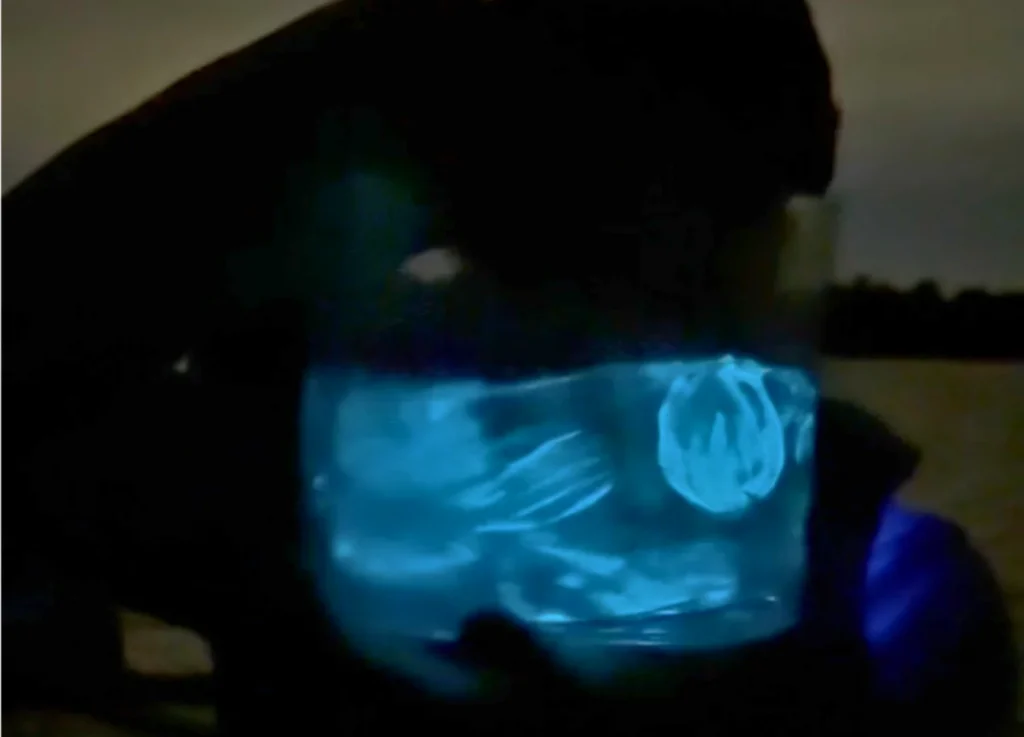
Bioluminescent comb jellies are small, soft-bodied sea creatures that flash blue-green light when disturbed in the water — and Florida’s Space Coast is one of the best places on Earth to see them up close.
Here’s a quick overview before we dive in:
- What they are: Comb jellies (ctenophores) are ancient marine animals, completely separate from jellyfish, that produce their own light through specialized bioluminescent photoproteins
- Where to see them in Florida: The Indian River Lagoon, Mosquito Lagoon, and Haulover Canal — all within easy reach of Orlando and Cocoa Beach
- When to go: Peak season runs roughly October through May, with winter months offering the most reliable displays
- Are they safe? Yes — comb jellies have no stingers and are harmless to touch
- How to experience them: A guided nighttime kayak tour is the most reliable way to see them glow
Most visitors first notice comb jellies as clear, golf-ball-sized blobs washing up on the beach or floating near the surface of a calm lagoon. Unremarkable in daylight. But paddle through a dark Florida waterway in winter and everything changes — a sweep of your kayak paddle or a passing fish sends pulses of cold blue-green light rippling through the water around you.
One of the things guests remember most is watching a comb jelly pulse with blue-green light while resting gently in their hands before being released back into the lagoon. Guides see that moment all season: the conversation gets quiet, everyone leans closer, and the tiny animal lights up like a living lantern in the dark.
Although many people call them bioluminescent comb jellyfish, they are technically ctenophores, not true jellyfish. Many visitors also search for “comb jellyfish Florida” before a trip, which is why understanding the difference helps you know what you are seeing on the water.
These animals have been doing exactly that for over 500 million years. They predate the dinosaurs by a wide margin, and scientists are still discovering surprising things about how they work.
This guide covers everything — from the science behind the glow to the best local spots and tours — so you can plan the most memorable night on Florida’s water.
What Are Ctenophores? Understanding the Gentle Glow
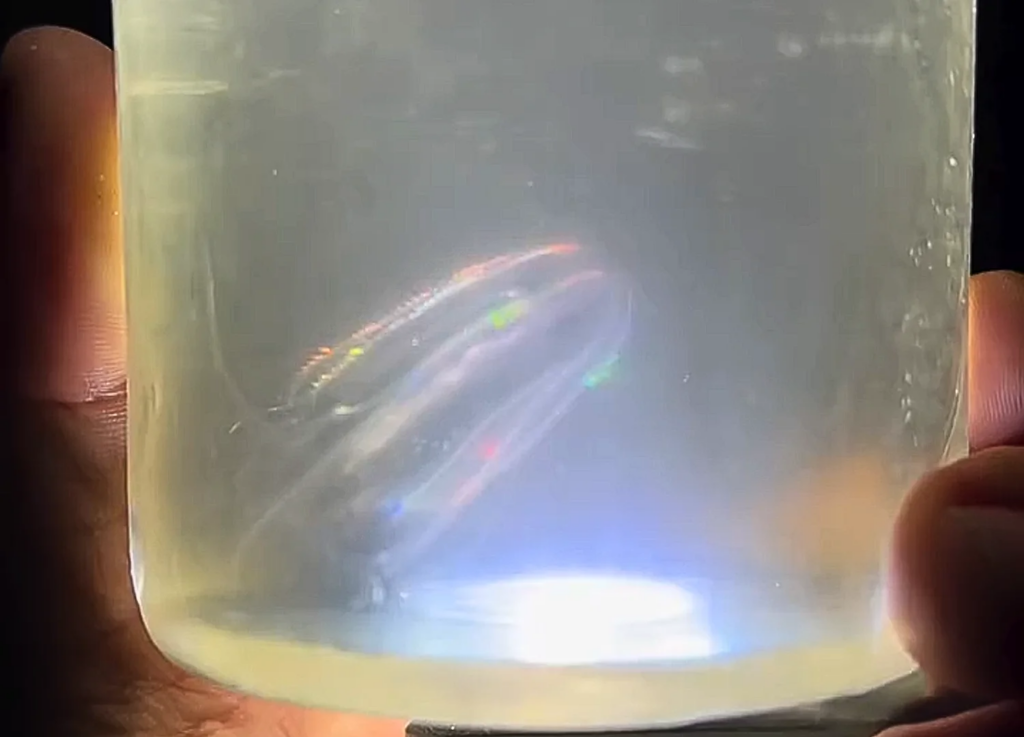
When you look at a comb jelly during the day, you might not expect much. They are gelatinous, transparent, and made up of about 95% water. However, if you catch them in the sunlight, you will see a brilliant, shimmering rainbow of colors pulsing along their sides. This daylight rainbow is not actually bioluminescence; it is a physical phenomenon caused by diffraction.
Comb jellies belong to the phylum Ctenophora (pronounced “teen-o-four-a”), which is entirely distinct from true jellyfish. The Smithsonian Ocean Portal’s guide to jellyfish and comb jellies explains that these gelatinous animals may look similar at first glance, but they come from separate evolutionary groups. Comb jellies get their name from the eight rows of hair-like cilia that run down their bodies. These cilia look just like the teeth of a comb. They beat in coordinated waves to propel the animal through the water. In fact, ctenophores like the warty comb jelly (Mnemiopsis leidyi) are the largest animals on Earth to use cilia for locomotion.
As these microscopic paddles beat, they split the ambient sunlight into a moving rainbow trail. But when the sun goes down, the real magic happens. If you want to know what to expect before heading out on the water, our guide to fun facts about comb jellies for bioluminescence kayak tours will give you a helpful head start.
At night, any physical disturbance—like the swirl of our kayak paddles, a splash of water, or a passing mullet—triggers a chemical reaction inside the jelly. This reaction produces a sudden, bright blue-green flash. On calm nights, guides often ask guests to pause their paddles for a moment and watch the dark water settle; the next gentle stroke can send a clean ribbon of light trailing beside the kayak.
How Bioluminescent Comb Jellies Differ from True Jellyfish
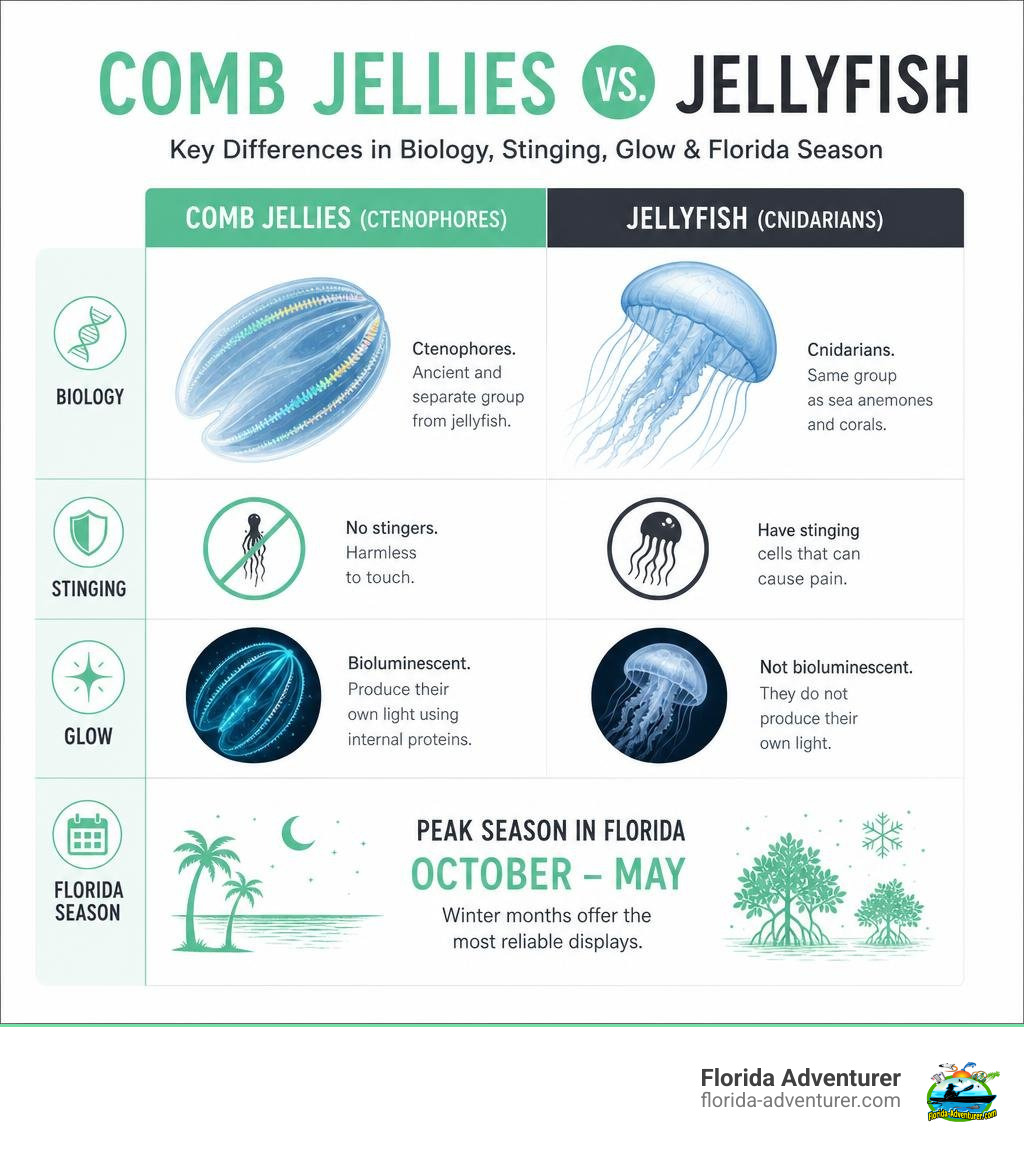
It is incredibly common for visitors to call these creatures “comb jellyfish,” but they are not jellyfish at all. True jellyfish belong to the phylum Cnidaria, while comb jellies belong to Ctenophora. This evolutionary split happened over half a billion years ago.
The most important difference for paddlers is how they capture food. True jellyfish use specialized stinging cells called nematocysts to inject venom into their prey (and occasionally into unsuspecting swimmers). Comb jellies do not have stinging cells. Instead, they use adhesive cells called colloblasts. These cells produce a sticky, mucus-like substance that traps tiny zooplankton without any sting.
| Feature | Comb Jellies (Ctenophores) | True Jellyfish (Cnidarians) |
|---|---|---|
| Phylum | Ctenophora | Cnidaria |
| Locomotion | Eight rows of beating cilia | Muscle contractions (bell pulsing) |
| Prey Capture | Sticky colloblasts (non-stinging) | Stinging nematocysts (venomous) |
| Light Production | Internal photoproteins (bioluminescence) | Fluorescent proteins / varied |
| Waste Disposal | Pores at the rear end | Single opening (same as mouth) |
| Florida Peak Season | October to May (Cooler months) | Summer months |
To learn more about how these fascinating creatures fit into the global marine tree of life, you can read the Aquarium of the Pacific’s comb jelly species profile.
Are Comb Jellies Safe to Touch?
Because comb jellies lack stinging cells, they are completely safe to touch. They are harmless, non-toxic, and incredibly gentle. When we guide our tours through the shallow waters of the Space Coast, we love showing guests how to gently scoop a comb jelly out of the water in their hands.
Holding one feels like holding a delicate, vibrating ball of firm gelatin. As it moves in your wet palm, you can feel the tiny vibrations of its beating cilia. In the dark, the jelly will pulse with a brilliant blue-green light right in the cup of your hand. Because they are so delicate, we always teach our guests to handle them with wet hands and return them gently to the water. For more interesting details on their gentle nature, check out our guide to fun facts about comb jellies.
The Science of the Glow: Photoproteins and Light Production
The brilliant flash of a comb jelly is a marvel of evolutionary chemistry. Unlike many marine organisms that must eat specific foods to obtain the chemicals needed for bioluminescence, comb jellies are self-sufficient.
They produce light using a chemical system consisting of a light-emitting molecule called luciferin and a catalytic protein called luciferase. In comb jellies, these chemicals are bound together with oxygen in a specialized “photoprotein.” When calcium ions are introduced into the cell—which happens when the animal is physically disturbed or shaken—it triggers the photoprotein to release a bright, instantaneous flash of light.
For a long time, scientists debated whether these animals synthesized their own glowing compounds or stole them from their diet. Landmark research has settled the score. A MBARI research summary on how comb jellies make their own glowing compounds explains how scientists confirmed that comb jellies can synthesize coelenterazine, the chemical substrate for their glow, internally using basic amino acids, making them one of the very few marine animals confirmed to do so. For another authoritative research perspective, the NIH Intramural Research Program explains why comb jellies are valuable for studying how light production and light sensing may have evolved together.
The Evolutionary Significance of Bioluminescent Comb Jellies
Because ctenophores are among the earliest multicellular animals to evolve, studying their genetics offers a window into the deep history of life on Earth. Mnemiopsis leidyi was the first bioluminescent animal to have its entire genome sequenced, revealing incredible secrets about the origin of animal senses.
Researchers identified 10 different photoprotein genes in comb jellies, clustered into two distinct groups in their genome. What surprised scientists most was where these genes were located. The light-emitting photoproteins are co-localized in the very same cells as opsins—the primitive light-detecting proteins that serve as the foundation for vision in all animals.
This means that the cells comb jellies use to make light are the same cells they use to detect it. This co-localization might act as an ancient feedback mechanism, helping the animal regulate its own bioluminescence or coordinate reproductive and defensive behaviors. You can explore this fascinating evolutionary link further in the National Human Genome Research Institute article on how bioluminescent comb jellies shed light on the evolution of vision.
Medical and Scientific Breakthroughs from Ctenophore Research
The unique genes and proteins discovered in comb jellies are doing far more than helping us understand ancient oceans; they are actively driving modern medical breakthroughs.
- Cellular Imaging: By isolating the genes responsible for producing ctenophore photoproteins, biomedical researchers can insert these genetic markers into other organisms. This allows scientists to make specific cells glow under a microscope.
- Tumor Tracing: These glowing proteins are used to tag and track tumor-forming cells in real-time, helping oncology researchers observe how cancer spreads and how it responds to experimental treatments.
- Neurological Studies: Because the light flash is triggered by calcium, these proteins serve as highly sensitive sensors for calcium signaling in brain cells, offering new insights into how neurons communicate.
Best Time to See Bioluminescent Comb Jellies in Florida
The best time to see bioluminescent comb jellies in Florida is typically October through May, with the most reliable displays often happening during the cooler winter months. As water temperatures drop, comb jellies become easier to find in the Indian River Lagoon, Mosquito Lagoon, and other sheltered Space Coast waterways. Visitors looking for comb jelly Florida experiences should plan trips between October and May, especially if they want the best chance of seeing individual jellies flash up close.
For the brightest experience, timing matters beyond the month on the calendar. Darker moon phases usually make the glow easier to see, especially around the new moon or on nights when the moon rises late. Peak visibility typically occurs on calm, moonless nights with good water clarity. Calm nights are also ideal because still water lets you notice each blue-green pulse from a paddle stroke, passing fish, or gently handled comb jelly.
Local weather patterns, including passing cold fronts, can influence where comb jellies are found from week to week. That is why guided tours are valuable in winter: local guides watch the weather, wind direction, launch conditions, and recent sightings to choose the safest and most active paddling areas. On the best winter nights, guests may see comb jellies lighting up beneath the clear kayak, flashing around their fingers, and sparkling in the wake of small fish.
Where and When to See Bioluminescent Comb Jellies in Florida
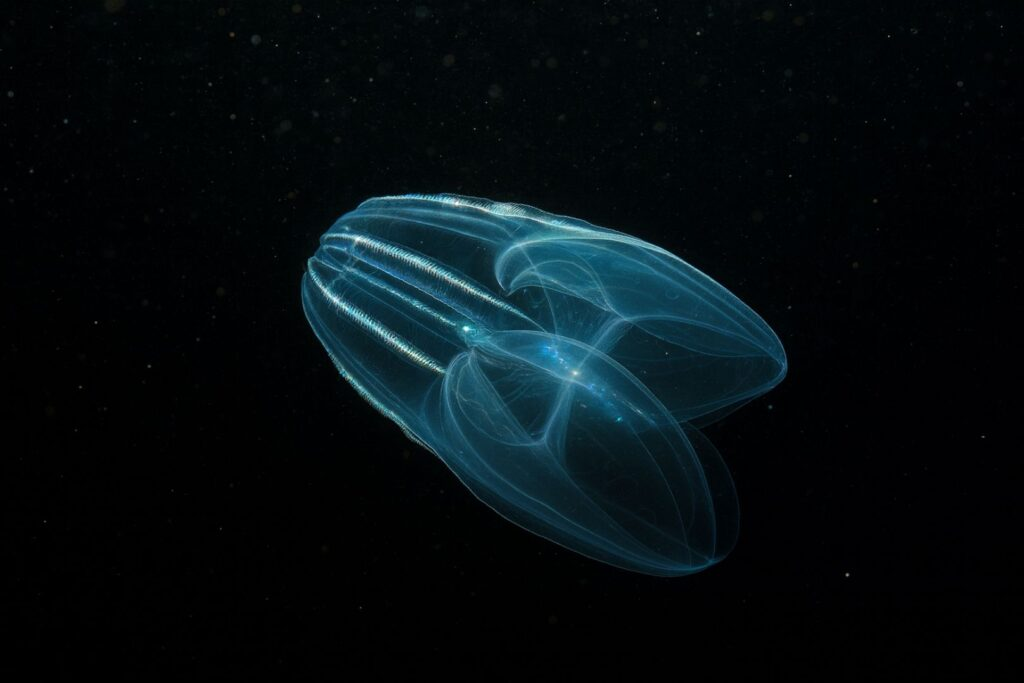
If you want to witness this prehistoric light show yourself, you need to know where and when to look. The shallow, brackish waters of Florida’s Space Coast offer the perfect habitat. Specifically, the Indian River Lagoon and Mosquito Lagoon systems boast the ideal salinity, temperature, and nutrient profile to support massive seasonal populations of comb jellies. If you’re searching for comb jelly Florida tours, the Space Coast offers the most reliable winter viewing anywhere in the state.
While you can spot occasional comb jellies year-round, their true peak season runs from October through May. As the summer heat fades and the water temperatures drop, the massive summer blooms of glowing single-celled dinoflagellates begin to dissipate. This cooler water belongs to the comb jellies, which multiply by the millions during the winter months. For a deeper dive into the best viewing areas, read our guide to the best places to see comb jelly displays from the Banana River to Titusville.
If you’re hoping to see comb jellyfish in Florida this winter, the Space Coast offers some of the best viewing opportunities anywhere in North America because the lagoons are shallow, sheltered, and easy to explore by kayak after dark.
Top Launch Sites and Viewing Locations on the Space Coast
As local eco-tour guides, we spend our nights scouting the absolute best places to launch. The waterways of Brevard County offer a few world-class locations where geography and currents concentrate these glowing creatures:
- Haulover Canal (Titusville): Located within the Merritt Island National Wildlife Refuge, this is legendary ground for bioluminescence. The canal connects the Indian River Lagoon and the Mosquito Lagoon, creating a natural funnel where tides wash massive numbers of comb jellies through the passage. The surrounding waters are sheltered from heavy winds, providing the calm, dark conditions needed for a perfect viewing experience. Learn more about this premier spot in our article on comb jelly bioluminescence at Haulover Canal.
- Cocoa Beach & the Banana River: The shallow, mangrove-lined flats near Cocoa Beach offer an incredible winter display. Because these waters are protected from open-ocean swells, the water is often glass-calm, allowing you to see the neon-blue trails of comb jellies several feet below your kayak. Discover the seasonal magic of this area in our guide to Cocoa Beach’s winter comb jelly glow.
- Merritt Island & Kelly Park East: Located just a short drive from Cocoa Beach and Cape Canaveral, this area features easy launching conditions and shallow grass flats where comb jellies gather to feed on zooplankton.
Choosing the Best Tour for Your Adventure
We offer a variety of guided experiences designed to help you get the most out of your night on the water. Depending on your group’s size, age, and comfort level, you can choose the perfect vessel for your journey:
- Our bioluminescent comb jelly tours run throughout the winter season: If you want absolute immersion, our 100% clear tandem kayaks are the way to go. Because the entire hull is transparent, you can look straight down between your feet and watch the comb jellies light up as the kayak glides directly over them. It truly feels like floating through outer space. You can secure your spot on our Comb Jelly Bioluminescence Kayak Tours page.
- Family Rafting & Classic Kayak Tours: For families with young children (ages 3 and up) or those who prefer a highly stable, relaxed ride, our multi-passenger rafting tours and classic tandem kayaks are perfect. Our professional guides handle the navigation, sharing local history and pointing out wildlife while you focus on scooping up the glowing jellies. Learn more about our Comb Jelly Adventure Tour page.
Ecological Roles, Life Cycle, and Environmental Adaptations
Comb jellies play a massive role in the marine food web. As voracious carnivores, they feed constantly on copepods, fish larvae, and other small zooplankton. Because they do not have a brain or complex sensory organs, they rely on their apical sensory organ (located at the opposite end of their mouth) to sense gravity and coordinate their movement.
Ctenophores are simultaneous hermaphrodites, meaning a single individual possesses both male and female reproductive organs and can self-fertilize. When conditions are right, they spawn rapidly. In coastal lagoons, a single comb jelly can release thousands of eggs daily. Under optimal conditions, their larvae can develop in as little as 20 hours, leading to sudden, explosive population blooms.
While our local species thrive in shallow coastal waters, other ctenophores have adapted to the extreme depths of the deep sea. A famous example is the bloody-belly comb jelly (Lampocteis cruentiventer), which lives in the dark mesopelagic zone of the Pacific. You can view stunning images and videos on MBARI’s bloody-belly comb jelly species page.
Voracious Appetites and Invasive Impacts
While comb jellies are a natural and vital part of our Florida ecosystem, they can cause massive ecological damage when introduced to environments where they have no natural predators.
A single Mnemiopsis leidyi can consume up to 10 times its own body weight in food per day, expanding its stomach to swallow prey up to half its own size. In the 1980s, this species was accidentally introduced to the Black Sea via the ballast water of cargo ships. With no local predators to keep them in check, the comb jellies multiplied exponentially, consuming the zooplankton that local fish relied on. This led to a near-total collapse of regional fisheries, causing an estimated $300 million in economic losses.
Today, the Global Invasive Species Program lists the warty comb jelly among the 100 of the World’s Worst Invasive Alien Species. To read more about how deep-sea ctenophores use unique adaptations like red bellies to hide their glowing meals from predators, explore this Discover Wildlife article on bloody-belly comb jellies.
Thriving in Extreme and Changing Environments
Part of what makes the comb jelly such a successful survivor is its extreme resilience. They possess a wide tolerance for changes in water temperature and salinity, allowing them to thrive in brackish estuaries where other marine life struggles.
When food is scarce, comb jellies have a fascinating survival strategy: they can survive for up to three weeks with minimal food by actively shrinking their body size and lowering their metabolism. Once food becomes plentiful again, they quickly regrow and resume spawning.
Furthermore, human activities like agricultural runoff and fertilizer use often lead to algae blooms that deplete oxygen levels in the water. While low-oxygen “dead zones” drive away fish and crabs, comb jellies are highly tolerant of low-oxygen environments. In polluted or disturbed waters, they often face very little competition, allowing their populations to explode.
Are Comb Jellies Worth Seeing?
Yes — comb jellies are absolutely worth seeing, especially if you want a Florida bioluminescence experience that feels hands-on, family-friendly, and completely different from a daytime nature tour. Because comb jellies do not sting, guests can often gently hold them in wet hands and watch them flash blue-green light up close before returning them safely to the water.
They are also one of the easiest bioluminescent organisms for families to appreciate. Instead of trying to imagine a microscopic glow in the water, kids and adults can see individual glowing animals drift beside the kayak, light up under the paddle, and pulse in the guide’s hands during the tour.
Comb jelly tours are different from summer dinoflagellate tours, too. Summer bioluminescence often looks like sparkling stars or glowing clouds in the water, while winter comb jelly bioluminescence comes from visible, gelatinous creatures that flash when disturbed. Because winter comb jelly season offers a completely different experience than summer dinoflagellate tours, many returning guests choose to experience both.
Frequently Asked Questions about Comb Jellies
Do comb jellies sting or hurt humans?
No, comb jellies are completely harmless to humans. They do not have stinging cells (nematocysts) like true jellyfish. Instead, they use sticky colloblasts to catch microscopic prey. You can gently hold them, let them swim through your fingers, and experience their glow up close without any worry of pain or irritation.
Bioluminescent comb jellyfish are harmless and do not sting, even though the common nickname makes them sound similar to true jellyfish.
What is the difference between summer and winter bioluminescence in Florida?
The summer and winter light shows on the Space Coast are created by two entirely different organisms:
- Summer (June to September): The glow is produced by microscopic, single-celled algae called dinoflagellates. When the water is disturbed, they create a sparkling, star-like glow throughout the water column.
- Winter (October to May): The glow is produced by comb jellies. These are larger, gelatinous animals that emit bright, concentrated pulses of blue-green light when touched.
Occasionally, we get a spectacular “double glow” transition period in the late spring or early autumn when both organisms overlap in the lagoon. If you want to plan your trip around these seasonal shifts, read our guide to Cocoa Beach’s comb jellyfish season.
Can you see comb jellies during a full moon?
Yes, you can still see them, but the display is much more dramatic on dark nights. Because bioluminescence is a cold light, bright moonlight can wash out the glowing effect. For the most dazzling, high-contrast experience, we highly recommend booking your tour during the new moon week or on nights when the moon rises late.
For more local travel tips and planning resources, visit Visit Space Coast’s official bioluminescence guide page.
About the Author: Josh Myers
Josh Myers is the owner of Florida Adventurer and has spent years guiding guests through the same Space Coast waterways where winter comb jellies light up the Indian River Lagoon, Mosquito Lagoon, and nearby launch areas. His experience comes from nights on the water: helping first-time paddlers get comfortable in kayaks, reading wind and moon conditions before tours, showing families how to handle delicate comb jellies safely, and explaining the difference between summer dinoflagellate glow and winter comb jelly bioluminescence in real time.
About Florida Adventurer
Florida Adventurer is a locally owned guided eco-tour company serving Florida’s Space Coast, including Titusville, Merritt Island, Cocoa Beach, the Indian River Lagoon, Banana River, and Mosquito Lagoon. Our small-group tours are built around responsible wildlife viewing, environmental stewardship, guest safety, and memorable guided adventures, including bioluminescence tours, dolphin and manatee encounters, sunset paddles, and kayak eco-tours. For comb jelly season, our guides focus on safe nighttime paddling, respectful handling of delicate marine life, and helping guests understand the coastal ecosystem they are exploring.
Conclusion
Paddling through the quiet, dark waters of Florida’s Space Coast and watching prehistoric creatures light up at the touch of your hand is an experience you will never forget. Whether you are looking for a magical family night out or an immersive adventure in a clear kayak, we are here to guide you safely through the glowing waters of the Indian River Lagoon and Mosquito Lagoon.
Ready to experience Florida’s winter glow for yourself? Book a Florida Bioluminescence Kayaking Tour and let our expert guides introduce you to one of the most unforgettable wildlife experiences on the Space Coast.