
What Makes the Water at Cocoa Beach Glow at Night?
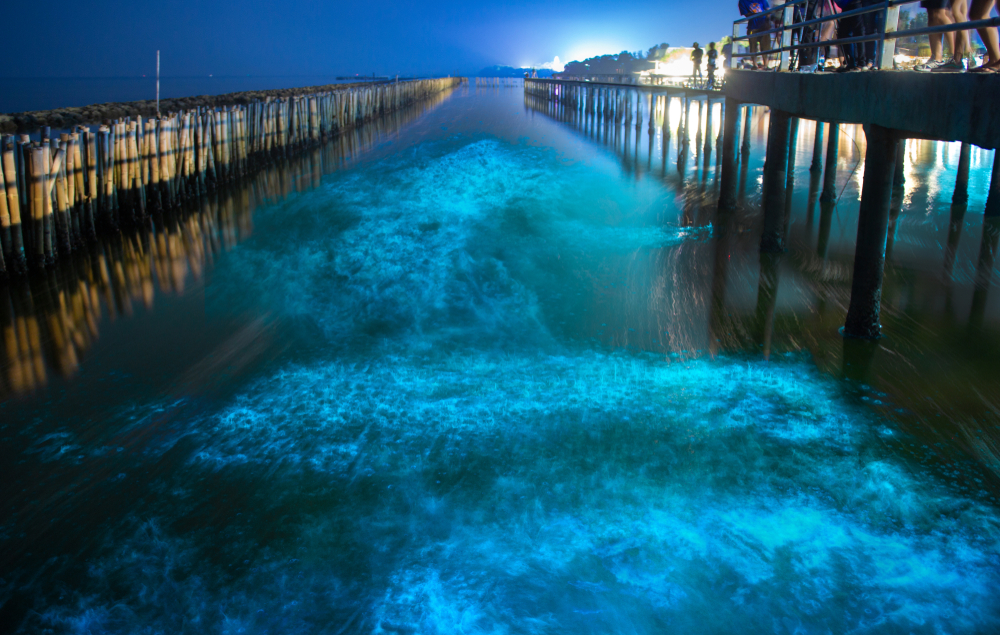
Why does Cocoa Beach glow at night? Here’s the short answer:
- The water glows because of tiny living organisms called dinoflagellates (and in cooler months, comb jellies)
- These microscopic creatures produce blue-green light through a chemical reaction when the water around them is disturbed
- The glow is visible to the naked eye — no special equipment needed
- The best displays happen in the Indian River Lagoon, Banana River, and Mosquito Lagoon — not on the open ocean beach itself
- Peak season for the brightest glow is June through October, with new moon nights offering the best visibility
This isn’t a light show or a trick of the light. It’s a real, natural phenomenon happening in the shallow brackish lagoons just minutes from Cocoa Beach — and it’s one of the most reliable bioluminescence displays anywhere in the continental United States.
Picture this: you dip a paddle into still, dark water and a trail of electric blue light fans out behind it. Fish dart beneath you, leaving streaks like underwater shooting stars. That’s the experience waiting in Florida’s Space Coast lagoons on the right night.
I’m Josh Myers, owner of Florida Adventurer, and I’ve spent years guiding guests through these exact waters — helping first-timers understand why does Cocoa Beach glow at night and what conditions produce the most spectacular displays. I’ll walk you through everything you need to know to plan your visit with realistic expectations and confidence.
Continue Exploring Florida’s Bioluminescence
If you’re planning a trip to Florida’s Space Coast, these guides will help you choose the right tour, understand seasonal conditions, and make the most of your visit.
- Bioluminescent Kayaking — Learn when to visit, what causes the glow, and how to choose the best kayak tour for Florida’s glowing waters.
- Bioluminescence Cocoa Beach — Discover the best nearby lagoon locations, moon phase tips, and planning advice for seeing the glow near Cocoa Beach.
- Do Jellyfish Glow? — Understand the difference between glowing comb jellies and true jellyfish during Florida’s winter bioluminescence season.
- Comb Jellies — Learn what these harmless winter visitors are and why they create a different kind of nighttime glow.
Why Does Cocoa Beach Glow at Night?
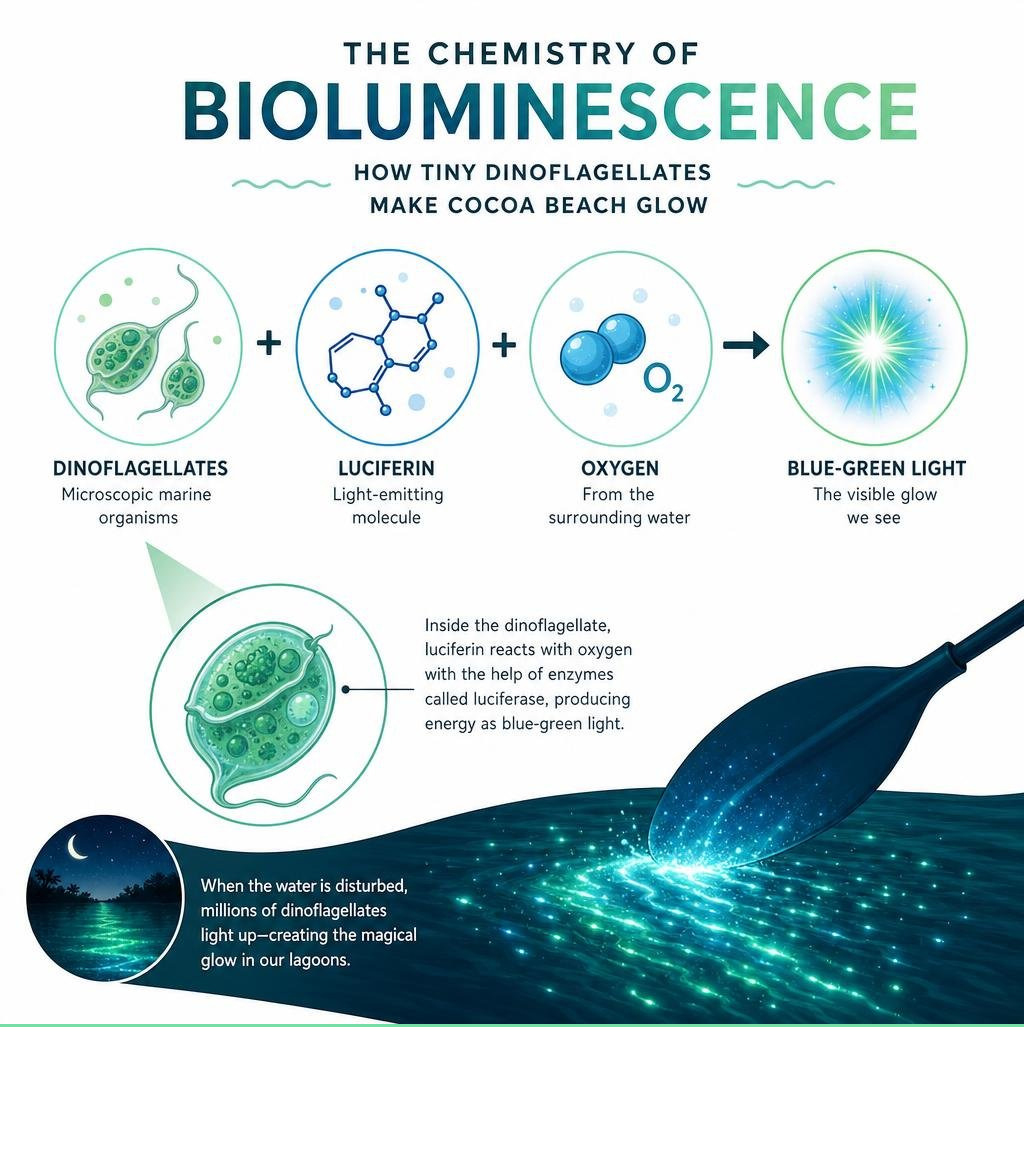
Cocoa Beach appears to glow at night because tiny living organisms in the nearby lagoon waters create blue-green light when the water around them is disturbed. On summer nights, the main organisms are microscopic dinoflagellates. When a paddle, fish, hand, or kayak moves through the water, those organisms flash for a moment and leave glowing trails behind.
That is the simple version our guides explain on the water: tiny organisms + disturbed water + a natural chemical reaction = blue light. NOAA describes bioluminescence as light produced by a chemical reaction within a living organism, which is exactly what visitors are seeing when lagoon water sparks around a paddle stroke.
You do not need to understand a full chemistry lesson to enjoy it. The glow is a biological response inside the organism, and it happens so quickly that every paddle stroke can look like sparks moving through the lagoon. Fish often create bright streaks under the surface, and clear kayaks make the effect even easier to see beneath you.
The biggest surprise for most visitors is that this glow is not usually something you see by standing on the Atlantic beach and looking at the surf. The best displays happen in calm, protected lagoon waters near Cocoa Beach, where the organisms can stay concentrated instead of being scattered by ocean waves.
From years of explaining the glow to first-time guests, we have found that people enjoy the experience most when they understand the science just enough to know what they are seeing, then focus on the planning details that shape the night: where to launch, when to go, how moon phases affect visibility, and what the glow actually looks like from a kayak.
For a deeper scientific overview, NOAA’s guide to bioluminescence is a strong resource on how living organisms produce light.
The Two Seasons of Bioluminescence in Cocoa Beach
One of the most common misconceptions is that the water only glows during the hot summer months. While summer offers the brightest and most intense displays, the Space Coast actually features two distinct seasons of bioluminescence, each powered by entirely different organisms.
Summer Glow: Dinoflagellates (May to October)
The summer season is dominated by the microscopic dinoflagellates. As the Florida sun heats the shallow waters of the Indian River Lagoon and Banana River, water temperatures rise, creating the perfect incubator for these algae to multiply. This season typically begins in late May and runs through early November, with the absolute peak of brightness occurring during the hottest months of June, July, August, and September. During this time, the water glows an electric neon blue. Every movement creates sharp, bright, firework-like trails of light.
Winter Glow: Comb Jellies (November to April)
As the water cools down in late autumn, the dinoflagellate population naturally declines. However, the glowing magic doesn’t stop. Cooler water brings in massive populations of comb jellies (Mnemiopsis leidyi). Unlike dinoflagellates, comb jellies are macro-organisms, meaning they are easily visible to the naked eye. They are ancient, prehistoric creatures that are roughly 95% water. Despite their name, they do not sting and are completely harmless to humans.
When disturbed, comb jellies emit a soft, pulsing, rainbow-like shimmer or green-blue light from within their jelly-like bodies. Paddlers can gently scoop these “sea walnuts” out of the water to watch them sparkle directly in their hands before releasing them back into the lagoon. This transition makes our region one of the few places in the world where some form of bioluminescence can be experienced year-round.
We have detailed guides to help you understand the magic of these winter visitors, which you can explore in our articles on glowing comb jellies and the unique winter glow of comb jellies.
| Feature | Summer Bioluminescence | Winter Bioluminescence |
|---|---|---|
| Primary Organism | Dinoflagellates (Pyrodinium bahamense) | Comb Jellies (Mnemiopsis leidyi) |
| Organism Type | Microscopic single-celled algae | Macroscopic jelly-like organisms (no sting) |
| Peak Months | June, July, August, September | November, December, January, February |
| Glow Appearance | Sharp, electric blue-green streaks and trails | Soft, pulsing, rainbow-like or blue-green orbs |
| Best Trigger | Fast movement, paddle strokes, darting fish | Direct contact, gentle swirling, holding in hand |
Can You See the Glow From Cocoa Beach Itself?
Not usually. This is one of the biggest points of confusion for first-time visitors.
When people ask why Cocoa Beach glows at night, they often picture the Atlantic shoreline lighting up in bright blue waves. That can happen in some coastal destinations around the world under rare bloom conditions, but it is not the normal Cocoa Beach experience.
Around Cocoa Beach, the most reliable bioluminescence is found in the protected lagoon system just minutes from the beach, especially:
- Banana River
- Indian River Lagoon
- Mosquito Lagoon
These waters are calmer, shallower, and more protected than the open ocean. That allows dinoflagellates in summer and comb jellies in cooler months to remain concentrated enough for visitors to see the glow clearly.
Our guides explain this expectation almost every night during peak season. Many guests arrive imagining the entire ocean glowing from shore. In reality, the strongest displays usually happen after you launch into quiet lagoon water, paddle away from bright lights, and begin disturbing the water around the kayak.
Why Doesn’t the Ocean Glow Like the Lagoons?
The Atlantic Ocean beside Cocoa Beach usually does not glow like the nearby lagoons because the conditions are completely different.
Ocean surf is constantly moving. Waves, currents, tides, and wind mix the water and spread the tiny glowing organisms over a much larger area. Even when bioluminescent organisms are present offshore, they are often too diluted to create the concentrated blue trails visitors hope to see.
The lagoons work differently. The Banana River, Indian River Lagoon, and Mosquito Lagoon are shallow, protected, brackish waterways with less wave energy. They warm up quickly, hold organisms in calmer pockets, and create the dark, still conditions that make the glow easier to see.
Salinity also matters. These lagoon waters are not exactly the same as the open Atlantic. Their mix of saltwater and freshwater, combined with warm summer temperatures and protected shorelines, helps create the right environment for seasonal blooms.
That is why a guided kayak tour usually gives you a better chance of seeing the glow than walking down to the beach at night. You are going to the place where the organisms are most concentrated, the water is easiest to disturb, and the darkness makes the blue-green light stand out.
Planning Your Nighttime Adventure: Best Times and Locations
Once you know that the glow happens mainly in the lagoons, planning becomes much easier. The best experience comes down to three decisions: where you want to launch, what kind of glow you want to see, and how dark the night will be.
Choosing the Right Location
The Indian River Lagoon, Banana River, and Mosquito Lagoon are all excellent bioluminescence areas, but they do not feel exactly the same. Instead of choosing by name alone, choose based on the kind of night you want.
| If you want… | Choose… | Why |
|---|---|---|
| The brightest glow | Mosquito Lagoon or darker Indian River Lagoon routes | Less artificial light and calmer water can make the blue-green trails stand out more strongly. |
| More wildlife potential | Indian River Lagoon or Merritt Island-area routes | These areas are known for rich estuary habitat where fish, birds, dolphins, and manatees may move through. |
| An easier paddle | Calm Banana River or sheltered lagoon routes | Protected water and shorter routes are often better for beginners, families, and guests who want a relaxed pace. |
| The closest option to Cocoa Beach | Banana River | It sits right behind Cocoa Beach, making it one of the most convenient lagoon choices for visitors staying nearby. |
The best launching points are usually in darker, calmer areas away from bright shoreline lights. That is why guided tours often use routes near Merritt Island, the Banana River, the Indian River Lagoon, or Mosquito Lagoon instead of launching directly from the ocean beach.
The Role of the Moon Phase
Darkness has a huge effect on how bright the bioluminescence appears. The organisms may still glow during a bright moon, but your eyes see the contrast much better on darker nights.
For the strongest views, plan around the new moon phase—the week before, during, and immediately after the new moon. During these nights, the sky is darker and the blue-green glow is easier to see with the naked eye.
If you are visiting during a brighter moon phase, a later tour or a more sheltered route can help. Tree-lined shorelines, mangrove edges, and darker lagoon pockets often make the glow easier to notice than wide-open water under a bright moon.
To help you coordinate your night out, check out our guide on things to do in Cocoa Beach after dark and learn more about planning a trip for bioluminescent kayaking near Kennedy Space Center.

Choosing the Right Bioluminescence Tour Format
Once you know where and when to go, the next decision is the kind of tour that fits your group. The right choice depends less on the equipment itself and more on who is paddling, how comfortable they are at night, and how immersive they want the glow to feel.
Clear Kayaks: Best for First-Timers Who Want the Most Immersive View
Choose a clear kayak if seeing the glow beneath you is the top priority. The transparent hull lets you watch blue-green light spark under the boat with each paddle stroke, fish movement, or swirl in the water.
This is usually the best fit for couples, photographers, first-time bioluminescence guests, and visitors who want the most memorable visual experience. You can explore our options for clear kayaking tours in Cocoa Beach to secure your spot.
Tandem Kayaks: Best for Guests Who Want Stability and Control
Choose a traditional tandem kayak if comfort, stability, and easy paddling matter most. These kayaks work well for beginners, couples, friends, and parents paddling with older children.
They are a strong choice if your group wants a simple, reliable way to experience the glow without focusing as much on the see-through boat effect.
Family Rafts: Best for Young Kids, Seniors, or Nervous Paddlers
Choose a family raft if someone in your group is very young, less mobile, or uncomfortable paddling in the dark. Rafts keep groups together, feel more secure, and let a guide handle more of the navigation.
This is often the easiest option for families with young children, seniors, or anyone who wants the glow without the stress of controlling a kayak.
What Guests Usually Expect vs. What Actually Happens
Many guests imagine the entire ocean glowing bright blue from shore. In reality, the most spectacular displays usually happen after launching into calm, protected lagoon waters where millions of microscopic organisms remain concentrated.
Here is the difference we explain before tours:
| What many guests expect | What usually happens |
|---|---|
| The Atlantic surf glows from the beach | The brightest glow is usually in the Banana River, Indian River Lagoon, or Mosquito Lagoon |
| The whole waterway glows constantly | The glow appears when the water is disturbed by paddles, fish, hands, or movement |
| It looks exactly like long-exposure photos | The naked-eye glow is real, but cameras often make it look brighter than it appears in person |
| Any night works the same | Dark, warm, low-moon nights usually create the best viewing conditions |
| The science is the main attraction | The real magic is seeing the water react around your kayak in real time |
That last point matters. The science explains why the glow happens, but the visitor experience is what makes it memorable. You hear a fish splash, see a streak of blue under the kayak, dip your paddle, and suddenly the water answers back with light.
Safety on the Water at Night
After you choose the season, location, moon phase, and tour format, safety is the next planning detail to understand. Night paddling is very different from daytime kayaking, so a guided trip should include proper gear, route knowledge, and clear communication on the water.
All guests should wear a properly fitted Personal Flotation Device (PFD) for the entire tour. Vessels should also have visibility lighting and whistle devices so guides and paddlers can stay together in the dark.
Our guides choose routes based on conditions, guest comfort, wind, visibility, and the best chance of seeing the glow safely. If you are nervous about paddling at night, a raft or guided tandem setup can make the experience feel much easier.
Frequently Asked Questions About Cocoa Beach Bioluminescence
When can I see the glow near Cocoa Beach?
The brightest dinoflagellate glow usually happens during the warmer months, especially from June through October. This is when the lagoon water is warm enough for strong seasonal blooms. Cooler months can still offer bioluminescence, but the experience is often powered by comb jellies instead of microscopic dinoflagellates.
How do dinoflagellates explain why Cocoa Beach glows at night?
Dinoflagellates are tiny organisms that flash blue-green light when the water around them moves. A paddle stroke, swimming fish, or gentle swirl can trigger that light. When there are millions of them in the lagoon at once, those small flashes combine into bright trails, sparkles, and glowing movement around the kayak.
Does the moon phase affect why Cocoa Beach glows at night?
The moon phase does not stop the organisms from glowing, but it does affect how well you can see the glow. A bright full moon can wash out the contrast on the water, while a new moon creates darker conditions that make the blue-green light easier to see.
On brighter nights, our guides look for darker routes, shaded shorelines, and calmer pockets of water where the glow can still stand out.
Conclusion
The glowing waters of Florida’s Space Coast are a true bucket-list experience. Whether you choose to paddle through a summer bloom of brilliant, electric-blue dinoflagellates or scoop up the gentle, shimmering comb jellies of winter, the lagoons surrounding Cocoa Beach offer an unforgettable connection to the natural world. By understanding the science behind the glow, planning your trip around the moon phases, and choosing the right tour format, you can ensure a magical, safe, and visually stunning night on the water.
Once you have watched a fish leave a glowing trail beneath your kayak or seen every paddle stroke illuminate the water around you, it is easy to understand why this has become one of Florida’s most unforgettable nighttime experiences.
About Josh Myers
Josh Myers is the owner and lead coordinator of Florida Adventurer. With years of hands-on experience helping guests explore the Space Coast’s bioluminescent waters, Josh focuses on making the glow easier to understand and easier to plan around. His team helps first-time guests learn what causes the light, how moon phases affect visibility, which lagoon routes make the most sense, and what to expect before paddling at night. Josh is passionate about sustainable eco-tourism and works closely with local conservation initiatives to help protect the lagoons that make these experiences possible.
About Florida Adventurer
Florida Adventurer specializes in outdoor adventure and bioluminescence tours serving Titusville, Merritt Island, Cocoa Beach, and the surrounding Space Coast. We offer guided kayak tours, clear-bottom kayak excursions, sunset paddles, and daytime wildlife encounters designed around safe, small-group experiences. Our knowledgeable local guides prioritize environmental stewardship, guest comfort, and practical trip planning, helping visitors choose the right season, route, moon phase, and tour format for their night on the water. Whether you are seeking the thrill of glowing summer waters or hoping to spot manatees and dolphins in their natural habitat, we are committed to delivering an exceptional, authentic Florida adventure.
Ready to Experience It Yourself?
Don’t miss your chance to witness one of the world’s most spectacular natural wonders. Our spots fill up incredibly fast, especially during the peak summer months and around the new moon phases. Book your adventure today to secure your clear kayak or family raft!