
The Ultimate Local Guide to Bioluminescence Near Cocoa Beach
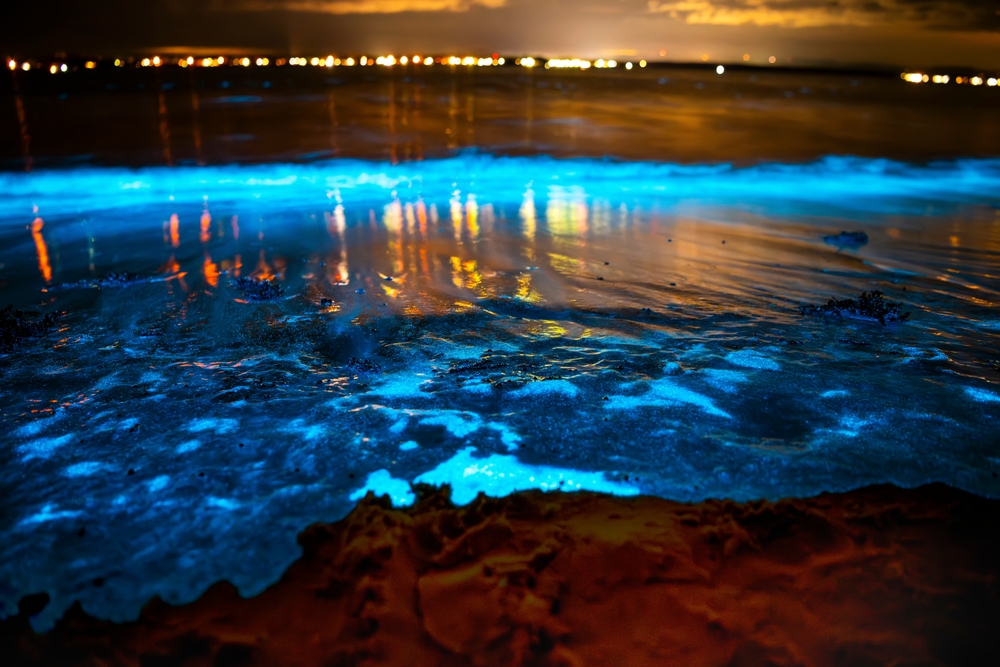
Bioluminescence in Cocoa Beach is best planned as a local evening experience, not just a science topic. The glow is the reason people search for it, but the real planning questions are usually more practical: where should you launch, how far is it from your hotel, what time should you eat dinner, which tour format fits your group, and what should you realistically expect on the water?
Here is the quick version:
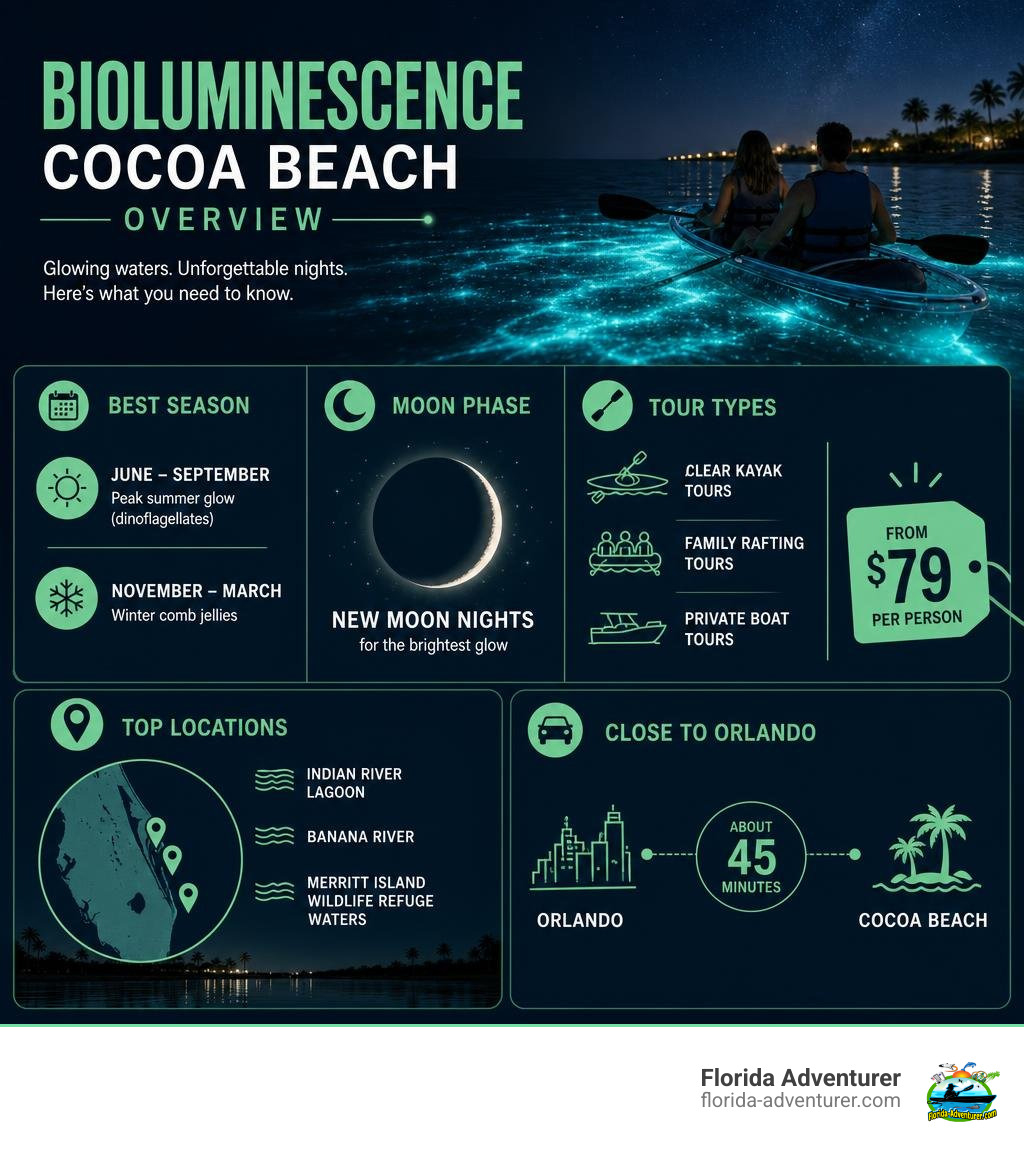
- Best summer glow: June through September, when dinoflagellates are usually strongest
- Winter option: November through March, when comb jellies can create a different but memorable glow
- Best conditions: Dark nights around the new moon, calm water, and low light pollution
- Main Cocoa Beach-area waterways: Banana River, Indian River Lagoon, Merritt Island, and nearby refuge waters
- Most convenient for: Cocoa Beach hotel guests, Port Canaveral visitors, cruise passengers, Orlando day-trippers, and Space Coast families
- Best tour choice: Depends on your group size, comfort paddling, launch location, season, and how much support you want from a guide
Before every launch, our guides evaluate wind direction, recent storms, moonlight, tide movement, water clarity, and where recent tours have found the strongest activity. Those conditions often influence which route provides the best experience that evening.
As guides who operate these tours regularly, we think about the experience differently than a visitor reading a map. A launch that looks close may not always be the best choice for that night. A route that worked beautifully last week may need to change after heavy rain, shifting wind, brighter moonlight, or different activity in the lagoon. Good planning is not just picking a date; it is matching the group, the season, and the night’s water conditions.
This guide focuses on the practical Cocoa Beach details: launch areas, timing, tour types, drive times, how to plan your evening, and how Cocoa Beach-area tours compare with Titusville-area options.
How We Choose Launch Locations
Before recommending or confirming a launch, our guides look at the night’s wind direction, recent storms, moonlight, water clarity, guest comfort, and recent glow reports. The goal is not to force every group into the same route; it is to choose the launch and paddle plan that gives that group the best experience on that particular night.

Why Cocoa Beach Is One of Florida’s Best Places to See Bioluminescence
Cocoa Beach works so well for bioluminescence because it sits close to the protected lagoon waterways where the glow is most visible, while still being convenient for visitors staying on the coast. You can spend the day at the beach, eat dinner nearby, then drive a short distance to calmer inland waters where guided tours launch after dark. For many travelers researching Cocoa Beach bioluminescence Florida experiences, that combination of convenience and natural lagoon access is the main appeal.
We’ve also found that guests staying in Cocoa Beach appreciate being able to combine a beach day with an evening tour without needing to relocate to another part of the Space Coast.
The main advantage is access. Cocoa Beach is near the Banana River, Merritt Island, Port Canaveral, and the broader Indian River Lagoon system. That gives guides multiple ways to match the evening’s conditions instead of treating every night the same.
For visitors, that matters. A family staying at a Cocoa Beach hotel may want the easiest drive and a stable tour format. A couple visiting from Orlando may care more about the darkest water and strongest seasonal glow. Cruise passengers near Port Canaveral may need a launch that fits a tighter evening schedule. Local guides weigh those details every night.
On some nights, the best Cocoa Beach-area experience is the most convenient protected-water route. On other nights, guide judgment may point toward darker shorelines, a slightly different paddle path, or a launch that gives the group better shelter from wind. That operational flexibility is one of the biggest differences between simply booking the nearest launch and booking with a guide team that is watching conditions closely.
Wildlife is another reason Cocoa Beach-area tours are memorable. Depending on the season and nightly conditions, guests may hear manatees surface, see mullet scatter through the glow, watch birds settle into the mangroves, or spot dolphins moving through darker stretches of water. None of that can be guaranteed, but the lagoon setting gives every tour a real sense of place. For wildlife-viewing etiquette, the Florida Fish and Wildlife Conservation Commission is a stronger reference than a tourism site because it focuses on responsible viewing and Florida wildlife guidance.
How Close Is Bioluminescence to Cocoa Beach?
Bioluminescence is not usually something you see while standing on Cocoa Beach itself. The beach is on the ocean side, while the best glow is typically found a short drive away in darker, protected lagoon waters where kayaks, rafts, and small-group tours can launch safely after sunset.
For most Cocoa Beach visitors, the planning path is simple: leave the beach, drive about 10–20 minutes depending on your hotel and launch location, then meet your guide near the Banana River, Merritt Island, Port Canaveral-area access points, or other protected lagoon routes. That short drive is what makes Cocoa Beach such a convenient base: you can stay near the ocean but still reach the calmer inland waterways where bioluminescence near Cocoa Beach is easier to view.
The exact drive time depends on where you are staying and which launch is best for that night. A north Cocoa Beach or Port Canaveral hotel may be closer to one access point, while a central Cocoa Beach stay may point toward another. Because wind, moonlight, storms, and recent glow reports can all influence the route, it is worth checking your tour confirmation instead of assuming the nearest launch is automatically the one you will use.
Why Does Cocoa Beach Glow at Night?
Cocoa Beach appears to glow at night because tiny bioluminescent organisms in nearby lagoon waters produce light when the water is disturbed. NOAA Ocean Exploration explains bioluminescence as light produced by a chemical reaction within a living organism, which is the science behind the blue-green flashes guests see around paddles, kayaks, fish, and small ripples during warmer months. In cooler months, comb jellies can create a different kind of glow, often appearing as small flashing lights in the water.
That is why the best bioluminescence Cocoa Beach Florida tours happen after dark in protected lagoon areas rather than directly on the ocean beach. The glow is easiest to see when the sky is dark, the water is calm, and there is less artificial light nearby. If you are hoping for the classic Cocoa Beach glowing water effect, plan around the darker moon phases and ask your tour operator what recent trips have been seeing.
If you want a deeper explanation of the organisms behind the glow, we cover that in dedicated guides to bioluminescent kayaking and comb jelly bioluminescence. For this Cocoa Beach guide, the most important thing to know is simple: warm-season plankton and winter comb jellies create two different nighttime experiences, and both are best enjoyed with realistic expectations and local guidance.
When to See Bioluminescence Near Cocoa Beach
Timing still matters, but you do not need a marine biology lesson to plan a good trip. For most visitors, the decision comes down to season, moon phase, weather, and how flexible your schedule is.
Summer Dinoflagellate Season
June through September is usually the strongest season for the classic blue-green glow people picture when they search for Cocoa Beach bioluminescence. On strong nights, paddle strokes, fish movement, and ripples can all light up around the kayak.
Summer is also the busiest season. If you are visiting during July, August, a weekend, or a new moon window, book early and avoid waiting until the day of your tour. The best times and formats can fill quickly.
From an operations standpoint, summer also requires more judgment. Afternoon storms can change runoff, wind, and water clarity by tour time. A night can still be safe and worthwhile after rain, but guides need to evaluate what actually happened locally instead of relying only on a forecast from earlier in the day.
Winter Comb Jelly Season
From roughly November through March, comb jellies often become the highlight. This is a quieter, cooler-weather experience. Instead of glowing trails across the surface, guests often see individual comb jellies flashing in the water like tiny lanterns.
Winter tours can be a great fit for visitors who want fewer crowds, cooler temperatures, or a more hands-on educational experience. They are also helpful for travelers who cannot visit during summer but still want to see natural bioluminescence in the Cocoa Beach area.
Guides also plan winter tours differently. Cooler air, wind exposure, and guest comfort matter more after dark, so the best route may be the one that balances glow, shelter, and an easier return paddle rather than simply chasing the darkest possible water.
Moon Phase and Nightly Conditions
The darker the sky, the easier it is to see the glow. New moon nights and the darker weeks around them are usually the best choice. A bright full moon does not mean a tour is impossible, but it can make the glow look softer and less dramatic.
This is where guide judgment matters. Some evenings, the best decision is to hug darker shorelines, adjust the route, wait for the sky to darken, or choose a launch area with less artificial light. Wind and storms matter too. Calm water usually gives guests a better view, while lightning, strong wind, or unsafe conditions can require rescheduling.
We also pay attention to what recent tours are seeing. If guides have found stronger activity in one stretch of water, or if a route has become more exposed because of wind direction, that information can matter more than a generic seasonal calendar.
| Planning Factor | What It Means for Visitors |
|---|---|
| Summer season | Best chance for bright blue-green plankton glow |
| Winter season | Best chance to see glowing comb jellies |
| New moon | Usually the best sky condition for visibility |
| Full moon | Glow may be visible but less dramatic |
| Calm wind | Easier paddling and better viewing |
| Recent guide observations | Often more useful than a generic calendar recommendation |
Where Do Bioluminescence Tours Launch Near Cocoa Beach?
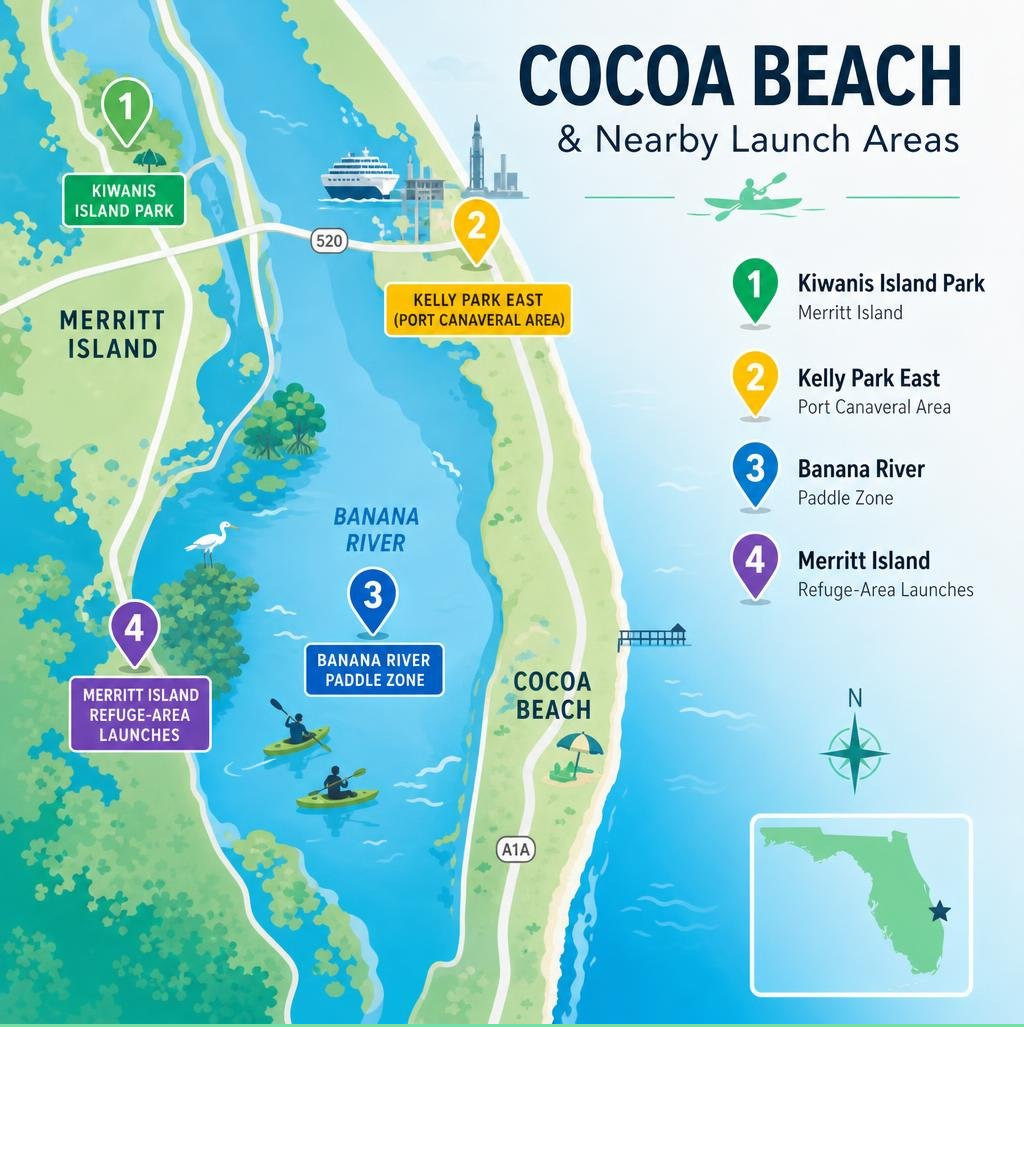
Launch location is one of the most important decisions for a bioluminescence Cocoa Beach tour. The closest launch is not always the right launch for every group or every night. Experienced local guides consider wind, darkness, guest ability, water access, parking, tide movement, recent rainfall, and where the glow has been most active recently.
Kiwanis Island Park
Kiwanis Island Park on Merritt Island is one of the most practical launch areas for many Cocoa Beach visitors. It gives access to calm Banana River water without feeling too remote, which makes it a strong option for first-time paddlers, families, and guests who want an easier evening from the beach.
From a guide’s perspective, Kiwanis is useful because it balances convenience with good protected-water access. When conditions line up, guests can get a strong glow without committing to a much longer drive after dinner. It can also be easier for guides to manage pacing, safety briefings, and beginner comfort when the group includes children or first-time paddlers.
Kelly Park East and Port Canaveral Area Access
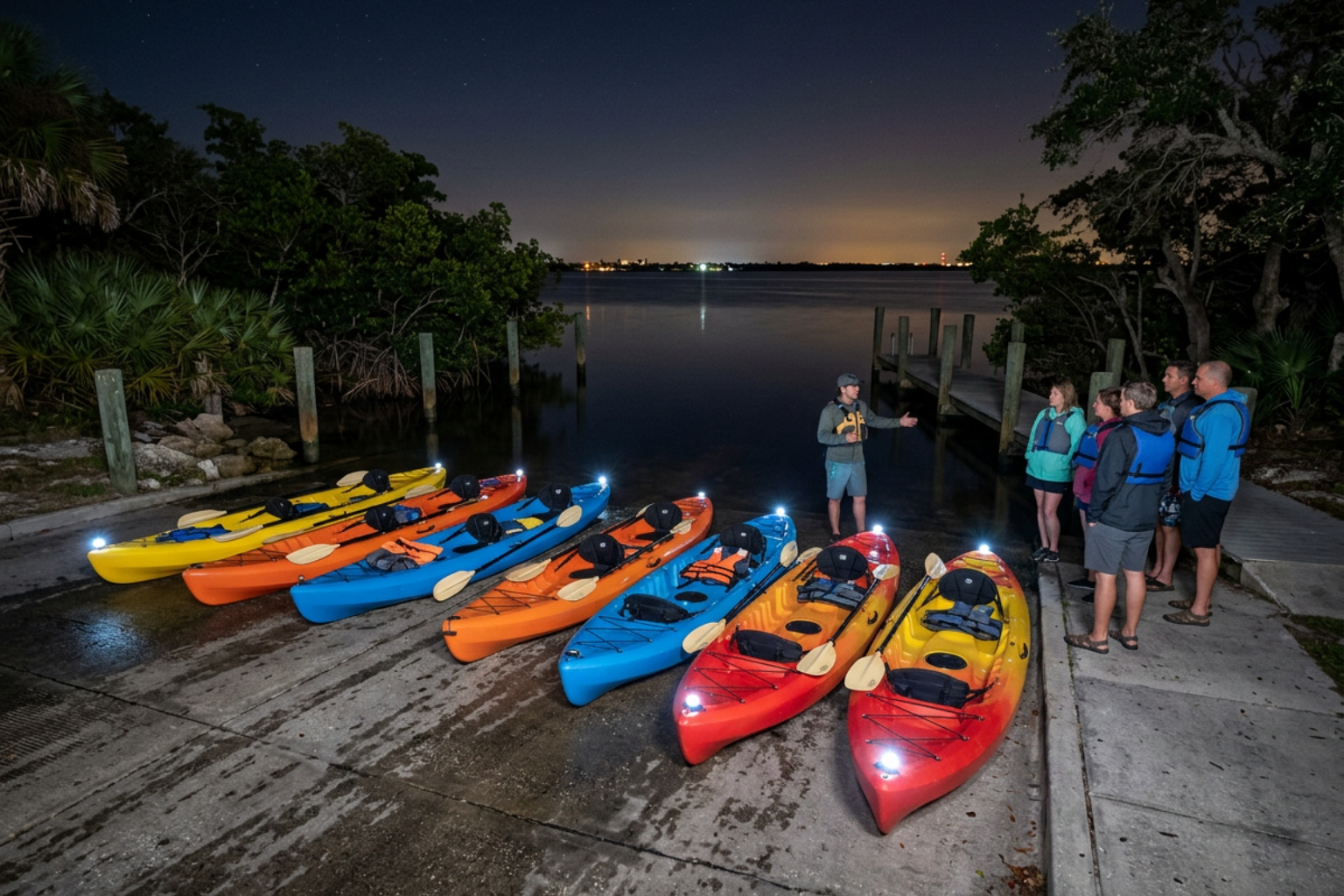
Kelly Park East is especially convenient for visitors staying near Port Canaveral, Cape Canaveral, or the north end of Cocoa Beach. It can be a practical choice for cruise passengers, families staying near the port, or guests who want less driving after a long beach day.
The tradeoff is that convenience and darkness are not always the same thing. On some nights, guides may choose routes or timing carefully to avoid light pollution and give guests a better chance of seeing the glow clearly. If the wind is pushing across open water or the moon is especially bright, the most important guide decision may be finding the best protected route rather than launching from the spot that looks simplest on a map.
Banana River
The Banana River is one of the main reasons Cocoa Beach is such a strong base for bioluminescence tours. It is close to the beach communities but feels very different once you are on the water at night. The shoreline, mangroves, calmer stretches, and wildlife activity all help create the kind of setting visitors hope for.
For many guests, this is the sweet spot: close enough to Cocoa Beach hotels to feel easy, but natural enough to feel like a real Space Coast eco-adventure. When the glow is active, guides often look for areas where small water movement, fish activity, and darker edges help guests see the bioluminescence without needing to paddle hard or rush the experience.
Merritt Island and Refuge-Area Waters
Merritt Island and nearby refuge waters can offer darker, wilder conditions than the most convenient beach-adjacent launches. These areas may appeal to visitors who care more about darkness, wildlife, and a quieter setting than the shortest possible drive.
The practical question is whether the extra drive fits your group. If you have young kids, a late dinner reservation, or an early cruise departure, convenience may matter more. If your priority is a darker night-sky feel, a Merritt Island or refuge-area launch may be worth it.
Experienced guides also weigh how remote a route should feel for that particular group. A quiet, darker area can be incredible for confident paddlers, but a more accessible launch may be a better call for families, nervous first-timers, or guests who need a smoother end to the evening.
How Guides Choose the Best Launch
Good bioluminescence tours are not run on autopilot. Some evenings our guides even change the launch location after reviewing the latest weather, wind, and water conditions because delivering the best possible guest experience is more important than following the same route every night.
That is why it helps to book with a local operator instead of choosing only by distance from your hotel. The best launch for your group is the one that fits the night’s conditions, your comfort level, and the kind of experience you want.
A helpful question to ask before booking is: does the operator adjust launch locations, timing, or routes based on nightly conditions? If the answer is yes, that usually means the guide team is thinking about the same details that actually shape the experience on the water.
Choosing the Right Cocoa Beach Bioluminescence Tour
Clear kayaks, standard kayaks, family rafting options, and boat-based experiences can all work well, but they serve different visitors. The right choice depends on who is in your group and how you want the evening to feel.
When comparing bioluminescence tours in Cocoa Beach, focus on guide experience, launch flexibility, and the type of experience that best matches your group rather than simply choosing the closest launch.
Clear Kayak Bioluminescence Tours
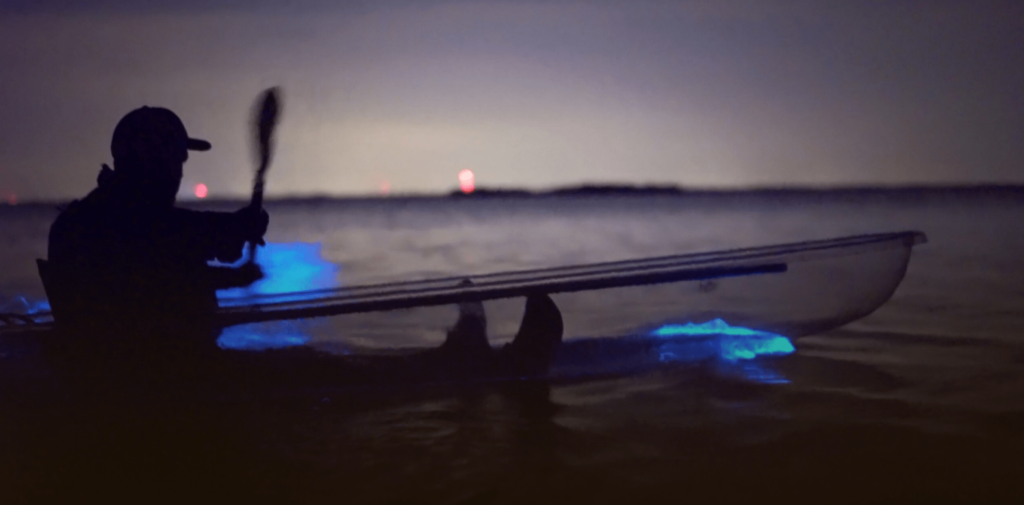
Clear kayaks are popular because they let guests see movement beneath the boat, not just beside the paddle. When the glow is strong, fish and water movement can appear below you, which creates a more immersive experience.
These tours are best for guests who are comfortable sitting low in a tandem kayak and want the most visual connection to the water. They may not be the right fit for every body type, age, or comfort level, so check vessel requirements before booking. You can explore our clear kayaking bioluminescence tours in Cocoa Beach if that format sounds like the right fit.
Guide support matters with clear kayaks because guests are often looking down into the water, taking in the glow, and paddling after dark at the same time. A well-run tour gives people enough instruction before launch, keeps the group together, and slows the pace when the best glow is happening close by.
Family Rafting and Boat-Based Options
Families with younger kids, larger groups, or visitors who do not want to paddle may prefer a rafting or boat-style tour. These formats can make the experience easier, more social, and less physically demanding.
They are also useful when the main goal is simply to relax and enjoy the glow without worrying about steering a kayak in the dark. Smaller guided groups can also make it easier to hear your guide, stay together, and adjust the pace for beginners.
For families, the best tour is not always the most adventurous one. Guides think about attention spans, comfort after dark, how easy it is to regroup, and whether the tour format lets everyone enjoy the glow without feeling stressed. When comparing bioluminescence tours Cocoa Beach visitors can book, choose the format that matches your group’s comfort level instead of choosing by price or launch distance alone.
Cocoa Beach vs Titusville: Which Area Is Better for Bioluminescence?
Cocoa Beach and Titusville can both be excellent bases for bioluminescence tours, but they solve different planning problems. Cocoa Beach is often the more convenient choice for beach hotels, Port Canaveral visitors, cruise passengers, and families who want a shorter evening drive. Titusville-area launches can appeal to guests who are prioritizing darker, more remote-feeling lagoon settings and do not mind building more travel time into the night.
The biggest difference is usually convenience versus setting. From Cocoa Beach, many visitors can reach protected Banana River, Merritt Island, or Port Canaveral-area launch points in about 10–20 minutes, depending on the exact meeting location. Titusville-area routes may involve a longer drive from Cocoa Beach, but they can also put guests closer to darker refuge-area waters and different parts of the Indian River Lagoon or Mosquito Lagoon system.
Wildlife can also feel different by area. Cocoa Beach-area tours may be especially practical for guests hoping to combine the glow with a beach day, Port Canaveral stay, or Banana River wildlife setting. Titusville-area tours may feel quieter and more remote, with a stronger refuge-style atmosphere on the right night. In both areas, guests may encounter fish activity, birds, dolphins, manatees, or other lagoon wildlife, but sightings are always a bonus rather than a guarantee.
Neither area is automatically better every night. A Cocoa Beach launch may be the right call when your group needs convenience, a family-friendly format, or a smoother end to the evening. A Titusville-area launch may be worth considering when darkness, wildlife habitat, and a more secluded feel matter more than drive time. Experienced guides look at the season, wind, moon phase, recent glow reports, group comfort, and launch conditions before deciding which route gives guests the best chance for a memorable experience.
| Factor | Cocoa Beach Area | Titusville Area |
|---|---|---|
| Convenience | Best for Cocoa Beach hotels, Port Canaveral, cruise visitors, and beach-day itineraries | Better for guests already staying near Titusville or willing to drive farther from Cocoa Beach |
| Drive time from Cocoa Beach | Often about 10–20 minutes to nearby protected lagoon launches | Usually longer from Cocoa Beach, depending on the exact launch |
| Launch feel | Practical access to Banana River, Merritt Island, and Port Canaveral-area routes | Often more remote-feeling refuge or lagoon access |
| Darkness | Can be excellent when guides choose protected, lower-light routes | Can offer a darker, wilder feel on the right night |
| Best for | Families, hotel guests, cruise passengers, and visitors who value convenience | Guests prioritizing remoteness, darker settings, and a more wilderness-style evening |
What Visitors Should Realistically Expect
Bioluminescence changes nightly. Some nights are bright and active, with glowing paddle strokes and fish movement. Other nights are more subtle, especially when moonlight, wind, rain, or water clarity affects visibility.
We would rather have guests arrive with realistic expectations and leave amazed than expect every night to look identical to a long-exposure photograph.
A good guide sets expectations before launch, explains what has been happening recently, and adjusts the route when conditions call for it. Ask whether the operator changes launch locations or routes based on nightly conditions rather than following the exact same route every evening. That one question tells you a lot about how locally operated the tour really is.
The best tours make room for nature to be nature. If the glow is strongest near a shoreline, the group may pause there longer. If fish are moving through one area, guides may give everyone time to watch instead of rushing to cover distance. The goal is not just to paddle a route; it is to create the best possible chance to experience the glow that particular night.
Before booking, check current tour pricing and availability so you can compare the right format, launch area, and timing for your group.
Staying in Cocoa Beach? Here’s How to Plan Your Evening
One of the best parts of booking a Cocoa Beach-area bioluminescence tour is that it can fit naturally into a full beach day. You do not have to build your entire vacation around it, but a little planning makes the night smoother.
A simple itinerary works well:
- Spend the afternoon at the beach. Give yourself time to rinse off, change, and avoid rushing straight from the sand to the launch.
- Eat an early dinner. Choose a meal that will not leave everyone feeling too full before paddling. Build in extra time for parking, traffic, and getting back to your hotel.
- Change into quick-dry clothes. Expect paddle drip and damp seats. Water shoes or secure sandals are better than loose flip-flops.
- Drive to the launch with time to spare. Night tours are harder to join late because guides need to complete safety instructions before heading out.
- Take the tour. Listen during the briefing, keep lights low, and give your eyes time to adjust once you are on the water.
- Return to your hotel. Bring a towel and dry clothes in the car so the ride back is comfortable.
Before leaving your hotel, check your tour messages and directions carefully. Because launch decisions can depend on wind, weather, route conditions, and recent glow reports, it is worth confirming the exact meeting point instead of assuming every Cocoa Beach bioluminescence tour leaves from the same place.
For Orlando visitors, the same logic applies, but you should give yourself more margin. Evening traffic, dinner timing, summer storms, and unfamiliar roads can all make the trip feel tighter than it looks on a map. If you are driving from Orlando, plan the tour as the main evening activity rather than trying to squeeze it in after a packed theme-park day.
For Port Canaveral and cruise passengers, timing is everything. Choose a launch and tour time that match your ship schedule, transportation plan, and how much flexibility you have after dark. If your schedule is tight, tell the operator before booking so they can help you choose a realistic tour time and meeting location.
Frequently Asked Questions About Cocoa Beach Bioluminescence Tours
Can Children Go on Cocoa Beach Bioluminescence Tours?
Yes. Children ages 3+ can join Cocoa Beach bioluminescence tours, as long as the tour format is a good fit for their age, comfort level, and ability to sit safely with an adult. Families should check the specific vessel type, meeting time, and safety requirements before booking, because nighttime paddling can feel different for younger kids than a daytime beach activity.
For many families, the best option is the format that keeps the group comfortable, close to the guide, and able to enjoy the glow without feeling rushed. If you are unsure whether a kayak, raft, or boat-style experience is best for your child, ask the operator before reserving.
Can You See Dolphins During Bioluminescence Tours in Cocoa Beach?
Dolphins live throughout the Cocoa Beach-area lagoon system, so it is possible to see or hear them during a nighttime bioluminescence tour. That said, dolphin sightings are never guaranteed, and the main focus of the tour is the natural glow in the water.
When dolphins do appear after dark, the experience can be memorable because their movement may disturb the bioluminescence around them. Respectful guides keep distance, avoid chasing wildlife, and let any encounter happen naturally. The best tours treat dolphins as a special bonus, not a promise.
About Josh Myers
Josh Myers is the founder of Florida Adventurer and a local Space Coast guide with hands-on experience leading bioluminescence, wildlife, and kayak tours throughout the Cocoa Beach, Merritt Island, Banana River, Indian River Lagoon, and Titusville areas. His tour planning is shaped by the same details visitors care about most: safe launches, calm water, realistic glow expectations, wildlife respect, and matching each group to the right route for that night. His firsthand experience evaluating weather, tides, moon phases, water clarity, and seasonal wildlife activity helps visitors understand what to expect while safely exploring Florida’s glowing waterways.
About Florida Adventurer
Florida Adventurer is a guided eco-tour company based on Florida’s Space Coast, specializing in bioluminescence tours, clear kayak experiences, wildlife encounters, and family-friendly outdoor adventures near Cocoa Beach, Merritt Island, Titusville, the Banana River, and the Indian River Lagoon. The team focuses on small-group guidance, local launch knowledge, responsible wildlife viewing, and practical guest support before and during each tour.
Every bioluminescence trip near Cocoa Beach is different because nature is different every night. With the right season, realistic expectations, and experienced local guides who understand the launch areas, you will have the best chance to experience one of Florida’s most memorable natural phenomena.
Ready to plan your night on the water? Check Florida Adventurer’s current Cocoa Beach bioluminescence tour options, choose the format that fits your group, and book early for the best summer, weekend, and new-moon availability.