
Don’t Get Caught Off Guard: What You Need to Know About Jellyfish Season in Florida
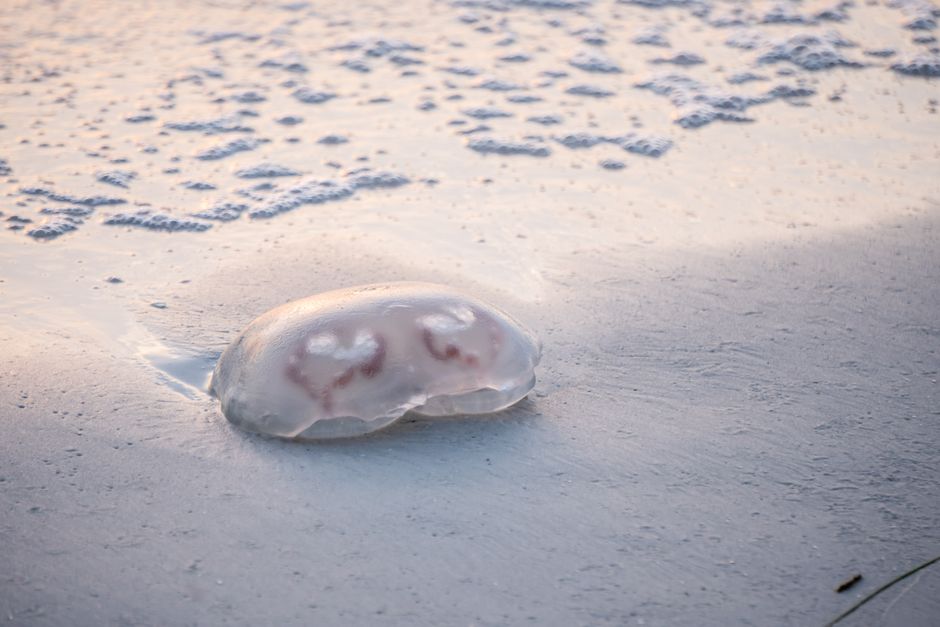
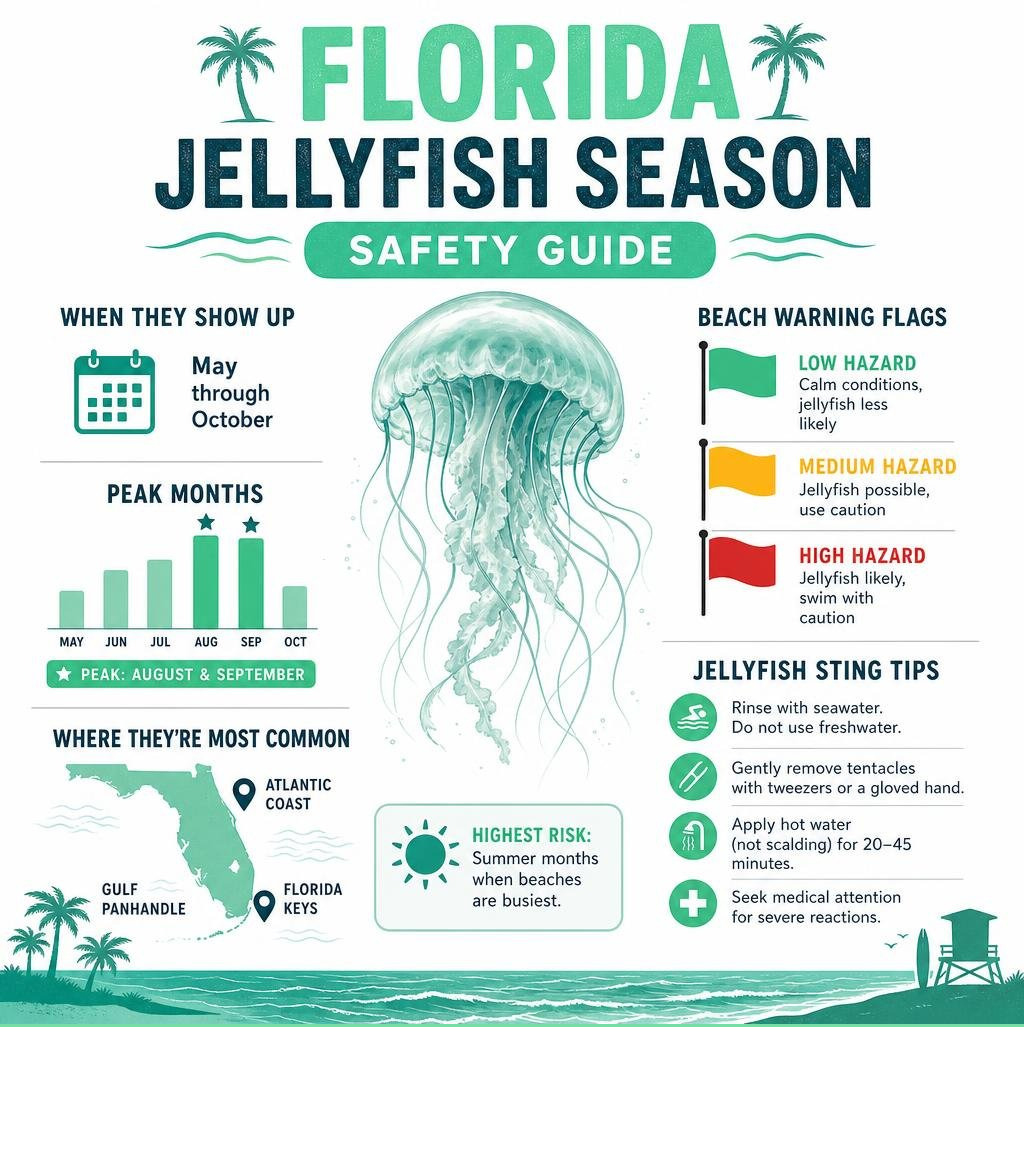
When is jellyfish season in Florida? Here’s the quick answer:
| Detail | |
|---|---|
| Season | May through October |
| Peak months | August and September |
| Year-round? | Yes — jellyfish are present all year, but blooms are largest in warm months |
| Most affected areas | Atlantic coast, Florida Keys, and the Gulf Panhandle region |
| Highest risk | Summer months when beaches are busiest, especially after onshore winds |
Month-by-Month Jellyfish Activity in Florida
Jellyfish activity changes by month, weather, water temperature, and wind direction. This timeline is a practical planning guide, not a guarantee for every beach on every day.
| Month | Typical Jellyfish Activity in Florida |
|---|---|
| January | Low overall activity, but Portuguese man o’ war may wash ashore after winter storms or strong winds. |
| February | Similar to January, with occasional winter wash-ups depending on surf and wind. |
| March | Gradual increase in some species as water begins warming. |
| April | Activity begins increasing, especially during warm spells and shifting spring winds. |
| May | Jellyfish season begins in many Florida waters. Beachgoers should start watching flags and local reports. |
| June | Common along many beaches, especially after several days of warm water and onshore breeze. |
| July | High activity. Expect a greater chance of jellyfish in the surf during summer beach trips. |
| August | Peak season. This is one of the months when swimmers are most likely to notice jellyfish. |
| September | Peak season continues, with warm water and late-summer conditions supporting larger blooms. |
| October | Declining but still common, especially early in the month. |
| November | Lower activity overall, though isolated sightings still happen. |
| December | Mostly lower activity, with winter species and Portuguese man o’ war possible after storms. |
Florida’s beaches are hard to beat: warm water, year-round sunshine, and some of the most beautiful coastline in the country. But from late spring through early fall, you’re sharing that water with something a little less welcome.
Jellyfish blooms are a normal part of Florida’s coastal ecosystem, and they do not mean you need to cancel a beach trip. Knowing when they tend to show up, how daily conditions affect them, and what to do if purple flags are flying can make the difference between a great vacation day and an avoidable sting.
I’m Josh Myers, owner of Florida Adventurer, and I’ve spent years guiding tours on Florida’s Space Coast waterways — including through the Indian River Lagoon, Mosquito Lagoon, and nearby coastal areas where guests often ask what they are seeing in the water. That firsthand, on-the-water experience gives me a practical perspective on when jellyfish season in Florida matters for planning, which conditions raise the odds of an encounter, and how to stay safe without overreacting.
Related Florida Wildlife Guides:
- Bioluminescent comb jellies
- Bioluminescent kayaking in Florida
- Where to see bioluminescence in Florida
Why Jellyfish Season Changes Throughout the Year
To plan the perfect beach trip or water adventure along the Space Coast, focus on the seasonal pattern first: jellyfish can appear any month, but warm-weather blooms are much more likely from late spring through early fall.
When Is Jellyfish Season in Florida and When Does It Peak?
While you can technically spot a jellyfish in Florida waters during any month of the year, the main season runs from May through October. During these warm-weather months, high water temperatures, longer days, and shifting wind patterns create better conditions for jellyfish populations to surge.
The peak of the season usually occurs during August and September. This is when ocean water is at its warmest, beach crowds are high, and jellyfish are more likely to be noticed in the surf. If you are planning a trip to Cocoa Beach, Cape Canaveral, or another Florida beach in late summer, do not assume the water will be unsafe — but do build in a habit of checking beach flags, wind direction, and local lifeguard updates before swimming. NOAA notes that jellyfish are carried largely by currents rather than purposeful swimming, which is why local conditions can change quickly from one day to the next: NOAA jellyfish facts.
Why Jellyfish Conditions Change Day to Day
The season matters, but it is not the only thing that matters. As guides, we pay close attention to daily conditions because what guests encounter on the water often depends on the last few tides, winds, and weather patterns.
Several factors can increase the odds of jellyfish near shore:
- Warm Water: Summer water temperatures support higher jellyfish activity.
- Onshore Winds: Easterly winds on the Atlantic coast can push surface-dwelling species toward the beach.
- Currents and Tides: Jellyfish drift with moving water, so one beach can be clear while another nearby beach has more activity.
- Storms and Fronts: Winter and spring weather can push Portuguese man o’ war onto beaches even outside the main summer season.
- Local Food Sources: Plankton blooms can support more jellyfish in a specific area.
The practical takeaway: use the month as your first clue, then confirm the day’s conditions when you arrive.
Should You Avoid Florida During Jellyfish Season?
No. Jellyfish season is something to plan around, not a reason to avoid Florida.
Millions of people swim, surf, paddle, and snorkel safely in Florida during the May-through-October jellyfish season. The key is understanding that jellyfish risk is not evenly spread across every beach or every day. Conditions can vary by coastline, wind direction, tide, recent storms, and even the specific access point you choose. For travelers asking when is jellyfish season in Florida because they are choosing vacation dates, the better question is which months and daily conditions require extra awareness.
Before entering the water, look for:
- Purple beach flags, which indicate dangerous marine life may be present.
- Lifeguard updates at staffed beaches.
- Recent local reports from beach patrols, parks, or tour operators.
- Onshore winds, which can push jellyfish and Portuguese man o’ war closer to the sand.
- Washed-up jellyfish or blue floats along the tide line.
This is where local knowledge matters. On the Space Coast, we often explain to guests that marine-life conditions are part of the daily rhythm of being on Florida waters. Some days are clear and calm. Other days require more caution, a different launch area, or simply better awareness before wading in.
The National Weather Service’s beach hazard guidance is a useful reminder that beach safety depends on current conditions, not just the calendar: NWS beach hazards and safety.
Best Months to Visit Florida if You Want to Avoid Jellyfish
If avoiding jellyfish is a major priority, the best months are generally November, December, January, and February. These cooler months tend to have lower overall jellyfish activity than late summer, especially compared with August and September.
That said, winter is not completely jellyfish-free. Portuguese man o’ war can wash ashore after storms or strong winds, and isolated jellyfish sightings can happen any time of year. Still, for travelers who want the lowest seasonal odds of encountering common summer jellyfish, winter is usually the better bet.
Here is the practical jellyfish season Florida planning breakdown:
| Goal | Best Timing | What to Know |
|---|---|---|
| Lowest overall jellyfish activity | November–February | Cooler water usually means fewer summer blooms. |
| Warm beach weather with moderate risk | April, May, October | Activity can increase, but crowds and heat are often easier to manage than peak summer. |
| Highest jellyfish awareness needed | July–September | Warm water and peak season make daily flag checks especially important. |
| Comb jelly bioluminescence tours | October–May | These are harmless, non-stinging comb jellies in lagoon waters, not the stinging ocean jellyfish most beachgoers worry about. |
Common Florida Jellyfish to Know Before Your Trip
You do not need a marine biology degree to plan around jellyfish season. For most beachgoers, it is enough to recognize the main categories: mild jellyfish, more painful stinging jellyfish, and Portuguese man o’ war.
| What You Might See | Sting Risk | Planning Takeaway |
|---|---|---|
| Moon jellyfish | Usually mild | Common, translucent, and often more alarming-looking than dangerous. Avoid touching them anyway. |
| Cannonball jellyfish | Usually mild | Firm, round, and common in warm months. Still best left alone. |
| Atlantic sea nettle | Moderate to painful | More likely to cause a noticeable sting; give them plenty of space. |
| Portuguese man o’ war | Painful and potentially serious | Not a true jellyfish, but treat it as a major beach hazard. Avoid the float and all trailing tentacles, even on sand. |
| Comb jellies | Harmless | No stingers. Best known locally for winter bioluminescence in lagoon waters. |
The Species Most Beachgoers Should Watch For
For planning purposes, the Portuguese man o’ war deserves the most attention. It is easy to spot because of its bright blue, purple, or pink gas-filled float, but its tentacles can trail far beyond the visible float. If you see one on the sand or in the water, stay well away and alert others nearby.
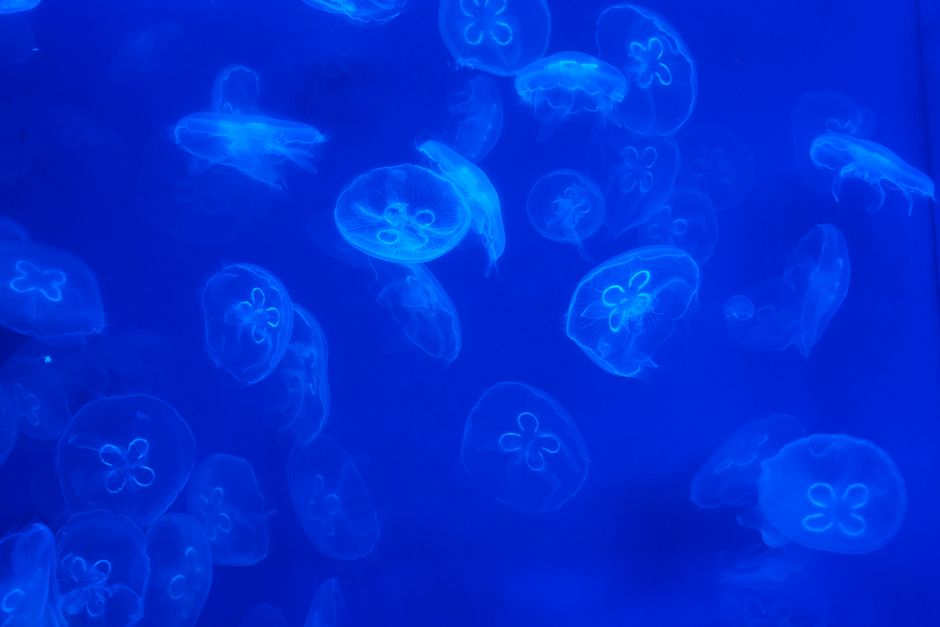
Moon jellies and cannonball jellyfish are also common in Florida waters, especially during warm months. They are usually less serious for swimmers, but they still signal that conditions are favorable for jellyfish activity. If you see several in the water or along the beach, check for purple flags and consider moving to a guarded area or choosing a different activity for the day.
Atlantic sea nettles can cause a sharper, more painful sting and are worth avoiding whenever you see them. In real-world beach planning, the exact species matters less than the pattern: visible jellyfish, purple flags, and onshore winds all mean you should be more cautious.
How to Spot Jellyfish and Stay Safe at the Beach
Preventing a sting is always easier than treating one. With a little bit of situational awareness, you can safely enjoy Florida’s beaches even during the height of the summer season. Once you know when is jellyfish season in Florida, the next step is learning how to read the beach on the day you arrive.
Reading Beach Warning Flags and Shoreline Signs
Before you even touch the sand, take a look at the local lifeguard stand. Florida uses a standardized beach warning flag system to alert beachgoers of current water conditions:
- Double Red: Beach is closed to the public due to extreme hazards.
- Single Red: High hazard, including strong surf and/or currents.
- Yellow: Medium hazard, moderate surf and/or currents.
- Green: Calm conditions, though exercise caution.
- Purple: Marine pests present. This is the jellyfish flag.
If you see a purple flag flying alongside a yellow or green flag, it means lifeguards have spotted jellyfish, Portuguese man o’ war, or other stinging marine life in the immediate area.
Another great habit is to walk along the high-tide line before you jump into the water. If you see gelatinous blobs, long tentacles, or blue-purple Portuguese man o’ war floats drying on the sand, assume there may be more in the surf.
Precautions for Swimmers, Snorkelers, and Kayakers
If you decide to enter the water when jellyfish are present, there are several steps you can take to protect yourself:
- Wear Protective Clothing: A thin rash guard, dive skin, or wetsuit provides a physical barrier that helps keep tentacles off your skin.
- Avoid Floating Seaweed: Jellyfish and Portuguese man o’ war tentacles can get tangled in floating sargassum or debris.
- Look Before You Dive or Surface: When snorkeling, keep your eyes open and scan ahead before surfacing.
- Use Guarded Beaches When Possible: Lifeguards can explain current flags and recent sightings.
- Adjust the Plan: If conditions look active, choose a pool day, a different beach, or a guided lagoon activity instead of forcing an ocean swim.
First-Aid Protocol: What to Do (and Avoid) If Stung
Even with the best precautions, accidents happen. If you or a family member gets stung, remaining calm and following appropriate first-aid steps can reduce pain and prevent additional stinging cells from firing.
Recommended First-Aid Steps
If a sting occurs, follow this step-by-step sequence immediately:
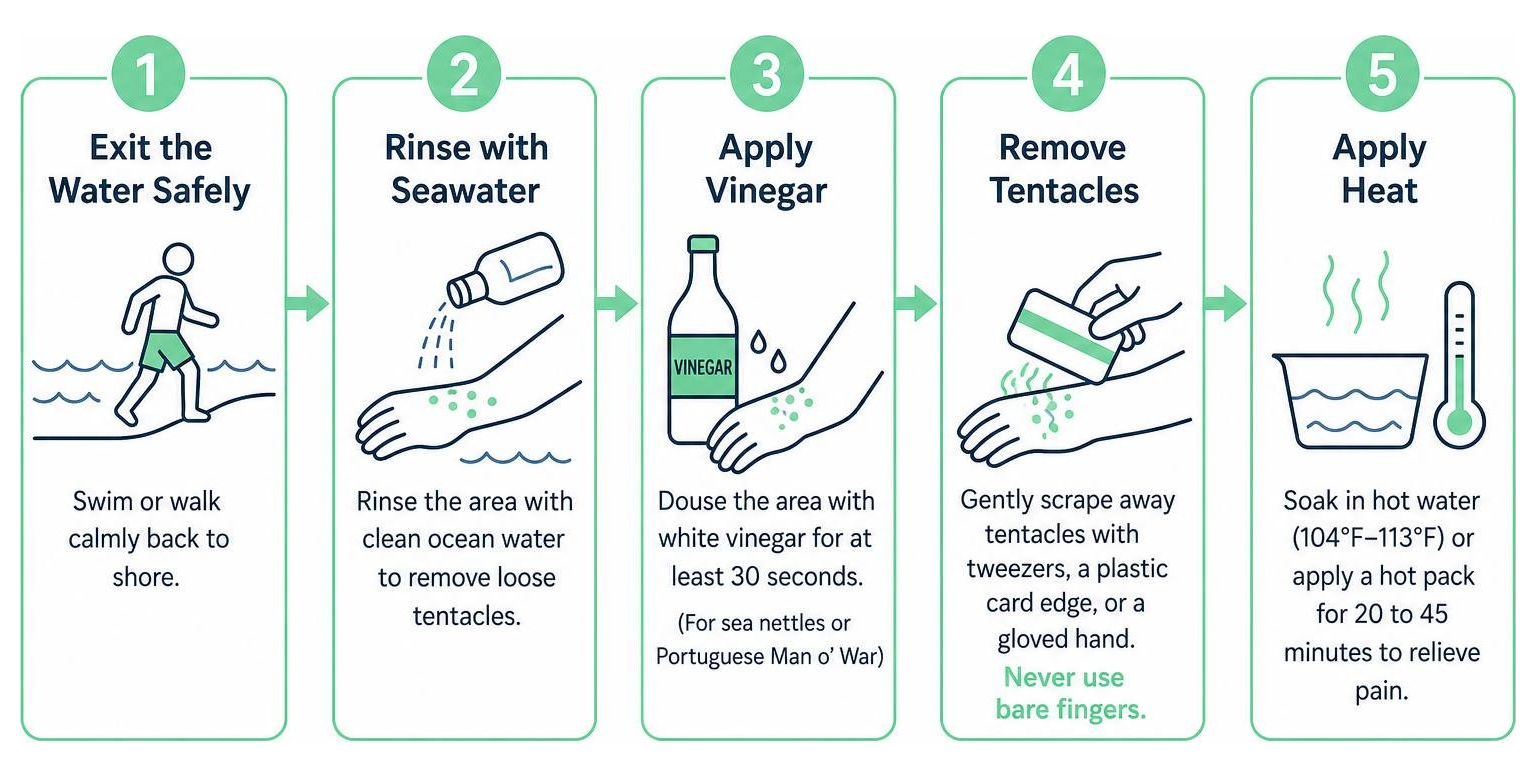
- Exit the Water Safely: Do not panic. Swim or walk calmly back to shore to avoid drowning or getting stung again.
- Rinse with Seawater: Pour clean ocean water over the affected area to rinse away loose tentacles and stinging cells.
- Remove Tentacles Carefully: Use tweezers, a plastic card edge, or a gloved hand to remove visible tentacles. Never use your bare fingers.
- Use Vinegar When Appropriate: If vinegar is available, it may help stop some unfired stinging cells from releasing more venom, especially for certain species. When in doubt, ask a lifeguard for local first-aid guidance.
- Apply Heat for Pain Relief: Once tentacles are gone, soak the area in hot water or apply a hot pack if it can be done safely without burning the skin.
If symptoms include difficulty breathing, swelling of the face or throat, chest pain, fainting, or signs of a severe allergic reaction, seek emergency medical care immediately rather than attempting home treatment.
Common Myths and Treatments to Avoid
There are countless beachside myths about treating jellyfish stings, many of which can make the sting worse:
- DO NOT use fresh water: Fresh water can trigger some remaining stinging cells to fire.
- DO NOT urinate on the sting: This is a myth and can make the situation worse.
- DO NOT rub or scrape with sand: Friction can trigger more stinging cells.
- DO NOT use alcohol or ammonia: These can irritate the skin and are not reliable first-aid treatments.
By the Way: What About Bioluminescent Comb Jellies?
Comb jellies deserve a quick mention because they are one of the most memorable things guests encounter with us on the Space Coast — but they are not the stinging jellyfish most beachgoers are worried about.
Comb jellies are harmless, non-stinging creatures that glow when disturbed at night. On the Space Coast, particularly in the protected waters of the Indian River Lagoon and Mosquito Lagoon near Titusville and Merritt Island, winter comb jelly season can create a completely different kind of jelly-like wildlife experience.
During our busiest summer months, guests often ask whether jellyfish will affect their trip. Because most of our tours take place in protected lagoons rather than ocean surf, the experience is very different from swimming at the beach, and we adjust routes based on current conditions when necessary.
The important planning distinction is this: summer ocean jellyfish season is mainly a beach-safety issue, while winter comb jelly season is a guided bioluminescence opportunity.
If you want to experience the glow without worrying about stingers, consider booking a comb jelly bioluminescence kayak tour. For more detail, read our guide to Indian River Lagoon comb jelly bioluminescence or these fun facts about comb jellies to know before your bioluminescence kayak tour.
Frequently Asked Questions About Florida Jellyfish Season
We hear a lot of questions from travelers planning Space Coast vacations. Here are the practical answers.
Are jellyfish in Florida only a summer problem?
No. Jellyfish can appear in Florida waters any time of year, but the main season is May through October, with peak activity in August and September. Winter has lower overall activity, though Portuguese man o’ war can still wash ashore after storms or strong winds.
Are there any jellyfish in Florida that can be fatal?
While Florida is home to several stinging species, fatal encounters are extremely rare. The bigger concern is a severe allergic reaction or a sting that causes systemic symptoms. If a sting victim experiences difficulty breathing, swelling of the lips or throat, chest pain, dizziness, fainting, or loss of consciousness, call 911 immediately.
How long can jellyfish tentacles remain dangerous after they die?
A jellyfish does not need to be alive to sting you. Tentacles from a dead jellyfish or Portuguese man o’ war can still contain active stinging cells, so never touch washed-up jellyfish or loose tentacles on the beach.
What is the difference between sea lice and jellyfish stings?
A typical jellyfish sting usually causes immediate, localized burning pain with red lines or welts. “Sea lice” are tiny jellyfish larvae that can get trapped under swimsuits or hair and cause a delayed, itchy rash after swimming.
When is jellyfish season in Florida for Space Coast beach trips?
For Cocoa Beach, Cape Canaveral, and nearby Space Coast beaches, the same general Florida pattern applies: jellyfish can appear year-round, but May through October is the main season and August through September usually deserves the most awareness.
Conclusion
Jellyfish season in Florida generally runs from May through October, with the highest activity in August and September. That does not mean you should avoid Florida during those months. It means you should check purple flags, pay attention to wind and local reports, avoid touching anything washed up on the sand, and know basic first aid before you swim.
Jellyfish are simply another part of Florida’s coastal ecosystem. Understanding when they are most common, knowing how to recognize different species, and following basic beach safety practices allows most visitors to enjoy Florida’s beaches with confidence. For those who want to experience Florida’s remarkable gelatinous marine life without worrying about stings, winter comb jelly season offers an entirely different — and unforgettable — kind of adventure.
Ready to see that glow for yourself? Explore our comb jelly bioluminescence kayak tour or start with our guide to where to find Florida’s most dazzling comb jelly displays from the Banana River to Titusville.
About Josh Myers
I’m Josh Myers, the owner and lead guide at Florida Adventurer. My work on Florida’s Space Coast includes helping guests identify the jelly-like species they see on the water, explaining the difference between harmless comb jellies and stinging ocean jellyfish, and answering seasonal questions before guests paddle through the Indian River Lagoon, Mosquito Lagoon, and nearby coastal areas. I train our guide team in strict safety protocols, local wildlife patterns, and responsible ecotourism practices so that every paddle stroke respects our environment while delivering a safe, educational, and unforgettable experience.
About Florida Adventurer
Florida Adventurer specializes in guided bioluminescence kayak tours, clear kayak experiences, and intimate wildlife encounters on Florida’s Space Coast. Based in the Titusville, Cocoa Beach, and Merritt Island areas, we are dedicated to helping visitors from nearby Orlando and around the world safely experience the glowing wonders of the Indian River Lagoon and Mosquito Lagoon. Our small-group eco-tours are led by knowledgeable, certified local guides who emphasize environmental stewardship, safety, and fun. Whether you are paddling through a summer field of glowing dinoflagellates or holding a harmless, shimmering comb jelly during a crisp winter evening, we provide the high-quality gear and local expertise needed for the adventure of a lifetime.
Ready to Experience It Yourself?
Don’t let jellyfish season keep you on the couch. While the ocean beaches have their seasonal peaks, our protected inland lagoons offer incredible, stinger-free adventures year-round. Book a guided tour with us today and paddle through the glowing, magical waters of the Space Coast.