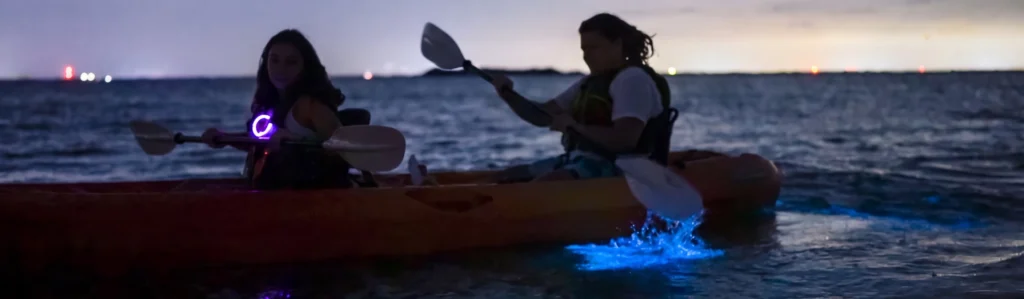
What Creates Indian River Lagoon Bioluminescence?
Indian River Lagoon bioluminescence is a seasonal natural phenomenon visible in parts of Florida’s Space Coast lagoon system when light-producing organisms are active and conditions allow. What guests see can vary with season, weather, water conditions, ambient light, and recent biological activity.
Warmer periods are generally associated with dinoflagellate displays, while cooler periods can bring bioluminescent comb jellies. April and May can be transitional, so there is no single calendar date when one type of glow simply switches to the other.
Moonlight affects visual contrast rather than making the organisms glow more strongly. Darker skies can make existing bioluminescence easier to perceive when the other conditions cooperate.
How Indian River Lagoon Bioluminescence Changes by Season
Different bioluminescent organisms may become more noticeable at different times of year, but seasonal patterns are guides rather than guarantees. Conditions can overlap or shift from year to year.
| Seasonal pattern | What guests may see | Planning note |
|---|---|---|
| Warmer months | Dinoflagellates often associated with visible flashes/trails | Conditions vary |
| Cooler periods | Comb jellies may become more noticeable | Conditions vary |
| April–May transition | Either pattern may be present | Check current observations |
Guests often assume glowing waters happen only during the warmest heat of summer. While brighter dinoflagellate displays can coincide with summer warmth, cooler periods can bring a different type of visual experience.
Warmer-Month Dinoflagellate Displays
During warmer periods, dinoflagellates may be active in protected lagoon waters. When a paddle stroke, fish movement, or surface ripple disturbs active cells, guests may see brief blue flashes or glowing trails. At the cellular level, bioluminescence is produced through a chemical reaction; NOAA Ocean Exploration explains how bioluminescence works.
A guided tour can help guests understand what conditions look promising before launch, but natural glow levels vary and cannot be guaranteed.
Cooler-Season Comb Jellies
Comb jellies are not true jellyfish and do not sting. Their moving rows of cilia can create a rainbow-like shimmer when external light reflects from them, while their actual bioluminescence is a separate light-producing process that may be visible in dark conditions.
April and May serve as transitional months. During this window, comb jellies may linger while early dinoflagellate populations begin multiplying. Check current conditions and tour availability.
Moonlight, Weather, and Visibility
Seasonal patterns can influence which organisms are more noticeable, while nightly visibility also depends on atmospheric darkness, wind, surface conditions, and water clarity.
Lunar Cycles and Dark Sky Timing
Moonlight affects contrast, not the biological strength of the glow. Darker skies can make faint bioluminescence easier to perceive, but strong displays may still be visible under other moon phases depending on moonrise, moonset, clouds, local lighting, and water conditions.
Wind, Water Clarity, and Storm Impacts
Wind, rain, storms, surface conditions, and water clarity can all affect paddling conditions and visibility along the Space Coast:
- Wind and Surface Conditions: Calmer conditions can make lagoon waters easier to paddle and can make subtle flashes easier to see. Strong winds can create surface chop and make individual bioluminescent flashes harder to track from the kayak.
- Rain, Storms, and Water Clarity: Rain and changing weather can affect water clarity, surface conditions, and visibility.
- Storm Protocols: Tours may operate in rain when conditions remain safe. Florida Adventurer waits at least 30 minutes after lightning within 10 miles, and unsafe conditions may require delays, rebooking, or a raincheck. Review the current cancellation and weather policy before your trip.
How the Indian River Lagoon and Mosquito Lagoon Fit Together
The broader Indian River Lagoon system includes Mosquito Lagoon as well as other connected Space Coast lagoon waters. That geographic system is broader than any one Florida Adventurer tour location, so tour-area names and lagoon-system geography should not be treated as interchangeable.
Where Florida Adventurer Operates Within the Lagoon System
Florida Adventurer’s current customer-facing tour areas are Cocoa Beach — Kiwanis Island in Merritt Island, serving the Cocoa Beach area; Titusville — Haulover Canal; and Mosquito Lagoon — Beacon 42 Boat Ramp within Merritt Island National Wildlife Refuge.
Choosing the right launch location helps your party plan a nighttime paddle on the Indian River Lagoon and its interconnected waterways.
Choosing a Bioluminescence Tour Format
Florida Adventurer offers several ways to experience bioluminescence, depending on your group’s comfort, timing, and preferred level of paddling:
- Traditional bioluminescence kayaking: A guided nighttime kayak experience focused on observing changing lagoon conditions and any visible glow.
- Clear-kayak bioluminescence: A clear-kayak option for guests who want a different view of the water during a nighttime tour.
- Sunset-to-bioluminescence experiences: A tour format that begins around sunset and continues into darker conditions.
- Group rafting: A multi-person option for groups that prefer to share the experience together.
Age, weight, duration, and vessel requirements vary by specific tour. Start with Florida Adventurer’s bioluminescence tour options to compare current availability.
What to Know Before a Night Tour
Night paddling requires preparation to protect both guests and the delicate estuarine habitat. Observe wildlife from the kayak or beneath it when conditions allow—do not touch, hold, scoop, collect, chase, crowd, feed, or otherwise handle wildlife.
Plan to get a little damp from normal paddling and launch conditions. Wear comfortable, quick-dry clothing appropriate for being on the water, protect belongings that should stay dry, and consider keeping a towel or change of clothes in your vehicle for after the tour. Follow the instructions provided with your specific booking for any additional items.
FAQs
When Can You See Bioluminescence in the Indian River Lagoon?
Warmer periods generally favor dinoflagellate displays, while cooler periods can bring comb jellies. April and May can be transitional months, so conditions vary and no single timing pattern is guaranteed. Check current conditions and tour availability before planning your visit.
How does the moon phase affect glowing water visibility?
Darker skies can improve visual contrast, making existing bioluminescence easier to see. Moonlight does not make the organisms biologically brighter or dimmer; it is only one of several planning factors alongside weather, water conditions, and local lighting.
Are guided night kayak tours safe for beginners and children?
Florida Adventurer currently offers tour options for guests ages 5 and older, but vessel, weight, pairing and participation requirements vary by experience. Review the requirements for the specific tour before booking and follow guide instructions during the safety orientation. Bioluminescence and wildlife sightings are natural and are not guaranteed.
How Does Mosquito Lagoon Relate to the Indian River Lagoon?
Mosquito Lagoon is part of the broader Indian River Lagoon system. Florida Adventurer lists Mosquito Lagoon as one of its three customer-facing tour areas, alongside Cocoa Beach and Titusville.
Where Does Florida Adventurer Offer Bioluminescence Tours?
Florida Adventurer offers bioluminescence tours from three customer-facing areas: Cocoa Beach, with launches at Kiwanis Island in Merritt Island; Titusville, at Haulover Canal; and Mosquito Lagoon, at Beacon 42 Boat Ramp. Merritt Island is geographic context for the Cocoa Beach launch, not a fourth customer-facing tour area.
What to Expect From Indian River Lagoon Bioluminescence
Indian River Lagoon bioluminescence can be a memorable part of a Space Coast night on the water, but it is a natural phenomenon that changes with the season and nightly conditions. Warmer periods may favor dinoflagellate displays, cooler periods can bring comb jellies, and April and May may be transitional.
Choose a launch location and tour format that fit your group, then arrive with realistic expectations about weather, water conditions, ambient light, and natural visibility. A guided eco-tour offers local context and a responsible way to explore this dynamic estuary, while the amount and appearance of any glow can vary from one outing to the next.
About Josh Myers
Josh Myers is the owner of Florida Adventurer and an experienced local Space Coast eco-tour operator. His firsthand knowledge of the area helps inform Florida Adventurer’s practical approach to guided kayaking, local waterways, changing natural conditions, and responsible wildlife viewing.
About Florida Adventurer
Florida Adventurer is a Florida Space Coast eco-tour operator offering bioluminescence kayaking, clear kayak experiences, dolphin and manatee kayaking, sunset tours, and group rafting. Current customer-facing tour areas include Cocoa Beach, Titusville, and Mosquito Lagoon, with individual launch details provided for each experience.
Explore Bioluminescence Tours on Florida’s Space Coast
Compare Florida Adventurer’s current bioluminescence tour options by location and tour format, then choose the experience that best fits your group, travel plans and current availability.