Where Can You See Glowing Water at Night?
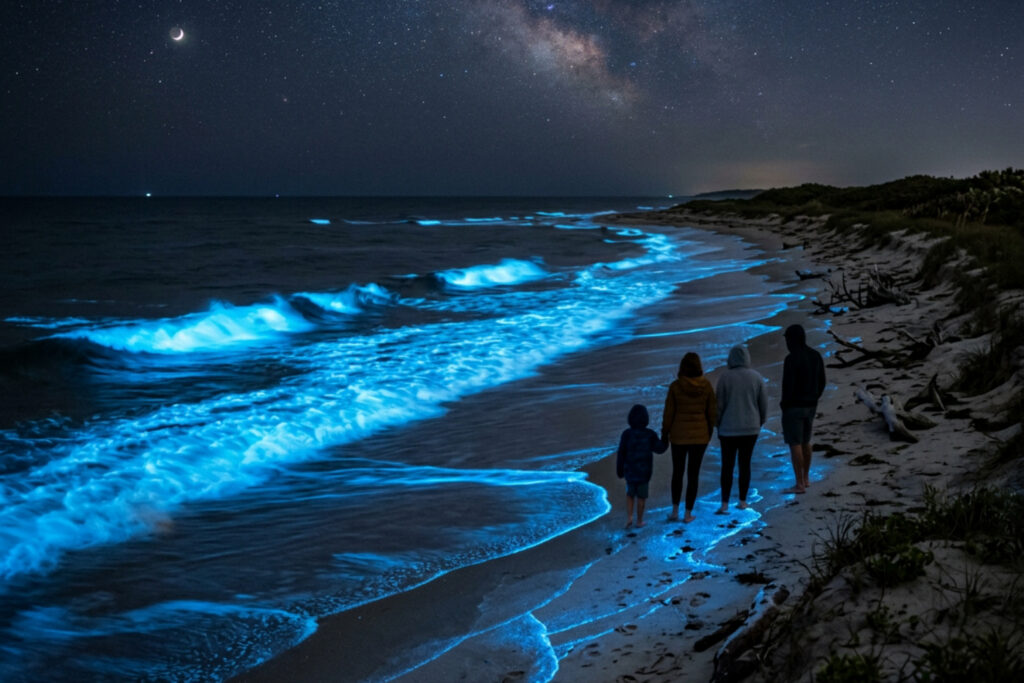
A glowing beach usually means bioluminescent organisms becoming visible in breaking waves, wet sand, or shallow water after dark. But many famous glowing-water experiences are not open-ocean beaches at all — they happen in protected bays, lagoons, estuaries, or seasonal marine events.
That distinction matters for travelers. A beach that glows may be something you can watch from shore, while other bioluminescent water locations are best seen by kayak, raft, or boat in calmer protected water.
Open-ocean bioluminescence is often episodic. A beach may be known for past displays without offering predictable viewing on a particular travel date.
Here are representative examples of the main glowing-water experience types:
| Destination | Best Season | Primary Organism | Experience Type | Typical Viewing Method |
|---|---|---|---|---|
| Maldives island shorelines | Often seasonal and event-dependent | Bioluminescent plankton | Beach and shoreline | Shoreline viewing during dark conditions |
| California or Oregon coast | Episodic bloom events | Dinoflagellates | Episodic ocean surf | Shoreline viewing when blooms occur |
| Mosquito Bay, Puerto Rico | Generally reliable, but still conditions-dependent | Dinoflagellates | Enclosed bay | Guided kayak or electric boat |
| Florida Space Coast (Titusville, Cocoa Beach area) | Summer for dinoflagellates; cooler months for comb jellies | Dinoflagellates or comb jellies | Lagoon and estuary | Guided kayak or raft |
| Toyama Bay, Japan | Spring firefly-squid season | Firefly squid | Seasonal firefly-squid event | Boat or shoreline observation |
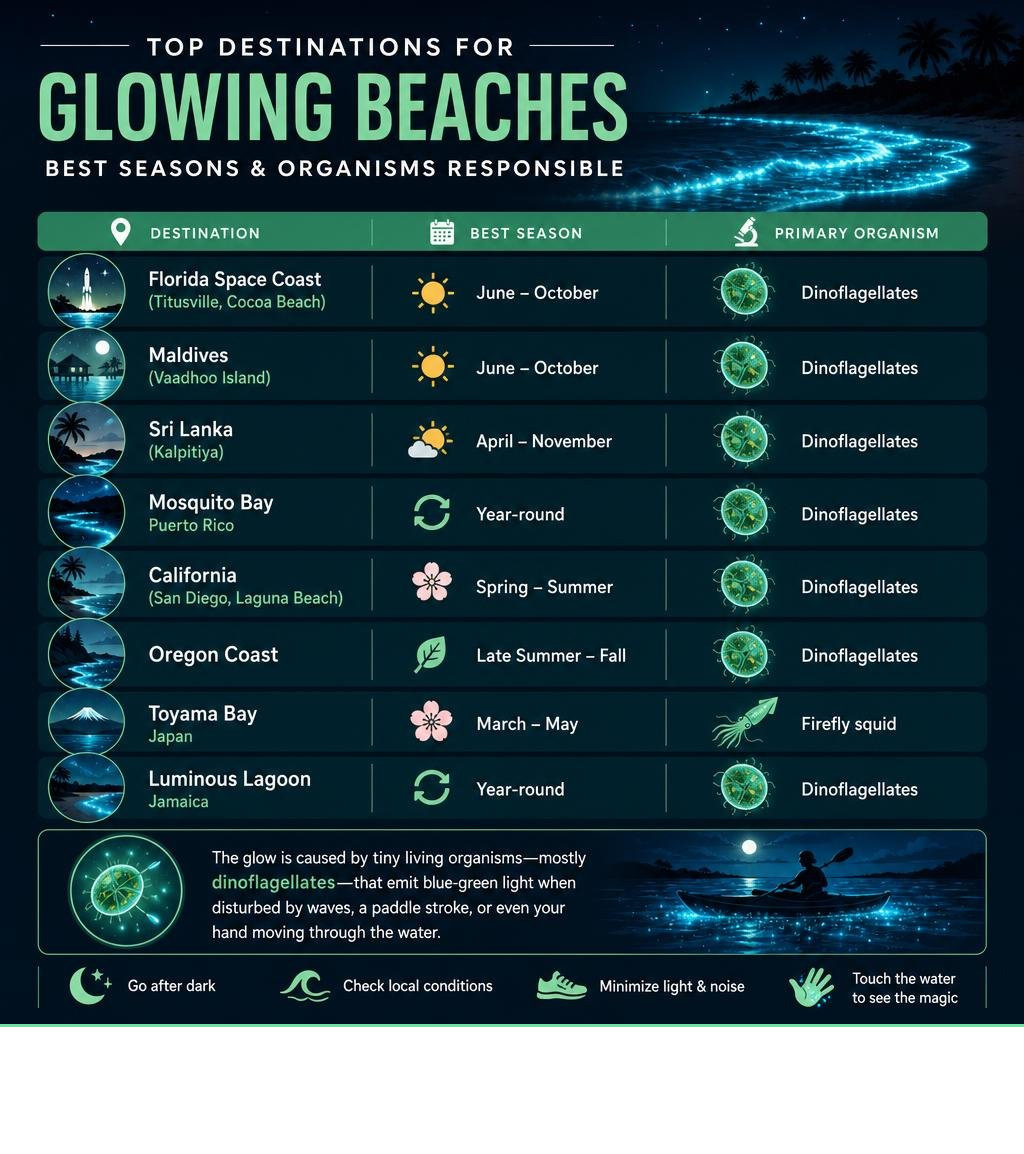
The glow is caused by tiny living organisms — often dinoflagellates in plankton blooms — that emit blue-green light when disturbed by waves, a paddle stroke, or even your hand moving through the water. It looks unreal. It feels unreal. But it is completely natural.
Some locations produce it reliably for months at a time. Others offer only a few fleeting nights per year. The best bioluminescent water locations do not all produce the same type of experience: some feature glowing surf, while others are best explored by kayak or boat.
I’m Josh Myers, owner of Florida Adventurer and an experienced guide on Florida’s Space Coast. My firsthand experience comes from leading bioluminescence tours in the Indian River Lagoon and Mosquito Lagoon. This guide uses that on-the-water perspective to explain how Florida’s lagoon experience differs from glowing shorelines elsewhere, while destination-specific information should be confirmed through current local and scientific sources before traveling.
Glowing Beaches vs. Bioluminescent Bays and Lagoons
Not every famous glowing-water destination is actually a beach. At some locations, bioluminescent organisms become visible in breaking ocean waves or wet shoreline sand. At others, the strongest displays occur in protected bays, lagoons, and estuaries that are explored by kayak or boat.
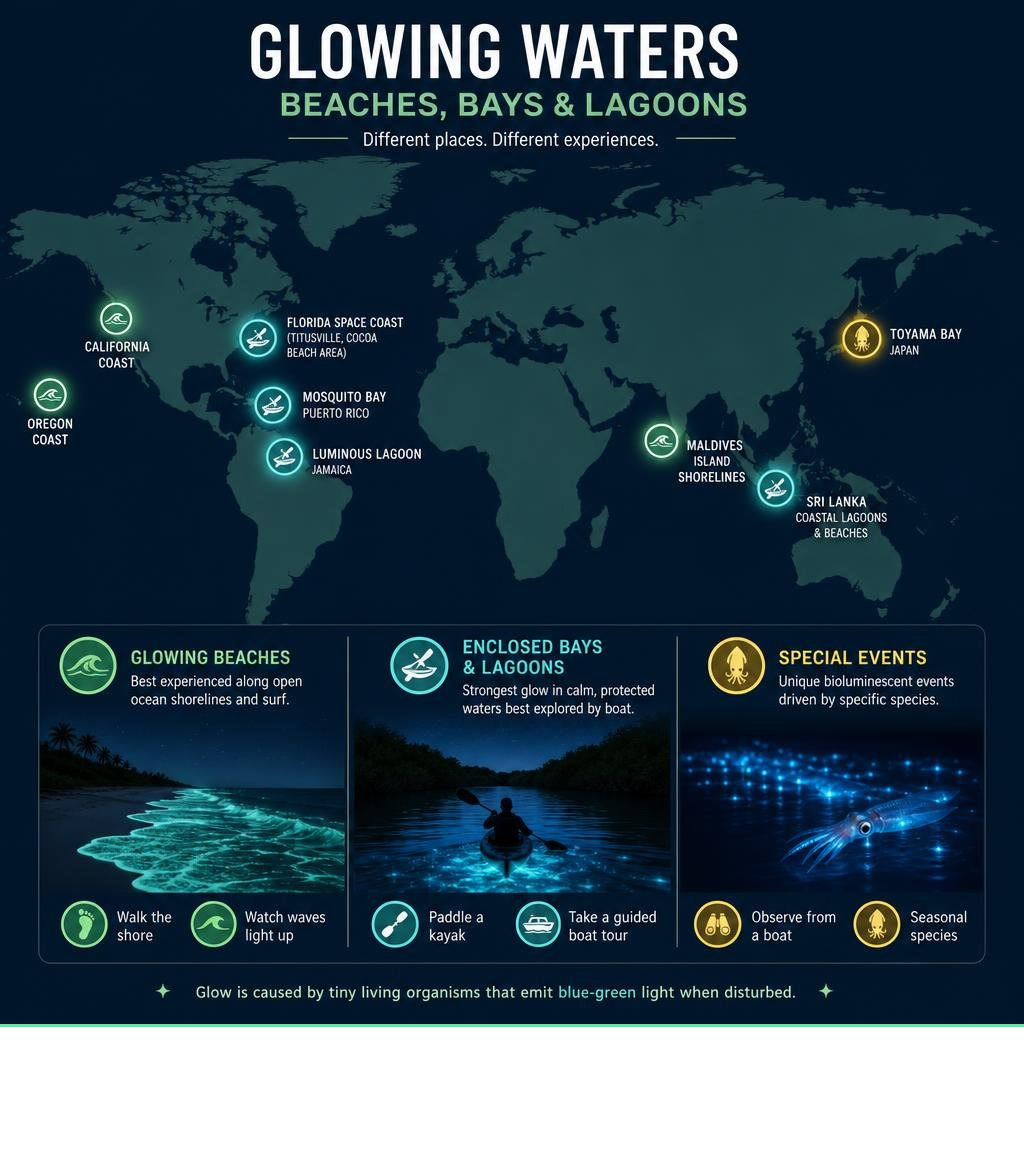
Florida’s Space Coast belongs in the second category. Visitors staying in Cocoa Beach generally travel to the nearby Banana River, Indian River Lagoon, or Mosquito Lagoon rather than expecting the Atlantic shoreline itself to glow consistently.
Understanding the setting helps travelers choose between shoreline viewing, a guided paddle, a boat tour, and other seasonal marine experiences.
The Science Behind the Glowing Beach Phenomenon
Many glowing beach and lagoon displays are caused by dinoflagellates, single-celled organisms that can produce visible light when movement disturbs the surrounding water.
This reaction involves a light-emitting molecule called luciferin and an enzyme called luciferase. When luciferin reacts with oxygen in the presence of luciferase, it releases energy in the form of brilliant blue-green light.
Because this chemical process releases virtually no heat, scientists often describe bioluminescence as living light. NOAA Ocean Exploration explains the broader science of bioluminescence as light produced by organisms through a chemical reaction.
On Florida’s Space Coast, dinoflagellates are generally associated with warm-season displays, while comb jellies may be more visible during cooler months. Comb jellies are not true jellyfish and do not have the stinging cells associated with jellyfish. They should still be observed without handling or disturbing them. NOAA also notes that some rainbow-like color effects in comb jellies can come from light scattered by their moving comb rows rather than bioluminescence alone.
Examples of Glowing Beaches, Bays, and Lagoons
Chasing the glow is a global adventure, but not every famous destination delivers the same kind of nighttime scene. Some are true beaches where the surf or wet sand can sparkle. Others are protected lagoons, bays, or estuaries where the glow is more reliable from a vessel than from the shoreline. If you want a broader bucket-list roundup, check out our guide to the best places in the world to witness bioluminescence. This article focuses on the difference between a beach, a bay, a lagoon, and a guided water experience.
The Maldives: Shoreline Glow, Not a Guaranteed Nightly Attraction
The Maldives is home to some of the most famous glowing shorelines on Earth, often described online as the “Sea of Stars.” Vaadhoo Island is the best-known example, but the effect is not a scheduled attraction that appears every night.
The glow is associated with bioluminescent plankton that become visible when disturbed by waves or movement. Because blooms, currents, moonlight, and local conditions all matter, travelers should treat Maldives shoreline bioluminescence as a possible natural event rather than a guaranteed feature of any one island or date.
Check recent local reports before planning around the phenomenon, and observe the shoreline without disturbing organisms or assuming that glowing footprints will appear.
California and Oregon: Episodic Pacific Coast Neon Waves
On the Pacific Coast of the United States, bioluminescence is a highly sought-after but unpredictable natural display. In California, nighttime blue-wave events are often associated with dinoflagellate blooms that may appear reddish or brownish during the day and glow when waves crash at night.
Because these events move with blooms, weather, surf, and currents, a beach that glows in one week may look ordinary the next. California locations such as Newport Beach, Laguna Beach, San Diego beaches, La Jolla, and Scripps Beach are better described as places where events have been reported, not as reliably scheduled viewing sites. Tomales Bay is a different experience again: a protected bay often explored by guided night paddle rather than open-ocean surf viewing.
In Oregon, the phenomenon is rarer and should be framed as an occasional open-coast event rather than an established seasonal attraction. Before planning around a specific beach that glows, confirm whether the display is currently active, seasonal, occasional, or commonly viewed from a guided vessel rather than from shore. To see how similar plankton blooms behave across the Atlantic, you can read about how bioluminescent plankton lit up waves on an Anglesey beach.
Florida’s Space Coast: A Lagoon Experience, Not a Glowing Ocean Beach
Florida’s Space Coast is one of the best-known U.S. destinations for seasonal bioluminescence, particularly in the Indian River Lagoon and Mosquito Lagoon. Visibility and intensity vary with season and current conditions.
The Indian River Lagoon, Banana River, and Mosquito Lagoon are shallow, brackish waterways that form a highly diverse estuarine system. The shallow, protected lagoon system can support seasonal concentrations of bioluminescent organisms.
If you are planning a trip to the Sunshine State, our guide to Florida’s glowing waters and the best places to see bioluminescence in Florida is a useful starting point for your itinerary.
Why Cocoa Beach Visitors Usually Go Into the Lagoon
Cocoa Beach sits on the Atlantic Ocean, where surf, tides, weather, and water movement make shoreline bioluminescence less predictable. The lagoon side of the Space Coast is different: calmer water, darker launch areas, and protected habitat make guided paddling a better fit for seeing the glow.
That is why many visitors staying in Cocoa Beach, Orlando, Titusville, Merritt Island, or near Kennedy Space Center book a lagoon tour instead of waiting for the beach itself to light up. When comparing bioluminescent water locations, consider the water type, seasonality, viewing method, moonlight, and how predictable the phenomenon is.
Comparing Tour Formats: Clear Kayaks vs. Tandem Kayaks vs. Rafts
Florida Adventurer offers different vessel formats at selected launch locations. Availability, age limits, weight limits, seating arrangements, and tour duration vary by specific tour. When you book an evening adventure with us on the Space Coast, the right format depends on your group size, comfort level, and the specific tour you choose.
- Clear Kayaks: These transparent vessels offer an immersive view into the water beneath you. As you paddle through dark lagoon water, you can look through the bottom of your kayak to watch glowing movement below when conditions align. Handling varies by kayak model, wind, current, and paddler comfort, so guests should review the requirements for the specific tour.
- Tandem Kayaks: Traditional tandem kayaks can suit many first-time paddlers who want a familiar vessel and a clear view of the water around them. Handling still depends on the boat, conditions, and paddler comfort.
- Group Rafts: Florida Adventurer’s Beacon 42 group-rafting experience uses multi-passenger rafts accommodating up to 10 guests, allowing families and larger groups to remain together in one vessel. The published duration is approximately 90 minutes.
For a deeper dive into choosing your vessel, read our article on bioluminescent kayaking in Florida.
Wildlife Encounters Under the Stars
What sets the Space Coast apart from many other nighttime water experiences is the possibility of nearby marine life. Paddling through the dark is exciting on its own, and when local wildlife moves through bioluminescent water, the moment can become unforgettable.
Manatees, dolphins, mullet, and other animals may be present, but wildlife sightings are never guaranteed. When animals move through active bioluminescent water, their motion can sometimes create visible trails or disturbed areas of glow.
Schools of mullet may also leap near the kayaks, leaving brief flashes of blue light in the air and water. During cooler conditions, guests may see comb jellies glowing in the water or beneath the vessel. They should be observed without touching, scooping, or removing them from the water.
To learn more about the history and ecology of these waterways, explore Bioluminescence Florida: A Magical Historical Adventure.
How to Plan Your Night: Moon Phases, Seasons, and Weather
Darker skies often improve the visible contrast between the surrounding water and the glow, but moon phase is only one planning factor. Season, cloud cover, wind, water clarity, recent conditions, tour availability, and local guidance all matter.
| Pattern | Timing | Primary Viewing Notes | Ideal Planning Approach |
|---|---|---|---|
| Summer pattern | June through October | Dinoflagellates are typically associated with warmer seasonal bioluminescence on Florida’s Space Coast. | Choose darker-sky dates when possible and check current tour availability and conditions. |
| Cooler-season pattern | November through March | Comb jellies are more commonly discussed during cooler months. | Look for dark-sky weeks, low wind, and current guidance from local operators. |
| Transitional months | April and May | Conditions can shift between cooler-season and summer patterns. | Check current availability and recent conditions before planning around a specific date. |
To help you decide when to book, we encourage you to look at our guide on Where to See Bioluminescence in Florida.
Best Times to See Bioluminescence on Florida’s Space Coast
The summer dinoflagellate pattern on Florida’s Space Coast generally runs from June through October, with July through September often treated as a strong planning window. April and May are transitional months, so visitors should confirm current availability and recent conditions rather than assuming the same pattern applies all spring.
New-moon periods and other darker-sky windows can make the glow easier to see because there is less competing moonlight. They do not make the organisms themselves brighter.
If you are staying nearby, a guided lagoon experience is a popular way to explore the Space Coast after dark.
Practical Tips for Clothing, Night Vision, and Photography
To make the most of your night on the water, preparation is key. Here are the top tips our guides share before every launch:
- Wear the Right Gear: We encourage all guests to wear water shoes for launch comfort, traction, and foot protection. Quick-dry, long-sleeved clothing is ideal to keep you comfortable in the evening air.
- Bring Insect Repellent: Because our tours launch from natural and marsh-adjacent launch areas such as those near Mosquito Lagoon, mosquitoes can be active. Apply insect repellent on land before boarding your kayak.
- Protect Your Eyesight: Avoid bright flashlights, camera flashes, and repeated phone-screen use once you are on the water. Limiting bright light helps your eyes adjust to the darkness and makes faint bioluminescence easier to notice.
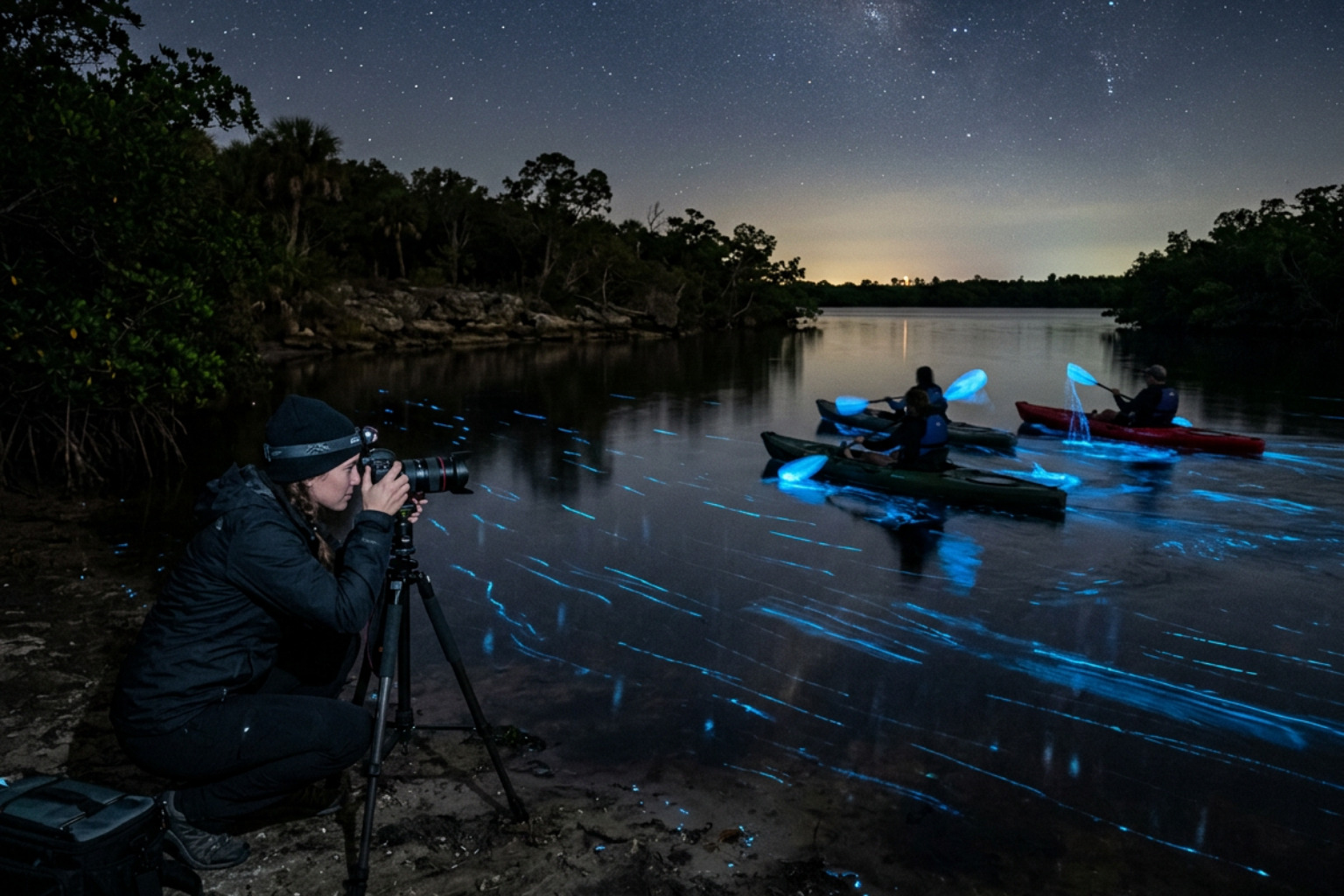
- Photograph Carefully: Bioluminescence is difficult to photograph because the glow is faint, the water moves, and most tours take place in very dark conditions. Turn off the flash, protect the device from water, and follow guide instructions before using equipment. Camera settings vary by device and conditions.
For more detailed advice, check out our photography tips for capturing bioluminescence kayaking.
Frequently Asked Questions About Bioluminescent Beaches
Is it safe to swim in bioluminescent waters?
Do not assume bioluminescent water is automatically safe for swimming. Water quality, organism type, local advisories, currents, wildlife, and nighttime conditions vary by location. Florida Adventurer guests should remain in their assigned vessel and follow guide instructions rather than entering the lagoon during a tour.
Can you see the glow after it rains?
Light rain does not automatically cancel a Florida Adventurer tour when conditions remain safe. Lightning, strong wind, rough water, or other unsafe conditions may cause a delay, route change, or cancellation. Florida Adventurer waits at least 30 minutes after a lightning strike within 10 miles before launching.
Review Florida Adventurer’s full weather, cancellation, and rebooking policy before your scheduled tour.
What should I wear on a night kayaking tour?
We recommend wearing lightweight, quick-dry athletic clothing. Long sleeves and lightweight pants are ideal because they provide a natural barrier against mosquitoes and cool evening breezes. Avoid wearing heavy cotton fabrics or denim, which hold moisture if you get splashed. Most importantly, wear sturdy water shoes to protect your feet during launch and boarding.
Which Glowing-Water Experience Is Right for You?
Choose an actual glowing shoreline if you want to watch bioluminescence from the beach and can remain flexible about timing. Choose a bay or lagoon experience if you prefer a guided kayak, raft, or boat tour with local route support. On Florida’s Space Coast, the most dependable planning strategy is to book a lagoon experience rather than expect Cocoa Beach’s Atlantic shoreline to glow.
If you are looking for a unique date night or a memorable evening with loved ones, discover the connection between bioluminescence and romance.
Continue Exploring Florida’s Glowing Waters
- For a Florida-specific trip overview, start with our guide to Florida’s glowing waters and the best places to see bioluminescence in Florida, which compares the state’s major viewing areas.
- If you want to understand the paddling experience before booking, read our guide to bioluminescence kayaking in Florida, including what the tour feels like on the water.
- For seasonal planning, use where to see bioluminescence in Florida to compare timing, locations, and viewing conditions.
- To add more local context, explore Bioluminescence Florida: A Magical Historical Adventure for background on the Space Coast waterways.
About Josh Myers
Josh Myers is the owner of Florida Adventurer and an experienced Space Coast eco-tour guide with firsthand experience leading bioluminescence and wildlife tours in the Indian River Lagoon and surrounding waterways. He helps guests understand how season, moonlight, weather, water conditions, and vessel format can shape the experience. His approach emphasizes practical preparation, responsible wildlife viewing, beginner support, and realistic expectations.
About Florida Adventurer
Florida Adventurer offers guided bioluminescence, clear-kayak, manatee, dolphin, and wildlife experiences across Florida’s Space Coast, including Titusville, Merritt Island, and Cocoa Beach. Its small-group tours emphasize guest safety, responsible wildlife viewing, local ecosystem education, and planning based on current conditions.
Compare Bioluminescence Tour Options
Start with Florida Adventurer’s Florida bioluminescence kayaking tours page to compare current routes, timing, vessel formats, and availability.
If you want to look through the vessel into the water below, review the Beacon 42 clear-kayak tour. Families and larger groups that want to remain together can compare the Beacon 42 group-rafting tour. Visitors staying near Cocoa Beach can also explore clear-kayak bioluminescence tours near Cocoa Beach.
Choose by location, vessel type, current availability, and group comfort rather than expecting the Atlantic shoreline to glow on demand.