
Florida Has Some of the World’s Best-Known Glowing Water — Here’s Where to Find It
A bioluminescent beach in Florida is real — but for planning purposes, think “beach-area vacation plus lagoon tour,” not a casual walk from your hotel room to glowing ocean waves.
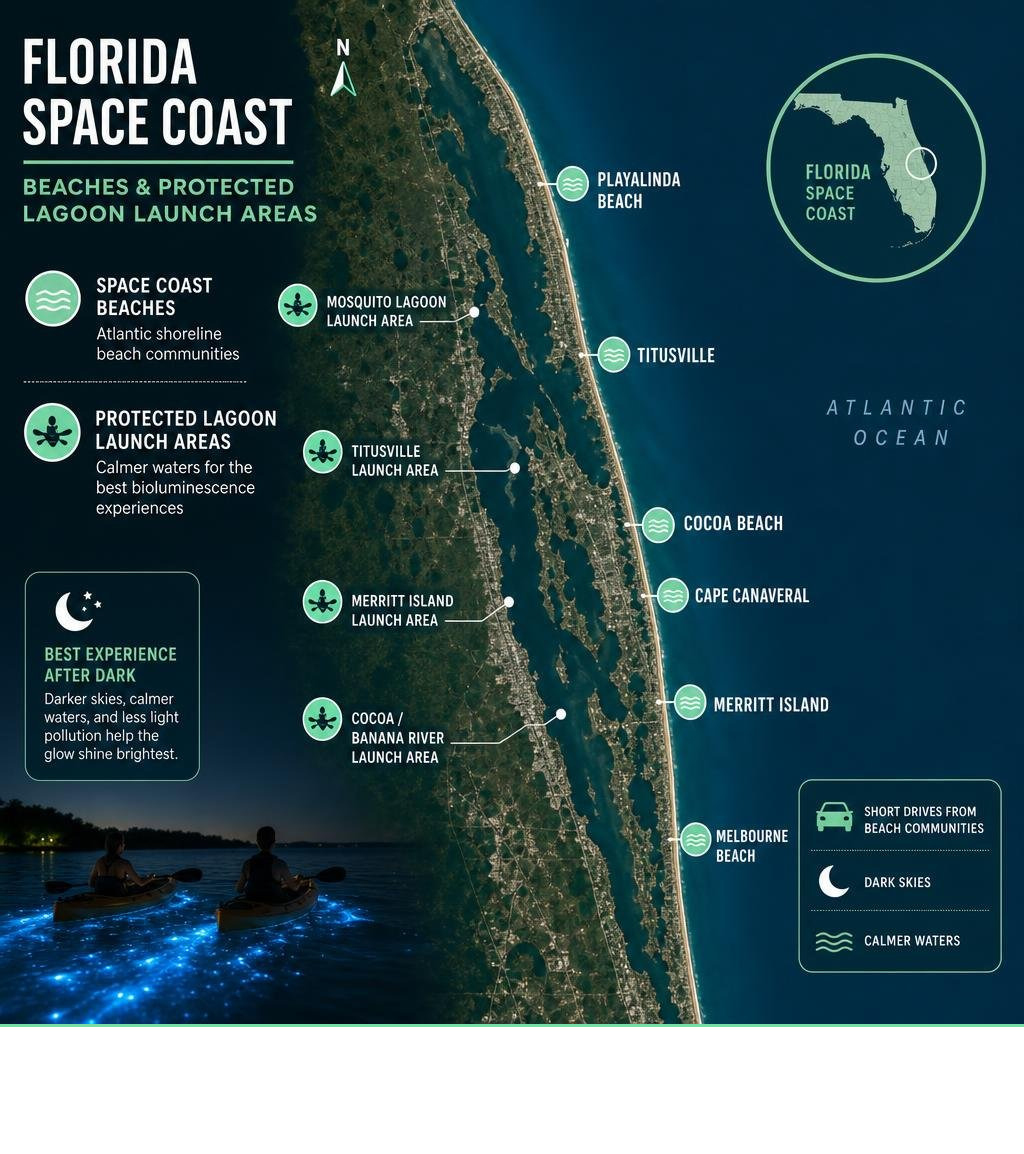
Most travelers who search for a bioluminescent beach in Florida are really looking for the best place to stay, when to visit, and how to see the glow without guessing. On Florida’s Space Coast, the answer is usually to spend the day near the beach, then meet a guide after sunset at a calmer lagoon, river, canal, or refuge launch.
If you are staying in Cocoa Beach, Cape Canaveral, or another Space Coast beach town, you are still in an excellent area for bioluminescence. Just plan for a short drive to the launch rather than expecting the brightest glow directly in the Atlantic surf. For help planning the beach-town portion of your trip, see our guide to bioluminescence near Cocoa Beach.
The most reliable displays are found in the protected lagoons and estuaries behind Florida’s beach towns, especially along the Space Coast near Cocoa Beach, Titusville, Merritt Island, and the Indian River Lagoon.
If you are comparing bioluminescent beaches in Florida, the Space Coast stands out because beach towns, darker refuge areas, and calm lagoon launches are all close together.
Here are the top places to plan a Florida bioluminescence trip:
| Location | Best Season | What You’ll See | Best For | Typical Drive From |
|---|---|---|---|---|
| Indian River Lagoon (Titusville) | June – October | Neon blue dinoflagellates | Wildlife, bright summer glow, and Orlando visitors | Orlando, Titusville, Kennedy Space Center |
| Mosquito Lagoon | June – October | Bright blue dinoflagellate glow | Dark skies and a quieter, more remote feel | Titusville, Merritt Island, Orlando |
| Banana River (Cocoa Beach area) | June – October | Blue sparkles + possible manatees | Convenience for Cocoa Beach, Cape Canaveral, and families | Cocoa Beach, Port Canaveral, Cape Canaveral |
| Merritt Island Wildlife Refuge | Year-round | Dinos in summer, comb jellies in winter | Wildlife, dark skies, and nature-focused guests | Cocoa Beach, Port Canaveral, Kennedy Space Center |
| Haulover Canal | Year-round | Consistent glow + wildlife movement | Reliability, wildlife movement, and guide-selected routes | Orlando, Titusville, Merritt Island |
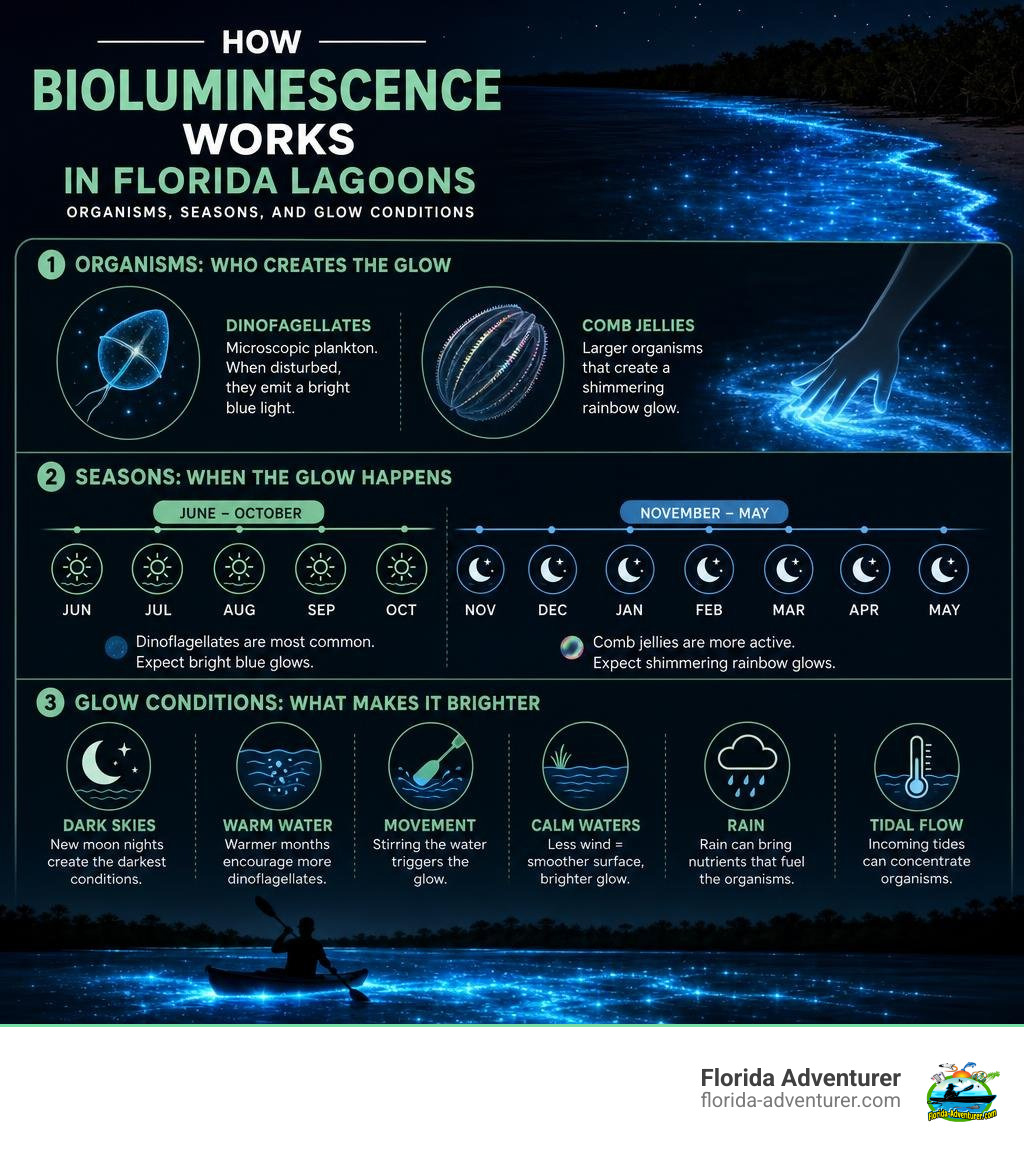
The best months for the blue dinoflagellate glow are July and August, especially around a new moon when skies are darkest. Winter visitors can still see bioluminescence, but the experience changes: comb jellies create a softer, shimmering glow from roughly November through May.
Most people experience the glow on a guided kayak or raft tour that lasts about 1–2 hours. Tours typically depart from lagoon launch sites near Titusville, Merritt Island, and Cocoa Beach, all within a reasonable drive of Orlando and the Space Coast beach communities.
The most important planning choice is matching your launch area, season, moon phase, and vessel type to the experience you want. During strong blooms, the water can create vivid blue trails behind paddles and fish, while quieter nights may feel more subtle and wildlife-focused. As local guides, we set realistic expectations because every night is different, and wind, rain, moonlight, tide, and water clarity all influence how bright the glow appears.
Use this guide to choose the right season, beach town, launch area, and tour style for your trip.
Why Florida’s Glowing Water Isn’t Usually on the Ocean Beach
Open-ocean beaches are beautiful, but they are not usually the best place to plan a reliable bioluminescence viewing experience. The same surf that makes the shoreline fun during the day can make the glow harder to see at night.
Ocean wave action constantly mixes and dilutes the water. Breaking surf spreads the organisms out, stirs up sand, and adds reflected light and motion that can wash out the subtle flashes your eyes are trying to catch. Even when bioluminescent organisms are present offshore, the open beach environment is less predictable than a shallow, protected lagoon.
Protected estuaries work differently. The Indian River Lagoon, Banana River, Mosquito Lagoon, and nearby canals are calmer, shallower, and more sheltered from heavy surf. On dark nights, that stillness helps every paddle stroke, fish movement, and hand swirl stand out more clearly.
Darkness is another major factor. Many oceanfront areas have hotels, condos, streetlights, restaurants, and beach traffic nearby. The lagoon launch sites we use are selected partly because they offer darker skies, calmer water, and better protection from wind. Some evenings our guides adjust launch locations or routes based on wind direction, water movement, recent weather, and where the glow has been strongest.
That is why the best “beach” plan is often this: enjoy Cocoa Beach or the Space Coast shoreline during the day, then meet your guide after sunset at a protected lagoon launch where Florida’s glowing water is much easier to experience up close.
The Science Behind Florida’s Bioluminescent Water
A little science helps explain what you are seeing on the water, but the planning takeaway is simple: Florida’s glow is seasonal, condition-dependent, and easiest to experience when you are on calm water after dark.
Bioluminescence is light produced by living organisms. In Florida’s lagoons, that light appears when tiny organisms are disturbed by motion — a paddle stroke, a swimming fish, a moving kayak, or your hand gently swirling the water.
On the Space Coast, two seasonal displays matter most:
| Season | Main Organism | What Guests Usually Notice |
|---|---|---|
| Summer | Dinoflagellates | Electric-blue trails, glowing paddle strokes, fish streaking through the water |
| Winter | Comb jellies | Larger glowing orbs that can shimmer in the water and are often easier to spot individually |
During the hot summer months, the star of the show is a microscopic organism called a dinoflagellate, commonly associated with the vivid blue glow guests hope to see. These tiny plankton gather in large numbers in warm, shallow lagoon waters, especially when conditions line up around heat, darkness, and calm water.
In cooler months, the experience shifts toward comb jellies. These are not true jellyfish, and they do not sting. Instead of turning the whole water surface electric blue, they create a more interactive winter glow as individual, translucent creatures shimmer in the dark water.
If you want to compare tour styles, routes, and seasonal options before booking, use our Florida bioluminescence tours guide or our guide to bioluminescence kayaking in Florida.
The important planning takeaway is simple: Florida’s glow depends on living organisms and natural conditions. A local guide cannot control nature, but experienced operators can improve your chances by choosing darker launch areas, calmer routes, better timing, and the right type of tour for the season.
Best Times and Conditions to See the Glow
Timing is everything when planning your visit to a bioluminescent beach in Florida. While the Space Coast can offer some form of glow through much of the year, the brightness, color, and style of the experience change with the season, water temperature, moon phase, and recent weather.
To help you plan, here is a practical comparison of the two main glowing seasons:
| Feature | Summer Dinoflagellates | Winter Comb Jellies |
|---|---|---|
| Active Months | May – October, with the strongest displays often in July and August | November – May |
| Best Visual Effect | Neon blue trails, glowing wakes, sparkles, fish streaks | Individual glowing orbs and soft shimmering pulses |
| Best For | Guests hoping for the classic electric-blue water effect | Guests who want a calmer, more hands-on winter nature experience |
| Planning Note | Book around darker moon phases when possible | Less dependent on giant plankton blooms, but still best in dark conditions |
Planning Your Trip to a Bioluminescent Beach in Florida
If your goal is the brightest blue dinoflagellate display, plan for summer — especially July and August. Warm water, long sunny days, and calm lagoon conditions can create the dramatic glow people associate with Florida bioluminescence.
June and September can also be excellent, and they may come with slightly smaller crowds. October can still produce glow, though conditions become more variable as the season changes. If you are staying near Cocoa Beach, our Cocoa Beach bioluminescence guide explains how to plan the beach-town portion of your trip around a nighttime lagoon tour.
Winter is different, not necessarily worse. Instead of expecting the whole lagoon to flash bright blue, winter guests should expect comb jellies, darker water, quieter conditions, and a more close-up encounter with glowing marine life.
How Moon Phases and Weather Affect the Glow
Aside from the season, the lunar cycle is one of the biggest factors in how bright the bioluminescence appears to your eyes. Bioluminescence is natural light, and it can be washed out by moonlight, nearby artificial lights, and bright skies.
The best time to book is usually during a new moon or the darker nights surrounding it. If you can only go near a full moon, a later tour may help if the moon has not risen yet or has already moved lower in the sky.
Weather also matters. Calm, windless nights are ideal because flat water makes it easier to see fish trails, glowing paddle strokes, and movement beneath the kayak. Wind can push water around, rain can change visibility, and storms can make tours unsafe. From an operator’s perspective, this is why flexible route selection matters. Some evenings, the best guide decision is to use a more protected access point or adjust the route rather than forcing the same path every night.
Top Locations and Tour Types on the Space Coast
The Space Coast is one of Florida’s best regions for bioluminescence because it combines beach-town convenience with protected lagoon systems just a short drive away. That is the key difference visitors need to understand: you may stay near the beach, but the best glow usually happens in the calmer waters behind it.
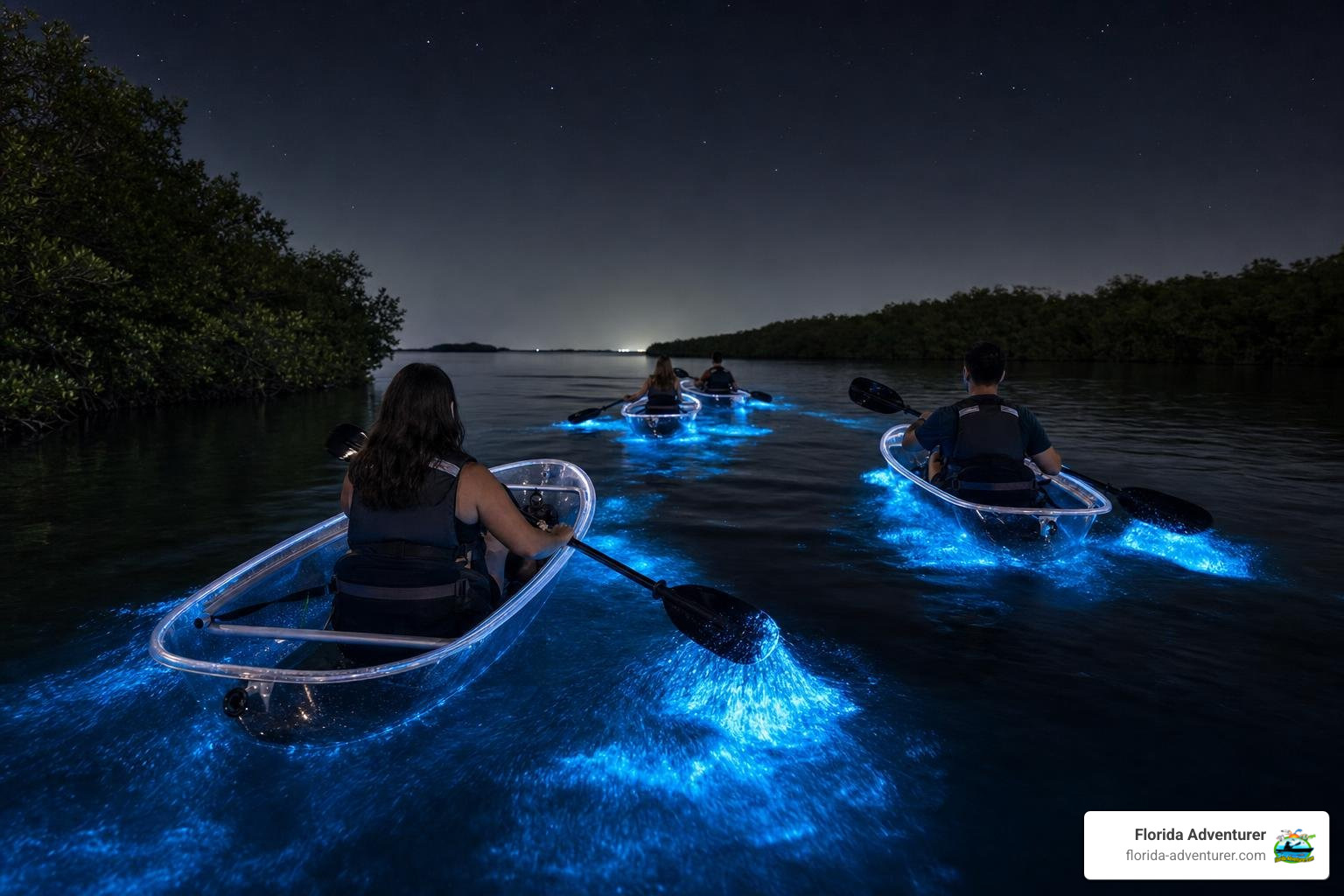
Our primary tour areas include the Merritt Island National Wildlife Refuge, the Indian River Lagoon, Mosquito Lagoon, Haulover Canal, and the Banana River near Cocoa Beach. These protected waters are calmer than the open ocean and often darker than developed beachfront areas, which makes the glow easier to see.
Although Florida’s waterways are technically lagoons, rivers, and estuaries rather than enclosed bays, many visitors use the phrase bioluminescent bay because the experience feels similar to the famous glowing bays found elsewhere. Locally, the best routes are usually protected lagoon, river, canal, and refuge waters rather than one single ocean bay.
We also pay close attention to the kind of night guests are actually going to have. A launch site that is perfect in one wind direction may not be the best choice the next evening. Water movement, recent rain, moon timing, guest experience level, and seasonal glow patterns all influence where guides prefer to paddle.
Which Florida Beach Town Is Best for Seeing Bioluminescence?
The best beach town depends on how you are building the rest of your trip. Cocoa Beach, Titusville, and Merritt Island can all work well for a Florida bioluminescence trip, but each one fits a slightly different traveler.
| Beach Town / Area | Best For | What to Know |
|---|---|---|
| Cocoa Beach | Beach vacation, families, cruise passengers, Cape Canaveral visitors | Best if you want classic beach-town convenience during the day and a short drive to a Banana River or nearby lagoon launch at night |
| Titusville | Bright summer glow, darker skies, Orlando day trips, wildlife-focused guests | Best if your main goal is the bioluminescence tour itself, especially around the Indian River Lagoon, Haulover Canal, and refuge-area launches |
| Merritt Island | Nature, quieter routes, Kennedy Space Center visitors, refuge access | Best if you want a more outdoors-focused trip near protected waters, wildlife habitat, and darker launch areas |
Cocoa Beach is the easiest choice if you want a true beach vacation. You can spend the day on the sand, visit restaurants near the pier or downtown area, and still be close enough to meet your guide for an evening lagoon tour. It is also convenient for cruise passengers staying near Port Canaveral before or after a sailing.
Titusville is often the stronger choice if bioluminescence is the centerpiece of the trip. It is closer to many Indian River Lagoon and Haulover Canal launch areas, and it works especially well for visitors driving from Orlando who want to focus on the nighttime glow rather than a full beach day.
Merritt Island sits between the beach communities and the refuge-style launch areas, making it a practical base for travelers who want wildlife, Kennedy Space Center, and bioluminescence in the same itinerary. It is less of a traditional beach-town stay, but it can be excellent for nature-focused guests.
Planning a Florida Beach Vacation Around Bioluminescence
A bioluminescence tour fits best when you treat it as the evening highlight of a Space Coast trip, not as a quick walk from the ocean beach. The ideal plan is simple: enjoy the beach during the day, eat dinner early, then meet your guide after sunset at a protected lagoon launch.
If you are staying in Cocoa Beach or Cape Canaveral, plan a relaxed beach day, rinse off, change into quick-dry clothes, and eat dinner before your tour. Keep the meal lighter than you would before a late-night paddle, and give yourself extra drive time because launch sites may be inland, north, or in a wildlife refuge area rather than directly on the beach.
For Orlando visitors, bioluminescence makes a memorable evening add-on to a theme park or vacation day, but timing matters. Leave enough room for traffic, dinner, check-in, and changing clothes before the tour. Many guests prefer making the Space Coast its own half-day trip instead of trying to rush straight from a full park day.
For cruise passengers, Cocoa Beach and Cape Canaveral are especially practical before or after a cruise. If your ship schedule allows, a nighttime bioluminescence tour can turn a port-area hotel night into one of the most memorable parts of the trip. Just make sure your tour date lines up with darker moon phases when possible, and avoid booking too tightly around embarkation or disembarkation times.
A simple itinerary might look like this: beach or Kennedy Space Center during the day, early dinner, change into water-friendly clothing, drive to the launch, paddle after sunset, then return to your hotel with towels and dry clothes waiting in the car. This is usually the most reliable way to turn a bioluminescence Florida beach trip into a strong nighttime glow experience.
Top Launch Areas for a Bioluminescent Beach in Florida Experience
When you book a tour, the goal is not simply to get on the closest water. The goal is to choose a launch area that gives guests the best realistic chance of seeing glow under that night’s conditions.
- Haulover Canal (Titusville / Merritt Island): A well-known access area connecting the Indian River Lagoon and Mosquito Lagoon. It is popular because it is protected, wildlife-rich, and often reliable when conditions are right.
- Beacon 42 Launch (Merritt Island): A quieter refuge-area option with dark skies, shallow water, and a more remote feel. It can be a strong choice for guests who want a less developed setting.
- Cocoa Beach / Kiwanis Island Park: A convenient Banana River area option for visitors staying in Cocoa Beach, Cape Canaveral, or nearby beach hotels. It works well for guests who want to pair a beach day with a nighttime lagoon paddle.
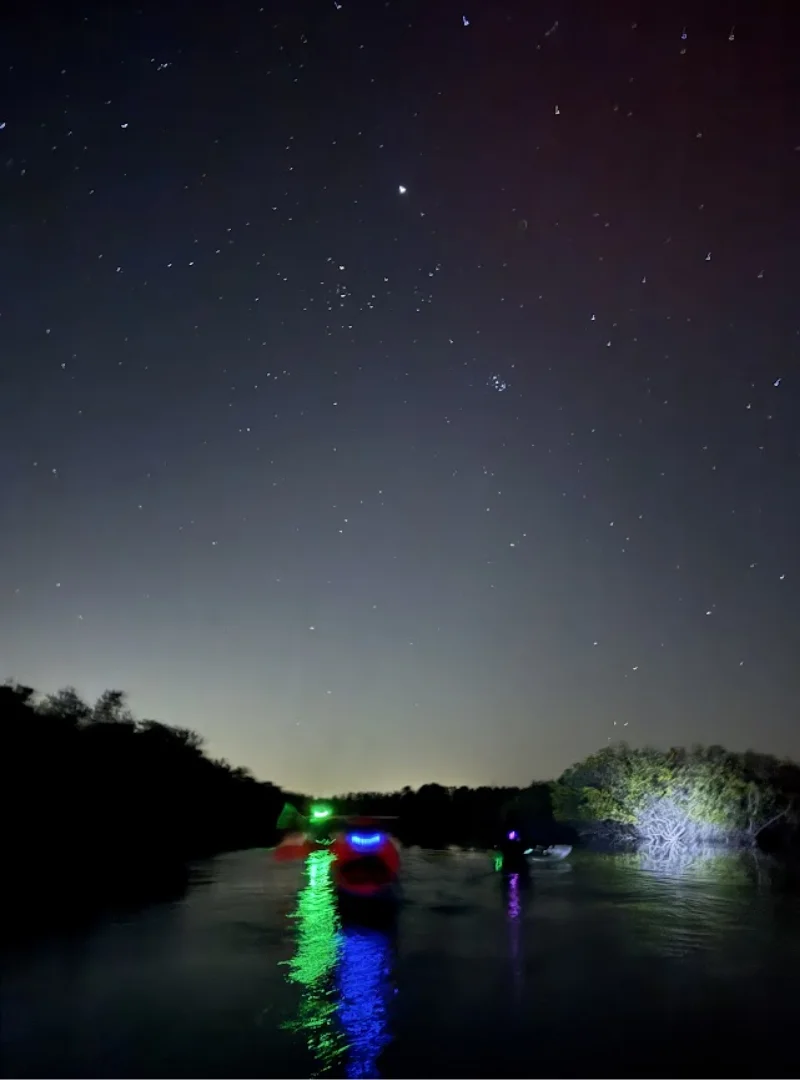
These launch areas can feel like a bioluminescent bay on the right night, with glow appearing around paddles, fish, kayaks, and gentle movement in the water.
Why Visitors Choose Florida Instead of Puerto Rico
Puerto Rico is famous for true bioluminescent bay experiences, especially protected bays where the glow can be part of the destination itself. Florida is a little different. Visitors here are usually planning a Space Coast beach trip, Orlando vacation, cruise stay, or Kennedy Space Center visit, then adding a nighttime lagoon tour as the highlight of the evening.
The similarity is the magic guests are hoping for: dark water that lights up when it is disturbed. In both places, the best experiences depend on darkness, calm conditions, seasonality, and responsible guides who understand local waterways. The difference is the setting. A Puerto Rico bioluminescent bay trip is often built around a named bay, while a Florida bioluminescence bay experience usually means protected lagoon, river, canal, or refuge waters near beach towns like Cocoa Beach, Titusville, Merritt Island, and Cape Canaveral.
Florida can be the more practical choice for travelers who are already visiting Central Florida, cruising from Port Canaveral, or spending time on the Space Coast. You can pair beach time, wildlife, Kennedy Space Center, and a guided night paddle without planning a separate island trip. Puerto Rico may be the better fit for travelers whose main goal is a dedicated tropical bioluminescent bay vacation.
Neither option is “better” for everyone. The right choice depends on your trip. If you want a Florida beach vacation with a realistic chance to see glowing water after dark, the Space Coast is one of the easiest places in the United States to build that experience into an existing itinerary.
Choosing Your Vessel: Clear Kayaks vs. Tandems vs. Rafts
The right vessel depends on your comfort level, group size, and what kind of experience you want.
- Clear Kayaks: These create the most immersive view because you can see the glow beneath and around the kayak. They are especially popular with guests who want the “floating through stars” feeling.
- Tandem Kayaks: Traditional two-person kayaks are stable, beginner-friendly, and a great fit for couples, friends, and parents paddling with older children.
- Family Rafts: Rafts are best for young children, nervous paddlers, older guests, or anyone who wants to relax while a guide helps manage the pace and route.
Smaller guided groups also make a difference. They make it easier to hear your guide, stay together, adjust the pace for beginners, and respond to changing conditions on the water. For a detailed breakdown of which tour style fits your group, read our guide to choosing a bioluminescence tour in Florida.
Preparing for Your Night on the Water
A little preparation goes a long way in ensuring your night on the water is comfortable and magical. Because our tours take place in a protected, wild wetland environment at night, you’ll want to pack and dress appropriately.
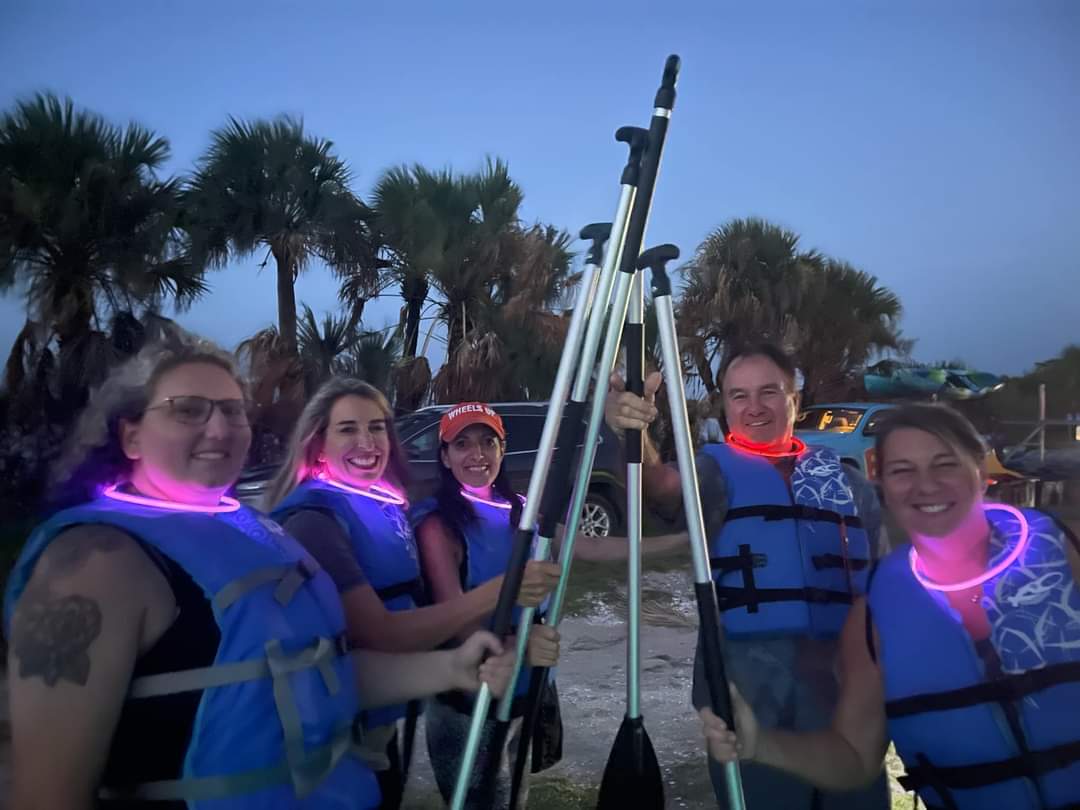
First and foremost: book your tour well in advance! Because peak bioluminescence season is relatively short and highly dependent on the lunar calendar, dark sky weeks and weekend spots sell out weeks ahead of time. If you are planning a summer trip to the Space Coast, we highly recommend securing your reservations at least 2 to 4 weeks in advance.
What to Wear and Pack
You will get splashed during a kayak tour—it’s part of the fun! To stay comfortable, we recommend dressing in lightweight, athletic, quick-drying clothing.
Here is our quick checklist of what to wear and bring:
- Clothing: Long-sleeved quick-dry shirts and lightweight pants or leggings. This keeps you warm if a breeze picks up and offers excellent natural protection against nighttime insects.
- Footwear: Water shoes, sandals with heel straps, or old sneakers. Avoid flip-flops, as you may need to step into shallow water along the shoreline during launch.
- Insect Repellent: This is crucial, especially for tours launching from the Merritt Island National Wildlife Refuge. We recommend bringing insect spray (and some guests swear by baby oil to deter tiny no-see-ums). Tip: Apply your spray on land before getting near the water so it doesn’t wash off and affect the sensitive lagoon ecosystem.
- Dry Bag: We provide dry bags for your essentials, but we highly recommend leaving valuables in your locked car.
- Post-Tour Comfort: Leave a towel and a dry change of clothes in your car trunk so you can change into dry clothes for the drive home.
For more detailed preparation tips, check out our guide on how to Explore the Indian River Lagoon with a Bioluminescence Kayaking Tour.
Wildlife Encounters and Safety for Beginners
One of the most thrilling aspects of a night kayak tour is the wildlife you might encounter. The Indian River Lagoon is teeming with life, and seeing these creatures at night is a completely different experience.
As you paddle, you might see schools of mullet jumping out of the water, leaving glittering blue trails behind them like tiny comets. Larger marine mammals also make frequent appearances. Manatees and bottlenose dolphins swimming through the lagoon disturb massive amounts of plankton, creating giant, glowing blue halos around their bodies. Seeing a dolphin surface next to your kayak, outlined in glowing blue light, is an experience you will never forget.
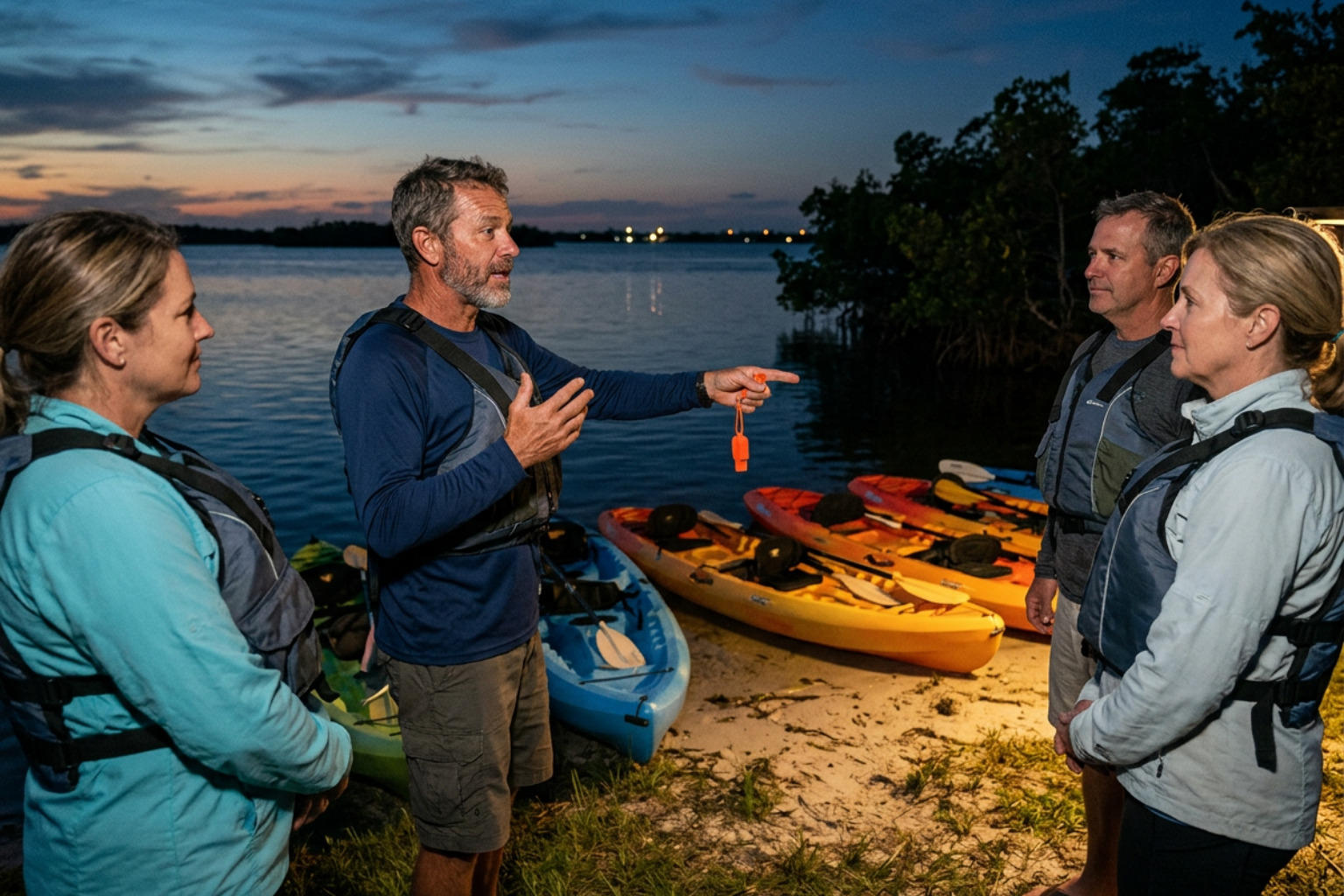
If you are a beginner, don’t worry! Our tours are designed to be completely beginner-friendly. Our expert guides provide a thorough safety briefing and paddling demonstration on land before we ever touch the water. We paddle in shallow, calm, protected waters where there are no waves, heavy currents, or motorized boat traffic. For couples looking to add a touch of romance to this peaceful night paddle, read our thoughts on Bioluminescence and Romance.
Frequently Asked Questions about Florida Bioluminescence
Can you see bioluminescence from the beach?
Sometimes you may see faint bioluminescence from a beach or shoreline, but it is not the most reliable way to plan your trip. In Florida, the brightest and most consistent glow is usually seen in protected lagoon waters rather than directly in the Atlantic surf.
If you are staying near Cocoa Beach, Cape Canaveral, or another Space Coast beach area, the better plan is to enjoy the beach during the day, then take a guided evening kayak or raft tour from a darker lagoon launch after sunset. Calm water, darker skies, and guide-selected routes give you a much better chance of seeing paddle strokes, fish movement, and the water around you light up.
Is there a true bioluminescence beach in Florida?
There are beaches near Florida’s glowing waters, but the most reliable plan is usually not standing on the ocean sand and waiting for waves to glow. A bioluminescence beach Florida trip works best when you use a beach town like Cocoa Beach or Cape Canaveral as your daytime base, then head to a protected lagoon launch after dark.
Where are the best bioluminescent beaches in Florida?
The best bioluminescent beaches in Florida are really beach areas near reliable lagoon launches. Cocoa Beach, Cape Canaveral, Titusville, and Merritt Island are strong bases because they put you close to the Indian River Lagoon, Banana River, Mosquito Lagoon, Haulover Canal, and refuge-area waters where the glow is easier to see.
Can you see bioluminescence without a guided tour?
Technically, yes, but we highly recommend going with a professional guide. Many first-time visitors underestimate how difficult it can be to navigate unfamiliar waterways after dark. Navigating the dark, winding waterways of the Merritt Island National Wildlife Refuge or the Indian River Lagoon at night can be incredibly disorienting, even for experienced daytime paddlers. There are no streetlights, and it is very easy to lose your bearings.
Furthermore, our guides know exactly where the brightest pockets of bioluminescence are concentrated on any given night, ensuring you get the best possible viewing experience. Going with us also means all your high-quality safety gear, permits, and navigation lights are taken care of.
Can children go?
Yes. Children ages 3+ can join many Florida Adventurer bioluminescence experiences, depending on the tour type, conditions, and current booking requirements.
For younger children, families who prefer extra stability, or anyone who may be nervous about paddling in the dark, our guided family raft tours are usually the best fit. Older children who are comfortable sitting in a kayak may be a good match for tandem kayak options. Always check the specific tour page for current age, weight, and safety requirements before booking your Bioluminescence Florida Adventures.
What happens if it rains on the night of the tour?
We rarely cancel tours for light rain, as a gentle drizzle can actually make the water sparkle beautifully! However, your safety is our absolute top priority.
If our guides detect lightning, high winds, or severe storms in the area, we will delay or reschedule the tour. If we must cancel a tour due to unsafe weather conditions, we will contact you as early as possible to offer a reschedule or a raincheck so you don’t miss out on the experience.
Sources and Local Expertise Behind This Guide
About Josh Myers
This guide was reviewed from the perspective of Josh Myers, owner of Florida Adventurer, who has years of firsthand experience guiding guests through the Space Coast’s bioluminescent waters. Josh Myers and the Florida Adventurer guide team regularly paddle the Indian River Lagoon, Mosquito Lagoon, Banana River, Merritt Island refuge areas, and Haulover Canal, so the recommendations here are based on real launch conditions, seasonal glow patterns, guest experience levels, and the practical decisions guides make after dark.
About Florida Adventurer
Florida Adventurer is a local Space Coast tour company specializing in guided bioluminescence kayaking, clear kayak tours, family raft experiences, wildlife encounters, and eco-adventures near Titusville, Merritt Island, Cocoa Beach, Kennedy Space Center, the Indian River Lagoon, Mosquito Lagoon, and the Banana River. Our goal is to help guests plan realistic, safe, and memorable nights on the water by matching the season, moon phase, launch area, vessel type, and group comfort level to the conditions we expect that evening.
Authoritative References
For the science behind the glow, we reference NOAA Ocean Exploration’s explanation of bioluminescence, which describes bioluminescence as light produced by living organisms through a chemical reaction and explains why blue light is common in marine environments.
For responsible wildlife viewing around Florida’s waterways, especially when manatees or other protected wildlife may be nearby, we follow guidance from the Florida Fish and Wildlife Conservation Commission, including giving animals space and never chasing wildlife for a closer look.
Conclusion
While many visitors begin their search looking for a glowing beach, they leave talking about the unforgettable experience of paddling through protected lagoon waters under a dark Florida sky. With the right season, realistic expectations, and an experienced local guide, you’ll have the best opportunity to experience one of Florida’s most remarkable natural phenomena.
Spaces fill up quickly, especially during the dark sky weeks of the summer. Don’t miss your chance to witness this breathtaking spectacle of nature—Book a Bioluminescence Florida Kayaking Tour with us today!