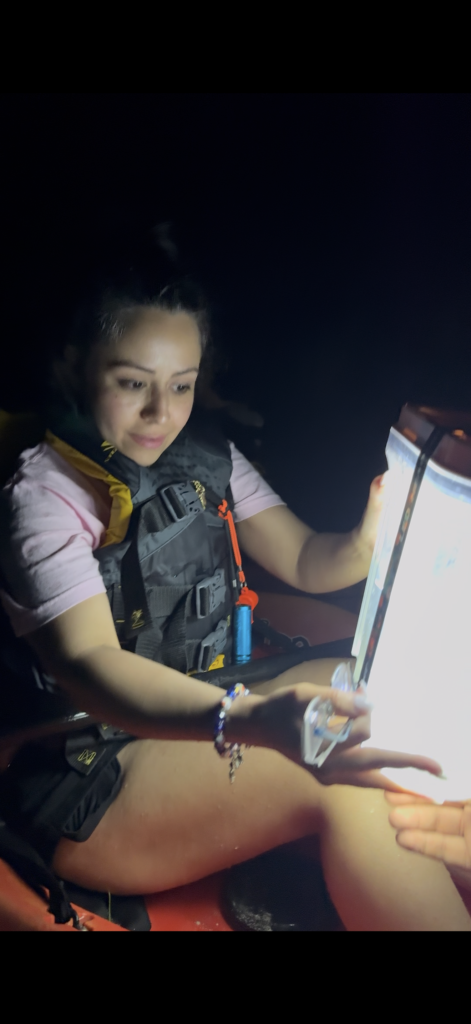
Quick answer: Kid-friendly bioluminescent kayaking near Orlando can be a memorable family outing when every child meets the tour’s current requirements, is comfortable wearing a life jacket, and can follow instructions on the water after dark. The tours take place on Florida’s Space Coast—not in Orlando—so families should allow for the drive, arrive early, and choose the tour format that fits their youngest participant.
For many families, the deciding question is not “Will my child love the glow?” but “Will my child be comfortable with the full experience?” A night paddle includes travel, a dark launch, insects, unfamiliar equipment, changing weather, and time in a shared kayak. The glow is a natural highlight, not a guaranteed special effect.
Family suitability checklist
| Consideration | A child may be ready when… | Ask before booking if… |
|---|---|---|
| Life jacket | They can wear a correctly fitted jacket for the entire paddle | They have sensory concerns or need a special size |
| Darkness | They can remain calm outdoors with limited white light | They are frightened by darkness or unfamiliar animal sounds |
| Attention | They can follow guide instructions and remain seated | They may stand, lean overboard, or remove safety equipment |
| Duration | They can manage the full check-in, briefing, paddle, and drive | A late bedtime or long car ride is likely to cause distress |
| Physical fit | They meet the operator’s current age, weight, and participation rules | Any mobility, medical, or accessibility concern could affect safe participation |
How far is bioluminescent kayaking from Orlando?
Florida’s established Space Coast bioluminescence tours launch around the Indian River Lagoon system near Cocoa Beach, Merritt Island, and Titusville. Driving time from Orlando varies widely with your starting point, the selected launch, traffic, and road conditions. Families should plan for roughly an hour or more each way rather than treating the tour as an in-town Orlando activity.
Confirm the exact meeting address before estimating travel. “Near Orlando” or “Cocoa Beach” may describe the visitor market, not the launch’s city limits. Add time for dinner, restroom stops, parking, check-in, and the return drive after the tour.
Why comb jelly tours can work well for families
During cooler periods, tours may encounter comb jellies. These transparent ctenophores are not true jellyfish and do not have jellyfish stinging cells. Some can produce blue-green bioluminescence, while their moving comb rows can also scatter outside light into rainbow colors. NOAA explains the important difference between a comb jelly’s rainbow iridescence and bioluminescence.
Comb jellies are extremely fragile. A responsible family tour does not encourage squeezing, collecting, or keeping them. Children should follow the guide’s instructions and observe wildlife in the water. The educational value comes from understanding a living lagoon—not treating animals as toys.
Warm-season glow vs. cooler-season glow
| Experience | What families may see | Best planning mindset |
|---|---|---|
| Warm-season dinoflagellates | Small blue flashes and trails when water movement triggers active organisms | Watch paddles and moving fish; intensity changes nightly |
| Cooler-season comb jellies | Individual non-stinging animals that may flash blue or green | Slow down and observe carefully without handling |
| Any season | Stars, mangroves, fish, birds, and possible larger wildlife | No wildlife or brightness guarantee |
What happens on a family night paddle
- Arrival and check-in: The guide confirms reservations and fits equipment. Late arrivals can miss essential instruction.
- Safety briefing: Families learn how to enter, paddle, steer, stay with the group, and respond if a kayak tips.
- Launch: A child is commonly paired with an adult in a tandem when the selected product and participation rules allow it.
- Night-vision adjustment: The group limits unnecessary white light so faint flashes become easier to notice.
- Guided route: The guide chooses an appropriate operating route based on weather, water, and group needs.
- Landing: Everyone remains attentive until the kayak and equipment are safely ashore.
Life jackets and nighttime safety
Florida requires a wearable U.S. Coast Guard-approved life jacket for every person aboard a human-powered vessel. The Florida Fish and Wildlife Conservation Commission advises paddlers to wear their life jackets and notes additional requirements for young children. Review FWC’s current human-powered vessel rules and paddling safety guidance.
Tour-company rules can be stricter than the legal minimum. Always use the operator’s current minimum age, size limits, and participation policy. Do not assume that a child who can swim is ready for a nighttime kayak tour; swimming ability does not replace a properly fitted life jacket or close adult supervision.
What parents expect vs. what happens
| Expectation | Realistic experience |
|---|---|
| The water will glow continuously | Light appears where organisms are active and water is disturbed |
| Every child can hold a comb jelly | Wildlife handling may be inappropriate; delicate animals should remain in the water |
| The launch is minutes from Orlando | The trip requires a significant drive to the Space Coast and back |
| A parent can paddle while the child moves around | Children must remain seated, balanced, and responsive to instructions |
| A phone will capture what everyone sees | Low light and kayak movement make photography difficult |
How to prepare children
- Explain that the group will be outside in real darkness with required safety lights.
- Show the child what a kayak and life jacket look like before the trip.
- Choose quick-drying clothes and secure footwear appropriate for a wet launch.
- Eat early enough to avoid rushing, but do not overpack snacks for the kayak.
- Apply insect repellent before arriving at the water and follow the label.
- Use the restroom before the safety briefing; remote launches may have limited facilities.
- Secure phones, keys, and comfort items in a waterproof case or dry bag.
- Set honest expectations: the tour is successful even if the glow is subtle and larger wildlife stays away.
Frequently asked questions
What age can children go bioluminescent kayaking?
Minimum ages vary by tour format, operator, conditions, and equipment. Check the current product requirements directly rather than relying on an older article or general legal minimum.
Is bioluminescent kayaking safe for children?
It can be appropriate for children who meet the requirements, wear fitted safety equipment, and can follow instructions. Outdoor and paddling risk cannot be eliminated, so parents should discuss individual needs before booking.
Do children need kayaking experience?
Many family participants are beginners. The adult in the kayak should be prepared to provide most of the paddling effort and follow the guide’s steering instructions.
Will children get wet?
They should expect splashes and wet feet around the launch. Dress for contact with water even if the goal is to stay inside the kayak.
Is a new moon required for families?
No. A darker sky can improve contrast, but safe weather, a suitable departure time, and a rested child are more important than choosing one exact moon phase.
Continue planning your family adventure
- 5 Comb Jelly Facts for Your Bioluminescence Tour — give curious children a science preview before the trip.
- New Moon Bioluminescence Tours in Florida — decide whether a darker lunar period fits your schedule.
- Things to Do in Cocoa Beach at Night — build a family evening with backup options.
Compare Florida Adventurer’s current group rafting and bioluminescence kayaking options, then contact the team with age, equipment, or accessibility questions before reserving.