
What Is Bioluminescence Kayaking, and Is It Worth It?
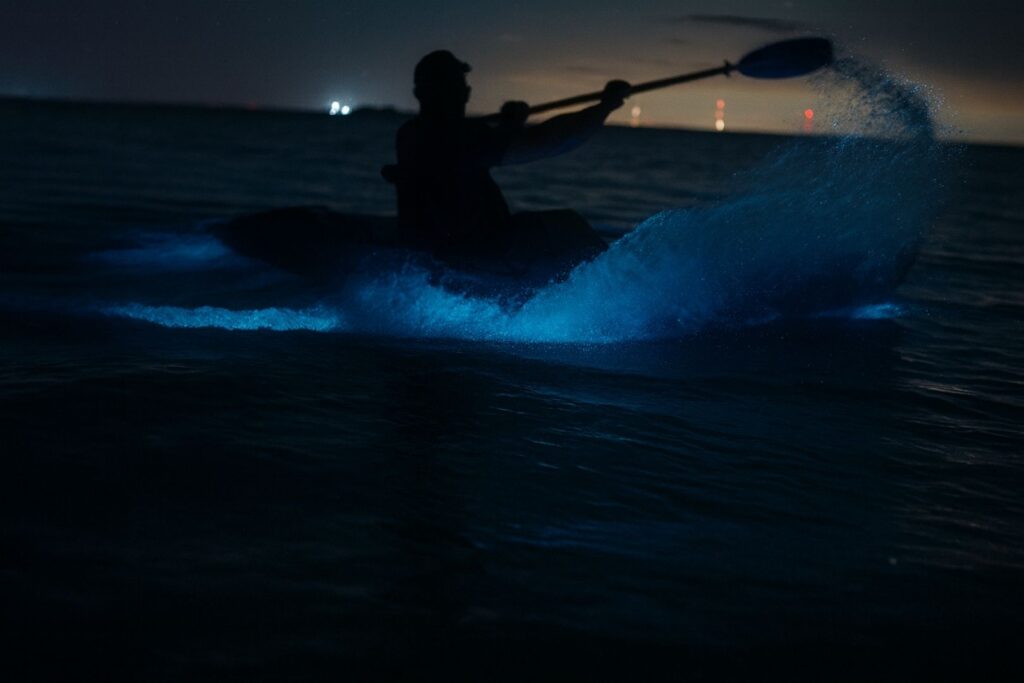
Bioluminescence kayaking is a nighttime paddling experience where every stroke lights up the water with an electric blue-green glow, caused by microscopic living organisms reacting to movement. The glow is created by microscopic dinoflagellates that emit light when disturbed, a natural phenomenon explained in greater detail by NOAA Ocean Exploration.
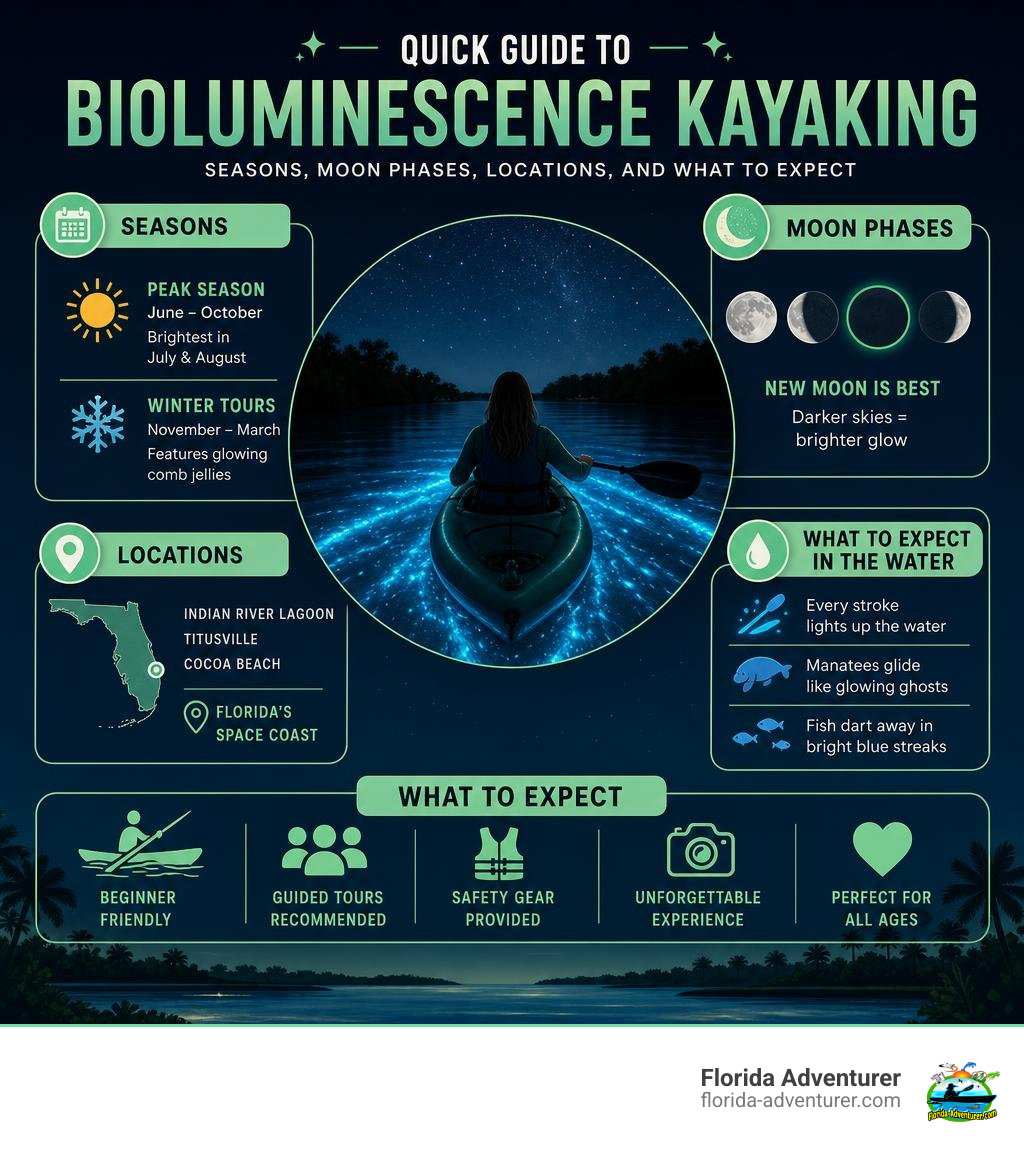
Quick answer for first-time visitors:
- It is beginner-friendly and no prior kayaking experience is required
- The best locations in Florida are the Indian River Lagoon, Titusville, and Cocoa Beach
- Peak season runs from June through October, with July and August being the brightest months
- New moon nights offer the best visibility
- Winter tours (November through March) are also available, featuring glowing comb jellies instead of plankton
- Guided tours are strongly recommended, especially for first-timers
Imagine paddling through dark, still water — and watching it catch fire with blue light beneath you. Manatees glide past like glowing ghosts. Fish dart away in bright blue streaks. Your paddle drips light.
That is what bioluminescence kayaking actually feels like.
Florida’s Indian River Lagoon is widely regarded as one of the premier destinations in North America for bioluminescence kayaking. During peak summer months, the lagoon often contains dense concentrations of dinoflagellates, creating spectacular glowing displays with every paddle stroke.
Whether you are planning a family trip near Orlando, a date night near Cocoa Beach, or simply looking for something unlike anything you have ever done — this guide covers everything you need to know about bioluminescence kayaking Florida tours and how to choose the right experience.
Before You Book: The Decisions That Shape Your Tour
Bioluminescence kayaking is not just a matter of choosing a date and showing up. The glow can change with the season, moon phase, wind, recent rain, water clarity, and where the organisms are concentrated that evening.
Before you book, think through these planning questions:
- Which season are you visiting? Summer is best for the classic blue-green dinoflagellate glow. Winter is better for comb jellies, which sparkle and flash when gently disturbed.
- Which launch makes the most sense? Titusville and Merritt Island are excellent for dark skies and access to the Indian River Lagoon. Cocoa Beach and the Banana River can be more convenient for beachside visitors.
- Which kayak style fits your group? Clear kayaks maximize the view below you, tandem kayaks are stable and beginner-friendly, and rafts are often easier for families or mixed-comfort groups.
- What moon phase are you booking around? New moon and crescent moon nights usually provide the darkest conditions. Full moon trips can still be fun, but the glow often appears softer.
- How long do you want to be on the water? Shorter tours are easier for young kids and first-timers. Longer tours may give guides more flexibility to reach better viewing areas.
- Choosing the right tour operator: Look for experienced local guides, small-group formats, clear safety procedures, and honest expectations about natural conditions.
The best bioluminescence kayaking Florida tours feel effortless to guests because the planning work happens behind the scenes. Before every tour, our guides check wind forecasts, recent storms, moonlight, tide movement, and water clarity because those factors can change where the brightest glow will be found. It is common for a preferred launch location or route to change from one evening to the next based on those conditions.
Smaller guided groups also make it easier to hear your guide, stay together, and adjust the pace for beginners.
That daily decision-making is one of the biggest reasons guided tours are worth it. You are not just renting a kayak; you are relying on local knowledge about where the lagoon is likely to be calm, dark, safe, and glowing that night.
How We Decide Where to Launch
One of the biggest behind-the-scenes decisions on a bioluminescence kayaking tour happens before guests ever get in the water: choosing the best launch and route for that night.
Our guides do not treat every evening the same. Before a tour, we look at wind direction, wind speed, recent weather, tide movement, water clarity, recent glow reports, and wildlife activity around the lagoon. Those details help us decide where the water is likely to be calm, dark, safe, and active.
Some evenings our guides make the decision to launch from a different access point than originally planned because protecting the guest experience is more important than following a predetermined route.
Wind matters because even a light breeze can change the surface of the water. Calm water usually makes the glow easier to see, while choppy water can scatter the light and make paddling more work for beginners.
Weather matters because recent storms, heavy rain, and cloud cover can all affect the experience. Rain can change water clarity and salinity in parts of the lagoon, while a calm, dark evening after stable weather often gives guests a better chance of seeing clean flashes around the paddle and kayak.
Tides and water movement matter because bioluminescent organisms are not spread evenly everywhere. Tide movement, currents, and sheltered shoreline pockets can concentrate or disperse the glow from one night to the next.
Water clarity matters because the brightest glow still needs visibility. If one area has stirred-up water, floating debris, or poor clarity, guides may choose a different route where guests can see more activity beneath the surface.
Glow reports matter because local experience builds night by night. If recent tours found stronger activity near a certain cove, shoreline, or darker stretch of lagoon, that information helps guides make smarter choices for the next group.
Wildlife matters too. Manatees, dolphins, fish, birds, and other lagoon life can make the trip more memorable, but guides also have to give wildlife space and choose routes that keep both guests and animals safe.
That is why guided bioluminescence kayaking is different from simply renting a kayak and hoping for the best. The route is part science, part local knowledge, and part real-time judgment. When guests see the water light up around them, they are also seeing the result of careful planning before the first paddle stroke.
Planning Your Trip Based on Who Is Going
A great bioluminescence kayaking trip depends on matching the tour to the traveler. A couple looking for a quiet date night, a family with young kids, and a photographer trying to capture the glow may all want different launch times, kayak styles, and expectations.
Orlando Visitors
If you are visiting Orlando, Disney World, Universal, or the theme park corridor, Titusville is usually one of the easiest places to plan a bioluminescence kayak tour. Many launch areas on the Space Coast are about 45 to 60 minutes from Orlando, depending on traffic and where you are staying.
For Orlando visitors, the biggest planning mistake is treating the tour like a quick add-on at the end of a packed theme park day. Night paddles are relaxed, but you still need time to drive, park, check in, apply bug spray, and get comfortable before launching.
Cocoa Beach and Cape Canaveral Visitors
If you are staying near Cocoa Beach, Cape Canaveral, or Kennedy Space Center, bioluminescent kayaking is one of the most convenient nighttime adventures you can add to your trip. The Banana River and nearby lagoon launch areas are close enough that you can spend the day at the beach, have dinner, and still make an evening tour.
Cocoa Beach visitors often prefer clear kayaks because the tour feels especially different from a normal beach day. Instead of watching waves from shore, you are paddling through sheltered water where fish, paddle strokes, and sometimes wildlife movement can create flashes beneath the boat.
Cruise Passengers
Cruise passengers sailing from Port Canaveral should plan carefully around arrival, departure, and transportation times. A bioluminescence tour can be a memorable pre-cruise or post-cruise experience, but it is usually not something to squeeze in if your ship schedule is tight.
If you are staying overnight before or after a cruise, choose a launch near Cocoa Beach, Cape Canaveral, Merritt Island, or Titusville and allow extra buffer time. Evening traffic, luggage logistics, dinner plans, and weather delays can all affect timing.
Families
Families should prioritize comfort, stability, and pacing. Tandem kayaks and family rafts can make the experience easier for kids or adults who are nervous about paddling in the dark. A shorter or earlier evening tour may also be a better fit than the latest departure.
The glow is exciting for children, but the full experience includes darkness, insects, getting splashed, and sitting in a kayak for the duration of the trip. Honest preparation helps families enjoy the night instead of feeling surprised by normal outdoor conditions.
Couples
For couples, bioluminescence kayaking works well as a date night because it feels quiet, unusual, and memorable. Sunset-to-night tours are especially popular because they combine wildlife viewing, changing sky colors, and the glow appearing as darkness settles over the lagoon.
Clear kayaks are often the best choice for couples who want the most immersive visual experience. Tandem kayaks can also be a good option if one person is more confident paddling than the other.
Photographers
Photographers should book around the darkest moon phase possible and bring realistic expectations. Bioluminescence is much easier to see with your eyes than to capture with a phone. The glow is brief, movement-triggered, and surrounded by darkness, so standard smartphone photos often turn out black.
A clear kayak can help photographers compose shots looking down into the water, but professional results usually require manual settings, long exposure, a stable setup, and patience. The best photo nights tend to be calm, dark, and not overly rushed.
What Happens on a Typical Bioluminescence Kayaking Tour?
For many first-time guests, the biggest question is not just whether the water will glow. It is what the evening actually feels like from arrival to return. A guided bioluminescence kayaking tour is designed to be beginner-friendly, organized, and comfortable even if you have never paddled at night before.
Arrival: Plan to arrive early enough to park, use the restroom if available, apply bug spray, and get settled before check-in. Night tours work best when guests are not rushing from dinner, the beach, or a theme park day.
Check-in: Guides confirm your reservation, group size, kayak type, and any basic instructions for the evening. This is also when guests can ask questions about what to bring, where to place personal items, and what conditions are like that night.
Safety briefing: Before launch, guides explain how to sit in the kayak, hold the paddle, steer, stay with the group, use lights appropriately, and respond if someone feels uncomfortable. Families and beginners should pay close attention here because the briefing sets the tone for a calm, safe tour.
Launch: Once everyone is ready, guides help guests get into their kayaks or rafts and launch from shore or a dock area. The first few minutes are usually slow and instructional so everyone can get comfortable paddling in the dark.
Paddling: The group moves at an easy pace toward darker, calmer water. Guides may adjust the route based on wind, recent glow reports, water clarity, moonlight, or boat traffic. You do not need to be an expert paddler; the goal is steady movement, not speed.
Wildlife: Depending on the season and conditions, guests may see or hear fish, birds, dolphins, manatees, or other lagoon wildlife. Guides help guests understand what they are seeing while keeping a respectful distance from animals.
Glow: As the water gets darker, paddle strokes, fish movement, and ripples around the kayak may begin to flash blue-green during summer dinoflagellate season. In cooler months, guides may focus more on comb jellies that sparkle when gently disturbed. The brightness can vary from night to night, which is why guides set expectations as conditions unfold.
Return: At the end of the tour, the group paddles back together, exits the water with guide assistance, and returns gear. Most guests leave damp, excited, and glad they chose a guided tour instead of trying to figure out the lagoon alone at night.
This step-by-step structure is one reason bioluminescence kayaking works well for beginners, families, couples, and visitors from Orlando or Cocoa Beach. The experience feels adventurous, but the guide support keeps it approachable.
Best Time for Bioluminescence Kayaking
Timing is one of the most important decisions you will make. Bioluminescence is a natural light reaction, so anything that adds brightness to the water—sunset, city glow, boat lights, or moonlight—can make the glow harder to see.
Which Season Should You Choose?
For the brightest blue-green water trails, plan your trip during the warm-weather dinoflagellate season. In Florida, this typically runs from June through October, with July and August often producing the most intense glow.
For winter visitors, November through March can still offer a memorable glowing-water experience, but it is different. Instead of clouds of microscopic plankton lighting up with every paddle stroke, winter trips often focus on comb jellies. These non-stinging organisms flash and shimmer when gently disturbed.
Which Moon Phase Is Best?
The best moon phase for bioluminescence kayaking is usually the new moon or the dark-sky window around it. Less moonlight means the glow has less competition, so the blue-green flashes appear brighter.
A full moon does not automatically ruin a tour, but it changes the experience. On bright nights, the water surface may be easier to see, but the bioluminescence can look less dramatic. Guides may look for darker shoreline pockets, shaded coves, or areas where the glow is still visible beneath the kayak.
To help plan around dark-sky windows, use our updated guide to new moon dates for bioluminescence in Florida.
Which Tour Length Is Best?
Shorter tours are usually best for families with younger children, first-time paddlers, or visitors who have already had a long day. They still give you the core experience: launching at night, paddling into darker water, and watching the lagoon respond to movement.
A shorter bioluminescence kayak tour can be the right choice when your group wants the glow without staying out too late after a beach day, theme park visit, or dinner in Cocoa Beach.
Longer tours may be better for guests who want a slower pace, more time on the water, or more flexibility if guides need to adjust the route based on conditions. If the glow is concentrated farther from the launch, extra time can matter.
Sunset vs. Full Night Tours
Sunset-to-night tours are ideal if you want a complete Space Coast experience. You may see dolphins, manatees, birds, and changing sky colors before the water gradually starts to glow.
Full night tours are better if your priority is maximum darkness from the beginning. You miss the sunset, but you start closer to peak viewing conditions.
For a detailed comparison, read our guide to sunset vs. nighttime bioluminescence tours.
Which Bioluminescence Kayak Tour Is Right for You?
The best bioluminescence kayak tour depends on your group, comfort level, travel schedule, and how you want to experience the glow. Instead of choosing only by price or whichever time slot appears first, match the tour format to your actual trip.
| Traveler | Best Tour Choice | Why It Fits |
|---|---|---|
| Families | Family raft or tandem kayak | More stability, easier group coordination, and less pressure on young paddlers |
| Couples | Clear kayak or sunset + bioluminescence tour | More immersive, memorable, and date-night friendly |
| Photographers | Clear kayak on a dark moon phase | Best chance to frame glow beneath the boat in low light |
| First-timers | Tandem kayak with a guided small group | Stable, beginner-friendly, and easier to paddle with support |
| Orlando visitors | Titusville or Merritt Island launch | Convenient Space Coast access from the theme park area |
| Cocoa Beach visitors | Banana River or nearby Cocoa Beach-area launch | Shorter drive from beach hotels and Cape Canaveral |
| Cruise passengers | Cocoa Beach, Cape Canaveral, or Merritt Island-area tour | Easier to combine with a Port Canaveral overnight stay |
| Winter visitors | Comb jelly tour | Best glowing-water option when dinoflagellates are out of peak season |
Clear Kayaks
Clear kayaks are best if you want the most visually immersive experience. On strong nights, the water can glow beneath your seat, around the paddle blade, and along the hull as the kayak moves through the lagoon. They are especially popular for couples, photographers, and guests visiting during peak summer glow.
Tandem Kayaks
Tandem kayaks are a strong choice for first-time paddlers because they are stable and allow two people to share the effort. They work well for families, friends, and mixed-experience groups where one person may be more confident than the other.
Family Rafts
Family rafts are often the most relaxed option for groups with children or guests who do not want to manage a traditional kayak. They keep everyone together and make the experience feel less intimidating in the dark.
Can Children Go Bioluminescence Kayaking?
Yes. Florida Adventurer welcomes children ages 3 and older when accompanied by an adult. Tandem kayaks and family rafts are often the most comfortable options for younger guests because they provide more stability and keep families together.
While every child is different, families should be prepared for darkness, insects, getting splashed, and sitting in a kayak for the duration of the tour. The experience can feel magical for kids when paddle strokes and fish movement light up the water, but it is still an outdoor nighttime activity.
Our guides provide a full safety briefing before launch, help families get comfortable with the equipment, and recommend the tour option that best fits the group. If your child is comfortable following instructions, sitting with an adult, and being on the water after dark, bioluminescence kayaking can be a memorable family experience.
Is a Clear Kayak Worth It?
For many guests, a clear kayak is worth it because it makes the glow feel more immersive. Instead of only seeing blue-green flashes around your paddle, you may also see light beneath your seat, along the hull, and under the kayak as fish or small organisms move below you.
Clear kayaks are especially appealing for couples, first-time visitors, photographers, and anyone booking during peak summer bioluminescence season near a dark moon phase. They turn the tour into more of a full visual experience, which is why many guests choose them when they want the most memorable version of bioluminescence kayaking.
That said, a clear kayak is not automatically the best choice for every group. Tandem kayaks or family rafts may be more comfortable for nervous paddlers, young children, or guests who care more about stability than seeing directly through the boat. The best choice depends on your comfort level, group size, and whether your priority is the clearest view of the glow or the easiest paddling experience.
Clear kayaks are usually worth it if:
- You want the most immersive view of the glow beneath you
- You are booking during peak summer dinoflagellate season
- You are planning a date night or special occasion
- You are comfortable paddling at night with a guide
- You want a more visually memorable tour experience
A tandem kayak or raft may be better if:
- You are bringing young children
- Someone in your group is nervous on the water
- Stability matters more than visibility below the kayak
- You want the easiest setup for a mixed-comfort group
If you are deciding between tour types, think of clear kayaks as the premium visual option and tandem kayaks or rafts as the comfort-first options. On a strong glow night, clear kayaks can make the experience feel unforgettable; on a softer night, a skilled guide and the right launch conditions still matter more than the boat itself.
Choosing the Right Tour Operator
A good operator should do more than provide boats. Look for local guides who explain safety clearly, understand changing lagoon conditions, keep groups organized in the dark, and are honest about how natural bioluminescence works. Ask whether the operator adjusts launch locations and routes based on nightly conditions rather than following the exact same route every evening.
The cheapest operator is not always the best choice. If a tour is crowded, poorly timed, or led by guides who are not adjusting to current conditions, you may save a few dollars but lose the quality of the experience. A better tour is usually the one that gives you the safest route, the clearest expectations, and the best chance of finding active glow that evening.
7 Mistakes People Make Booking Bioluminescence Kayaking
Even when the lagoon is glowing, a few planning mistakes can make the experience less comfortable or less impressive than expected.
1. Booking During a Full Moon Without Realizing the Tradeoff
Full moon tours can still be beautiful, but they are not usually the darkest or brightest-looking nights. If your main goal is the strongest visible glow, book near the new moon or during a darker lunar window.
2. Expecting the Glow to Look Identical Every Night
Bioluminescence is natural, not a theme park effect. Some nights are incredibly bright. Other nights are softer because of wind, rain, moonlight, tide movement, or water clarity. A trustworthy operator should explain this before you book.
3. Wearing Cotton or Heavy Clothing
You will probably get splashed. Cotton, denim, and heavy fabrics hold water and can feel uncomfortable after dark. Quick-dry clothing, water shoes, and a towel in the car make the night much easier.
4. Choosing Only the Cheapest Operator
Price matters, but it should not be the only factor. Guide experience, group size, launch location, equipment quality, and safety procedures all affect the tour. A slightly better-planned tour can make a much bigger difference than a small price difference.
5. Forgetting Bug Spray
Mosquitoes and no-see-ums are part of the reality of Florida estuaries, especially on warm, calm summer nights. Apply insect repellent before getting into the kayak so you are not trying to manage it on the water.
6. Expecting Easy Phone Photos
Your eyes will usually see far more than your phone captures. Bioluminescence is difficult to photograph because it is brief, dim, and movement-triggered. Enjoy the experience first, then try photos if conditions allow.
7. Waiting Until the Last Minute
The best dark-sky dates, family-friendly times, and peak summer evenings can fill up quickly. Booking early gives you more control over the moon phase, launch time, kayak type, and schedule.
How Far in Advance Should You Book?
For the best choice of dates, kayak styles, and tour times, it is smart to book your bioluminescence kayaking tour as early as you can once your travel dates are set. Peak summer nights, weekends, holiday periods, and dark moon phases can fill up quickly because those are the dates most visitors want.
If you are visiting during June, July, August, or a new moon window, try to book at least one to three weeks in advance when possible. Families, larger groups, and guests who specifically want clear kayaks should plan even earlier because those options may have limited availability.
Last-minute bookings can still work, especially on weekdays or outside peak season, but waiting gives you fewer choices. Booking ahead also makes it easier to plan around your drive from Orlando, Cocoa Beach, Cape Canaveral, or Port Canaveral without rushing after dinner or a full day of activities.
The safest approach is simple: once you know your travel dates, reserve the night that best matches your schedule and moon phase. If weather or water conditions require an adjustment, a local operator can help you understand the best available options.
If you are comparing Florida bioluminescence kayaking dates, prioritize the night that gives your group the best mix of darkness, travel convenience, and available kayak style instead of waiting for a perfect forecast.
Why Every Night Looks Different
One of the most important things to understand before booking a bioluminescence kayaking tour is that the lagoon is different every night. The glow is real, natural, and movement-triggered, which means it responds to the conditions guides are watching long before guests arrive at the launch.
Wind is often the first factor we notice. Calm water makes the glow easier to see because each paddle stroke, fish movement, or ripple stands out clearly. When the surface gets choppy, the light can look more scattered, and beginners may spend more energy paddling than watching the water.
Moonlight changes the contrast. On new moon nights, the darker sky helps the blue-green flashes appear brighter. During a full moon, the lagoon can still glow, but the extra light on the water often makes the effect look softer unless guides can tuck into darker shoreline pockets.
Wildlife can make a good night unforgettable. Fish, mullet, dolphins, manatees, and other lagoon life can all trigger flashes as they move through active water. Visitors should always observe wildlife responsibly by following FWC wildlife viewing guidelines, and guides should give animals space instead of trying to force an encounter.
Temperature matters because seasonal water conditions influence what kind of bioluminescence guests are most likely to see. Warm summer water is best for the classic dinoflagellate glow, while cooler months are better known for comb jellies that sparkle when gently disturbed.
Rainfall can change water clarity and salinity, especially after heavy storms. A little weather does not automatically ruin a tour, but recent rain can affect where the glow is strongest and whether guides choose a more protected or clearer route.
Cloud cover can help or hurt depending on the night. Clouds may block moonlight and make the water feel darker, but stormy weather, lightning risk, or unstable conditions can change launch plans. Experienced guides are constantly balancing visibility, safety, and where the lagoon is most likely to be active.
That is why two guests can take the same tour route on different nights and have slightly different experiences. The best operators do not promise a manufactured light show; they read the lagoon, adjust to the conditions, and help guests understand what they are seeing in real time.
What a Great Night Actually Looks Like
A great bioluminescence kayaking night does not always mean the entire lagoon looks like a glowing swimming pool. The most honest expectation is that the experience changes from night to night.
Some nights feel like this:
— Every paddle stroke creates bright blue trails, fish leave glowing streaks, and the water under the kayak flashes with movement. These are the peak-season, dark-sky, calm-water nights everyone hopes for.
Other nights may feel more like this:
— The glow is still visible, but it appears in smaller flashes, under the kayak, along the paddle blade, or in darker pockets near the shoreline. These nights can still be peaceful and memorable, but they are subtler.
That variation is normal. Wind can stir the surface and make organisms flash before you reach them. Recent storms can affect salinity and clarity. Moonlight can make the glow look weaker. Tide movement can shift concentrations from one area to another.
This is where guide experience matters. Our guides monitor conditions before each trip and adjust routes when needed. On some evenings, that means staying close to protected coves. On others, it means paddling toward darker water, calmer shoreline, or areas where recent tours have found stronger activity.
The most successful guests arrive with the right mindset: expect a real natural phenomenon, not a guaranteed special effect. When conditions line up, bioluminescence kayaking can be extraordinary. When they are more moderate, you still get a quiet night paddle through one of Florida’s most unique estuaries.
Conclusion
Every bioluminescence kayaking trip is different because nature is different every night. That is part of what makes the experience so special. With the right season, realistic expectations, and an experienced local guide, you will have the best chance to experience one of Florida’s most remarkable natural phenomena.
With realistic expectations and experienced local guides, you will discover why so many visitors consider bioluminescence kayaking one of the most unforgettable experiences on Florida’s Space Coast.
About Josh Myers
Josh Myers is the owner of Florida Adventurer and has spent years guiding bioluminescence kayaking tours throughout Florida’s Space Coast. His firsthand experience evaluating weather, tides, moon phases, water clarity, and nightly lagoon conditions helps guests experience Florida’s glowing waters safely and comfortably.
Josh and his team work with first-time paddlers, families, couples, and visitors exploring the Indian River Lagoon, Mosquito Lagoon, Banana River, Merritt Island, Titusville, and Cocoa Beach areas. His approach combines small-group guiding, practical safety instruction, and education about the wildlife and fragile ecosystems that make Florida’s bioluminescent waters so remarkable.
About Florida Adventurer
Florida Adventurer is a Space Coast tour company specializing in guided bioluminescence kayaking, clear kayak experiences, manatee and dolphin tours, and small-group eco-adventures throughout Brevard County. Our local guides help guests explore the Indian River Lagoon, Mosquito Lagoon, Banana River, Merritt Island, Titusville, Cocoa Beach, and nearby waterways with safety, local knowledge, and responsible wildlife viewing at the center of every tour.
For bioluminescence kayaking guests, that means choosing routes based on current conditions, explaining what creates the glow, helping beginners feel comfortable on the water, and giving wildlife the space it needs. Whether you are visiting from Orlando, staying near Cocoa Beach, or planning a Space Coast adventure, Florida Adventurer is built around helping guests experience Florida’s natural beauty in a guided, respectful, and memorable way.
Ready to Experience It Yourself?
Explore our available dates and book your bioluminescence kayak tour in Florida on our Bioluminescence Florida Kayaking Tours page today!